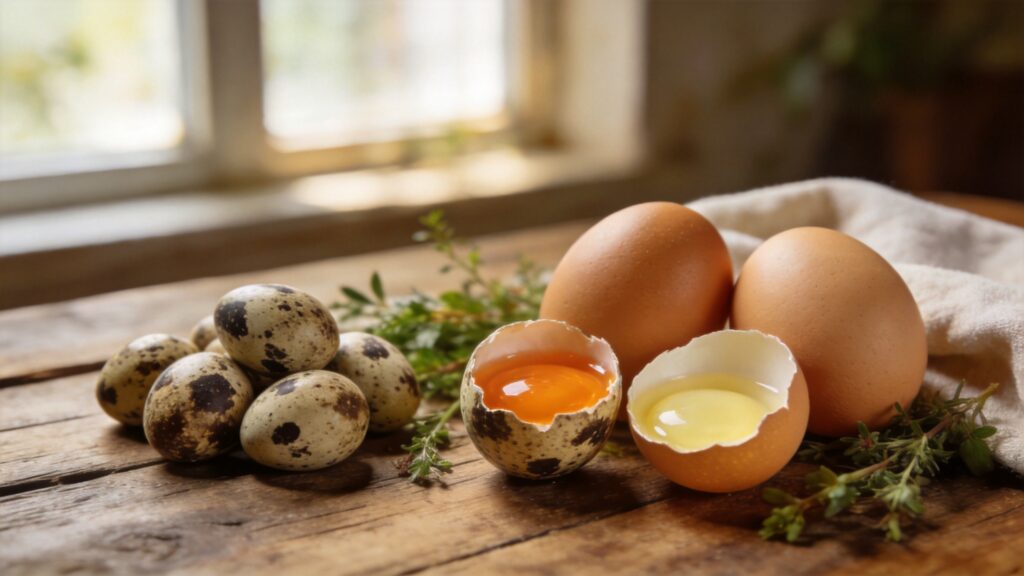
When it comes to choosing between quail eggs and chicken eggs, the decision often boils down to size, taste, and perceived health benefits. But for the health‑conscious American eater, the real question is: which tiny egg packs a bigger nutritional punch? In this deep dive, we’ll crack open the data on vitamins, minerals, and protein, explore how each egg behaves in the kitchen, and offer tailored recommendations for your unique dietary goals. Whether you’re a fitness enthusiast, a parent, or simply someone looking to upgrade your breakfast, this showdown will help you make an informed choice.
The Nutritional Landscape: Vitamins, Minerals, and Protein
Both quail eggs and chicken eggs are nutrient‑dense foods, but they are not identical. To truly compare them, we need to look at the numbers per 3.5 ounces (100 grams) — a standard benchmark that levels the playing field despite the dramatic size difference (a quail egg weighs about 9–10 grams, while a large chicken egg weighs about 50 grams).
| Nutrient | Quail Egg | Chicken Egg |
|---|---|---|
| Calories | 158 kcal | 143 kcal |
| Protein | 13.1 g | 12.6 g |
| Total Fat | 11.1 g | 9.5 g |
| Vitamin B12 | 1.6 µg (67% DV) | 1.1 µg (46% DV) |
| Riboflavin (B2) | 0.79 mg (61% DV) | 0.51 mg (39% DV) |
| Selenium | 32.0 µg (58% DV) | 30.8 µg (56% DV) |
| Iron | 3.65 mg (20% DV) | 1.75 mg (10% DV) |
| Phosphorus | 226 mg (18% DV) | 198 mg (16% DV) |
| Choline | 263 mg (48% DV) | 251 mg (46% DV) |
| Cholesterol | 844 mg | 373 mg |
Protein content is remarkably close, but quail eggs have a slightly higher protein density — about 13.1 g vs. 12.6 g per 100 g. While that difference is modest, the real story lies in the micronutrient profile. Quail eggs shine with nearly double the iron (3.65 mg vs. 1.75 mg), significantly more vitamin B12 (1.6 µg vs. 1.1 µg), and a higher riboflavin count. These nutrients are especially valuable for women of childbearing age, athletes, and anyone prone to anemia.
However, the cholesterol elephant in the room cannot be ignored. A 100‑gram serving of quail eggs contains 844 mg of cholesterol — more than double the 373 mg found in chicken eggs. For context, the American Heart Association recommends limiting dietary cholesterol to 300 mg per day for healthy individuals. That does not mean you should fear quail eggs, but it does mean portion control is key. Many recent studies have shown that dietary cholesterol has a smaller impact on blood cholesterol than previously believed, but if you have existing heart conditions or high LDL, you may want to stick with chicken eggs or limit quail eggs to occasional treats.
Where Quail Eggs Excel: The “Hidden” Minerals
Beyond iron and B12, quail eggs provide higher levels of zinc (1.5 mg vs. 1.3 mg) and magnesium (13 mg vs. 12 mg). These trace minerals support immune function, muscle recovery, and stress management. For busy Americans juggling work and workouts, even small increments can add up over time.
Protein Quality and Bioavailability
Both eggs are considered a “complete” protein source, meaning they contain all nine essential amino acids. The digestibility of egg protein is excellent — nearly 97% for both. Therefore, the choice isn’t about which protein is “better” but about how you integrate them into your daily intake. If you eat 3–4 chicken eggs a day, you get roughly the same protein as 10–12 quail eggs — but with far less cholesterol.
“Quail eggs are a nutrient powerhouse, but they are not a magic bullet. Their high cholesterol content means they should be enjoyed in moderation, especially for individuals with cardiovascular risk factors. For most people, including them a few times a week can boost iron and B12 intake without concern.” — Dr. Lisa Valente, Registered Dietitian
Taste, Culinary Uses, and Cost Per Egg
Let’s move from the lab to the kitchen. The flavor and texture of an egg can make or break a dish — and quail eggs have a distinct personality.
Taste and Texture
Quail eggs are often described as richer and creamier than chicken eggs, with a more delicate yolk that has a buttery, almost nutty finish. The whites are firmer and less watery, which means they hold together beautifully when poached or fried. In contrast, chicken eggs have a milder, neutral flavor that adapts to virtually any seasoning. If you love the yolk of a pasture‑raised chicken egg, you’ll likely adore quail eggs — they amplify that yolk‑centric experience.
Culinary Uses
Because of their small size, quail eggs are often used as elegant garnishes or tapas‑style components. Here are a few common applications:
- Appetizers and canapés: Hard‑boiled quail eggs halved and topped with caviar, smoked paprika, or a dab of aioli.
- Ramen and noodle bowls: A soft‑boiled quail egg adds a pop of richness without overwhelming the bowl.
- Salads and grain bowls: Perfect for portion control — you can scatter 2–3 quail eggs over a salad for a protein bump that’s still visually appealing.
- Pickled eggs: Their small size allows them to absorb brine quickly, making them a tangy snack in under 24 hours.
- Breakfast: Fried quail eggs on avocado toast or a mini English muffin — great for kids or those watching overall calorie intake.
Chicken eggs, meanwhile, remain the workhorse of the American kitchen. They scramble, bake, poach, and bind with unmatched versatility. A chicken egg is the backbone of omelets, quiches, frittatas, French toast, and literally thousands of baked goods. If you’re batch‑cooking a week’s worth of egg muffins or making a large frittata, chicken eggs are far more practical.
Cost Per Egg
Here the difference is stark. A dozen chicken eggs from a standard grocery store costs about $2.50–$4.00, or roughly 20–33 cents per egg. Pasture‑raised chicken eggs can run $5–$8 per dozen (42–67 cents per egg). Quail eggs, however, are a premium niche product. A 12‑count carton of quail eggs typically costs $5–$8 — that’s the same per‑egg price as pasture‑raised chicken eggs, but you’re getting only 7–12 grams of actual egg per quail egg versus 50 grams per chicken egg. In other words, quail eggs are about 4–5 times more expensive per ounce. For budget‑conscious shoppers, chicken eggs are the clear winner. For chefs and foodies seeking presentation or novelty, the premium is justified.
Practical Comparison at a Glance
- Flavor intensity
- Quail eggs — richer, creamier, more yolk‑forward. Chicken eggs — mild and adaptable.
- Culinary flexibility
- Chicken eggs win for volume cooking. Quail eggs excel as specialty accents.
- Cost efficiency
- Chicken eggs are far cheaper per gram of protein. Quail eggs are a luxury ingredient.
- Ease of handling
- Chicken eggs are easier to crack, separate, and cook in batches. Quail eggs require a bit more dexterity due to their size.
Recommendations for Different Dietary Needs
Your personal health goals, lifestyle, and budget will ultimately decide which egg lands on your plate. Below, we tailor the pick for several common scenarios.
For High‑Protein or Athletic Diets
If your primary goal is maximizing protein with minimal calories, both eggs are excellent, but chicken eggs offer the best protein‑to‑cost ratio. Eat 3–4 chicken eggs daily for ~37–50 g of high‑quality protein. If you want to add variety and micronutrients, replace one chicken egg with 2–3 quail eggs a few times a week — this boosts your iron and B12 without blowing your protein budget. Try a pre‑workout snack of 3 hard‑boiled quail eggs with a piece of fruit for a quick, energy‑dense boost.
For Those Concerned About Cholesterol or Heart Health
If your doctor has flagged your LDL cholesterol or you have a family history of heart disease, choose chicken eggs as your daily driver. Stick to 1–2 whole eggs per day and use additional egg whites if you need more protein. Limit quail eggs to once or twice a week, and when you do eat them, treat them as a garnish — for instance, 2 quail eggs on a salad rather than 6 as a main course. The higher cholesterol in quail eggs (844 mg/100 g) can add up fast. Remember, dietary cholesterol affects individuals differently, but caution is prudent until you know your personal response.
For Iron‑Deficiency or Anemia Prone Individuals
This is one group where quail eggs truly shine. With nearly twice the iron of chicken eggs, plus extra B12, they can be a gentle, bioavailable source of heme iron — especially beneficial for women with heavy menstrual cycles, vegetarians who still eat eggs, or teens. Recommendation: Incorporate 4–5 quail eggs (about 40–50 g) into your breakfast or lunch 3–4 times per week. Pair them with a vitamin‑C source like bell peppers or citrus to enhance iron absorption.
For Children and Picky Eaters
Kids often love the miniature size of quail eggs. Their creamy yolk and firm white make them less messy than runny chicken eggs, and they can be a fun “egg‑citing” novelty. However, because of the cholesterol content, you should not feed children a dozen quail eggs in one sitting. A good rule: for children under 10, limit to 2–3 quail eggs per serving, and no more than 3 servings per week. Chicken eggs remain the safer everyday option. A fun lunchbox idea: peel a few hard‑boiled quail eggs and pack them with cherry tomatoes and cucumber slices.
For Weight Management and Calorie Control
Both eggs are low‑calorie, high‑satiety foods. One large chicken egg contains about 72 calories; one quail egg contains only about 14 calories. If you are trying to keep your meal under 300 calories, 5 quail eggs (approx. 70 calories) can feel like a “bigger” portion visually than 1 chicken egg, which may help with psychological satisfaction. That said, the protein per calorie is slightly better in chicken eggs (12.6 g per 143 cal vs 13.1 g per 158 cal). Practical tip: For a 250‑calorie breakfast, choose 3 chicken eggs (216 cal) or 14 quail eggs (196 cal). The latter requires much more peeling effort — so chicken eggs win on convenience for weight‑loss meal prep.
For Culinary Adventurers and Food Bloggers
If you love experimenting with plating, texture, and flavor, quail eggs are a fantastic ingredient to master. Their firm white makes them ideal for tea‑stained or soy‑marinated eggs (like Chinese “tea eggs” made miniature). They also poach into perfect little spheres that elevate avocado toast, bowls, and pasta dishes. My personal favorite: a soft‑boiled quail egg over a bowl of sautéed mushrooms and wilted spinach — the yolk becomes a creamy sauce. Cost be damned — if you’re cooking for presentation or a special brunch, quail eggs are worth the splurge.
Putting It All Together: A Balanced Approach
You don’t have to choose one over the other forever. Many health‑conscious Americans keep both in their fridge: a carton of chicken eggs for daily scrambles, baking, and meal prep, plus a smaller pack of quail eggs for weekend brunches, salads, or when they want an iron boost. The key is to recognize that quail eggs are not a “superfood” replacement for chicken eggs — they are a complementary ingredient with a unique nutrient profile. If you enjoy the taste and have the budget, including them 2–3 times a week adds variety and micronutrient density without overdoing cholesterol.
“The healthiest egg is the one you actually eat in a balanced way. Whether you pick speckled quail or classic chicken, focus on the whole diet — not just one ingredient.” — Marion Nestle, Professor of Nutrition, NYU
In the end, the nutritional showdown between quail eggs and chicken eggs reveals no clear loser — only different strengths. Chicken eggs are affordable, versatile, and perfectly safe for daily consumption with moderate cholesterol. Quail eggs offer a denser packet of iron, B12, and a luxurious taste, but at a higher price and cholesterol cost. Choose based on your health priorities, listen to your body, and don’t be afraid to crack both.