When space is tight and every square foot counts, finding the right livestock can feel like a puzzle. Quail solve that puzzle with elegance. These pint-sized poultry pack an incredible punch — from rapid growth to quiet demeanor — making them the unsung heroes of small homesteads. Below, we unpack ten compelling reasons why quail deserve a spot on your land, backed by practical tips and real-world examples.
The Ultimate Space-Saving Livestock
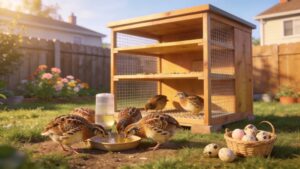
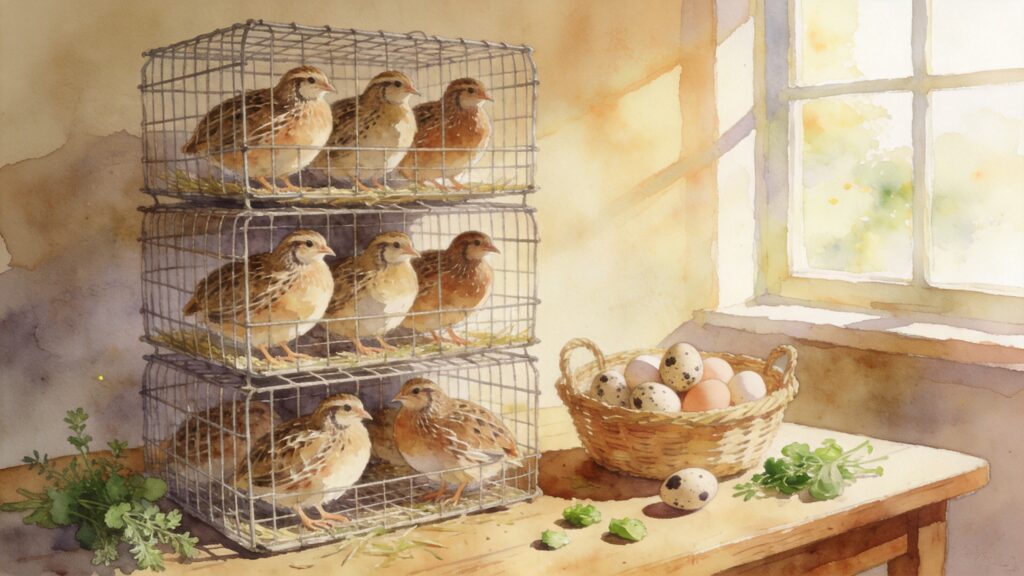
Quail require a fraction of the space needed for chickens or ducks. A flock of six Coturnix quail thrives in a cage just 2 feet by 3 feet — about the size of a small end table. Vertical stacking is a game-changer: a three-tier cage system on a 4×4 footprint holds up to 18 birds. That’s enough to produce a dozen eggs per day while occupying less floor space than a refrigerator.
For urban homesteaders, this means even a balcony or a corner of a garage can become a productive micro-farm. Case in point: Sarah from Portland, Oregon, converted an unused 3×5 closet into a quail setup. “I produce more protein per square foot than any other animal I’ve tried,” she says. Pro tip: Use rabbit-style cages with wire floors and a manure tray underneath to keep cleaning easy and smell minimal.
Quiet Companions for Neighborhood Homesteads
Roosters crow. Ducks quack. Geese honk. Quail, by contrast, communicate mostly through soft coos and chirps. A male quail’s crow is barely louder than a songbird, and it rarely carries beyond 50 feet. This makes quail a dream for homeowners associations (HOAs) and close-quarters neighborhoods where noise complaints can end a hobby.
“I’ve kept quail in a suburban backyard for three years without a single neighbor complaint. My rooster’s crow was the reason I switched. With quail, I get eggs, meat, and peace.” — Mike T., Virginia homesteader
Actionable advice: Place cages away from property lines and use a small fan or white noise machine if you’re extremely close to neighbors. Most people will never even know you have birds.
Rapid Growth: From Egg to Table in Weeks
Few livestock animals can match the metabolic speed of quail. Coturnix quail hatch at 8–10 grams and reach slaughter weight (about 200–250 grams) in just 6–8 weeks. Meat breeds like Jumbo Brown can hit 300 grams in the same window. Compare that to a broiler chicken’s 8 weeks for a 5-pound bird — quail offer a much faster protein turnaround per unit of feed.
This rapid growth also means you can stagger batches. For example, set eggs in an incubator every two weeks to have a continuous supply of butcher-ready birds. Breeding tip: Keep one male for every three females; replace breeders every 12 months for optimal fertility.
Dual Purpose: Eggs and Meat in a Tiny Package
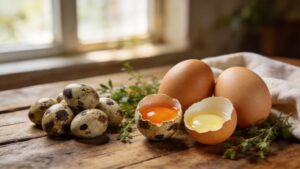
Quail are the ultimate dual-purpose bird for small homesteads. A single Coturnix female lays 250–300 eggs per year, starting at just 6–7 weeks old. Quail eggs are nutrient-dense — three quail eggs equal one chicken egg in volume, but contain more iron, vitamin B12, and selenium. On the meat side, a pair of dressed quail makes a fine meal for one person, and the flavor is richer than chicken, with a firmer texture.
| Attribute | Quail (Coturnix) | Chicken (Layer) |
|---|---|---|
| Age at first egg | 6–7 weeks | 18–22 weeks |
| Annual egg count | 250–300 | 250–300 |
| Space per bird | 0.5 sq ft | 2–4 sq ft |
| Feed per dozen eggs | 1.5–2 lbs | 4–5 lbs |
Practical takeaway: If you primarily want eggs, keep a flock of 6–12 females. For a meat rotation, hatch 20–30 chicks every 6 weeks. You’ll have a steady supply of both without a huge freezer commitment.
Legal and Community Acceptance: A Neighbor-Friendly Choice
Many cities and towns that ban chickens outright allow quail, classifying them as “exotic pets” or “small game” rather than livestock. Quail do not require large outdoor runs, and their quiet nature means they rarely trigger nuisance ordinances. Check your local zoning: in some areas, quail are even exempt from slaughter regulations because they fall under “domestic fowl” thresholds.
Real-world example: The city of Austin, Texas, allows up to 12 quail per household without a permit, while chickens are limited to 4 and require a rooster ban. Action step: Print out your city’s animal code and highlight the section that includes quail — often under “cage birds” or “non-avian poultry.” Present it to your HOA if needed. The legal agility of quail is a massive advantage for urban homesteaders.
Low Startup Costs and High Returns
You can launch a quail operation for under $200. Starter costs include: a wire cage ($40–60 from a rabbit supplies store), a heat lamp ($15), a small incubator ($50–80), feed ($15 for 50 lbs), and 10–15 hatching eggs ($1 per egg from a local breeder). At current retail prices, quail eggs sell for $4–6 per dozen at farmers’ markets, and whole dressed quail bring $3–5 each. A flock of 12 layers can pay for itself in feed and setup within 3–4 months.
- Initial investment: ~$180 for a complete starter system
- Monthly feed cost: $10 for 12 birds (using 20–25% protein game bird feed)
- Egg revenue potential: $20–30/month from farmers’ market sales (200 eggs/month)
- Meat revenue potential: $30–50/month if processing 8 birds per week
Consider selling hatching eggs and day-old chicks, which command $1–3 each, for additional profit.
Minimal Feed, Maximum Output
Quail convert feed to protein more efficiently than nearly any other poultry. A layer quail eats about 20–25 grams of feed per day (0.75 oz). That’s roughly 1.5 pounds of feed per dozen eggs. By comparison, a chicken eats about 4–5 pounds per dozen. Over a year, a flock of 12 quail consumes roughly 220 pounds of feed — versus 800 pounds for a dozen chickens. This efficiency slashes your feed budget and storage needs.
Feeding tip: Use a 24–28% protein game bird feed for laying hens, or mix your own with soybean meal, corn, and oyster shell. Scatter scratch grains sparingly to prevent obesity. Always provide water in shallow dishes with pebbles to prevent drowning.
Resilient and Disease-Resistant
Quail are hardy birds with robust immune systems. They rarely suffer from common poultry ailments like Marek’s disease, avian pox, or respiratory infections when kept in clean, well-ventilated cages. Their small size means less crowding stress, and because they don’t scratch in the dirt, they avoid exposure to soil-borne parasites. Key stat: In a 2020 study by the University of Georgia, quail housed in stacked cages had a 98% survival rate to 8 weeks, compared to 94% for floor-raised broilers.
- Keep cages dry and draft-free — humidity above 70% invites mold.
- Quarantine new birds for 14 days before introducing to your flock.
- Use a simple vaccine schedule: none required for backyard quail, but consider a killed Newcastle vaccine if outbreaks are common in your region.
- Clean manure trays weekly; disinfect with white vinegar solution (1:3 ratio) monthly.
This hardiness makes quail an ideal starter livestock for beginners who worry about veterinary complexities.
Nutrient-Rich Eggs and Lean Meat
Quail eggs are a superfood. They contain 3–4 times more vitamin B12 than chicken eggs, higher levels of iron (1.4 mg vs 0.9 mg per 100 g), and more riboflavin. The yolk-to-white ratio is higher, giving them a richer, creamier taste. For health-conscious Americans, quail eggs are also lower in cholesterol per gram than chicken eggs — a common misconception clarified by USDA data. Quail meat is lean, with about 4 g of fat per 100 g, making it a sought-after option for keto and paleo diets.
Recipe idea: Soft-boiled quail eggs (2 minutes) with sea salt and black pepper make a perfect 70-calorie snack. For dinner, pan-sear four whole quail with garlic and rosemary — a 10-minute meal that tastes like a gourmet treat.
Easy Breeding and Self-Sufficiency
Once you have a breeding pair, you never need to buy eggs or chicks again. Quail reach sexual maturity at 6 weeks, and females will lay fertilized eggs daily if a male is present. Simply collect the eggs, store them at 55–60°F with 70% humidity, and set them in a still-air incubator at 99.5°F for 17 days. Hatch rates of 80–90% are common with careful turning.
This closed-loop system empowers homesteaders to maintain their flock indefinitely. Pro tip: Cull any male that shows aggression, and rotate breeding stock every 6 months to avoid inbreeding depression. Keep a minimum of three bloodlines if you plan to sell breeding stock.
- Breeding ratio
- 1 male : 3–4 females — higher ratios reduce stress on hens
- Incubation duration
- 17 days at 99.5°F (37.5°C), 45% humidity first 14 days, then 60% for last 3 days
- Egg storage
- Up to 10 days at 55°F; turn daily to maintain viability
Conclusion
Quail offer an unmatched combination of space efficiency, quiet operation, rapid growth, and dual-purpose productivity. They slip through legal loopholes, demand minimal feed, and reward you with nutrient-dense eggs and lean meat. Whether you’re a suburbanite with a balcony or a rural homesteader with a small shed, quail can turn your tiniest corners into a thriving protein factory. Start with a dozen birds, and you’ll quickly understand why these little dynamos are the perfect fit for small-scale homesteading.