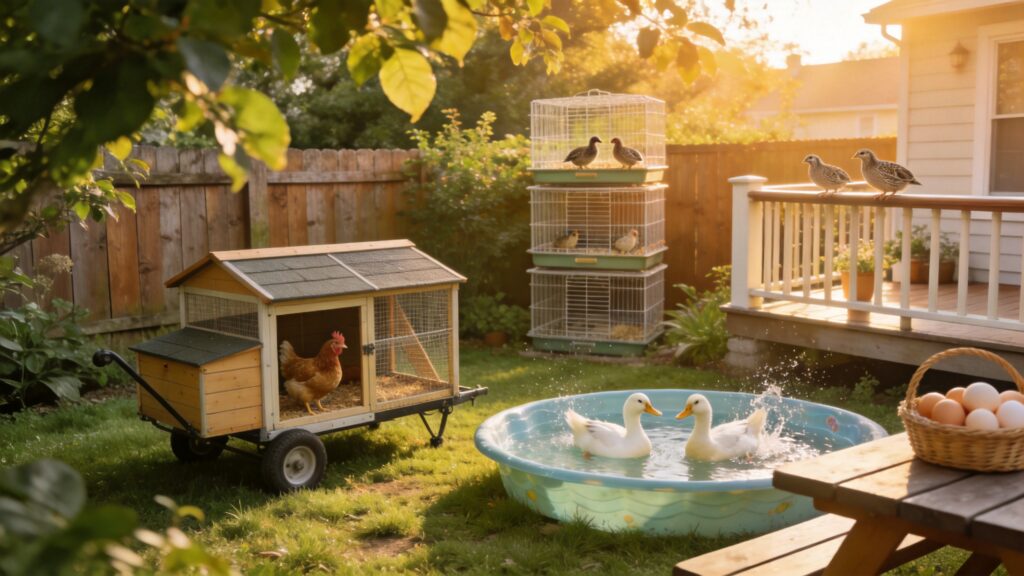
Imagine stepping into your backyard and gathering fresh eggs, just steps from your kitchen. For millions of Americans with limited outdoor space, raising backyard poultry has become a rewarding way to reconnect with food sources. But with chickens, ducks, and quail all vying for your attention, choosing the right species for a small yard requires careful thought. This guide walks you through every consideration—from local laws to neighborly diplomacy—so you can make a smart, sustainable choice.
Assessing Your Space, Climate, and Local Regulations
Before you buy a single chick, take a hard look at what your property actually offers. A 10×10 foot patch of grass in a suburban subdivision demands a different approach than a quarter-acre lot in a semi-rural town.
Yard Size and Layout
For chickens, plan on at least 4 square feet per bird inside the coop and 10 square feet per bird in an outdoor run. Ducks need more space—about 6 square feet indoors and 15–20 square feet outdoors—because they are messier and need water access. Quail thrive in much tighter confines: a colony of 6–8 quail fits comfortably in a 2×2 foot cage, making them ideal for apartments with balconies.
- Example: A family in Portland, Oregon, kept 4 hens in a 4×8 foot mobile coop that they moved weekly on a 10×12 foot patch of lawn. They rotated the run to prevent mud and odor.
- Warning: Ducks require a kiddie pool or shallow pond that needs daily cleaning. If your yard is tiny, the mud factor multiplies fast.
Climate Considerations
Cold climates favor hardy breeds like Plymouth Rocks or Pekin ducks, which have dense feathers. Hot, humid areas work better with Mediterranean chicken breeds (Leghorns) or Coturnix quail, which tolerate heat well. Never assume a species will adapt—research your local USDA hardiness zone and typical summer highs.
Local Regulations: The Non-Negotiable First Step
Most U.S. cities allow hens but ban roosters due to noise. Some HOAs forbid any poultry outright. Call your city’s zoning office or check municipal code online. Pay attention to setback requirements (e.g., coop must be 10 feet from property lines) and maximum bird counts.
“I skipped checking my HOA rules and ended up spending $300 on fines and rehoming my three ducks. The six months of neighbor complaints were worse.” — Megan T., Denver, CO
Comparing the Big Three: Chickens, Ducks, and Quail
Each species has distinct trade-offs in feed costs, housing complexity, and egg output. The table below summarizes key differences for a small-space flock of 4–6 birds.
| Factor | Chickens (Hens) | Ducks (Pekin or Runner) | Quail (Coturnix) |
|---|---|---|---|
| Space per bird (coop/run) | 4 sq ft / 10 sq ft | 6 sq ft / 15 sq ft | 1 sq ft cage (no run needed) |
| Eggs per year (per bird) | 250–300 | 200–280 | 300–350 |
| Monthly feed cost (4 birds) | $20–$30 | $25–$35 (ducks eat more) | $15–$20 (smaller birds) |
| Noise level (hens only) | Moderate (egg song, clucking) | Low to moderate (quacking, can be loud) | Very low (soft calls) |
| Housing complexity | Standard coop with roosts, nesting boxes | Need deep bedding, extra ventilation for moisture | Simple wire cage, can be stacked vertically |
Chickens: The All-Around Backyard Classic
Chickens are the most forgiving for beginners. They tolerate cold better than ducks, lay consistently, and their manure is easier to compost. For small spaces, bantam breeds (miniature chickens) need even less room—2–3 square feet per bird. Downside: they scratch and dust-bathe, which can kill lawn grass unless you use a movable pen.
Ducks: Messy but Charming
Ducks are quieter than chickens (no loud egg songs) and their eggs are richer, perfect for baking. However, they need constant access to water deep enough to submerge their bills, which means a muddy, wet area. If you have a tiny yard, ducks will turn it into a swamp. Runner ducks are less messy if kept on deep litter, but still require more cleaning than chickens.
Quail: The Space-Saving Overachiever
Quail are the ultimate small-space solution. A stack of two 2×2 foot cages can house 12–15 birds, and they start laying at 6 weeks old. They don’t need a run or a coop—just a well-ventilated cage indoors or in a sheltered shed. Quail are silent enough for apartment balconies. The catch: they require specialized feed (higher protein, 24–26%), and their eggs are tiny (about 5 per chicken egg). Many owners process quail for meat as well.
Housing and Space Requirements: Making Every Square Foot Count
Whatever species you choose, maximize your limited space with smart design. A poorly planned coop leads to disease, odor, and neighbor complaints.
Vertical Thinking for Small Yards
For chickens, a tractor-style mobile coop (chicken tractor) lets you move birds daily to fresh grass while concentrating manure. Build a 4×6 foot tractor on wheels with roosts above the ground—this uses vertical height for perching. For quail, stackable cages allow you to keep 20 birds in a 2×4 foot footprint.
- Chicken-specific tip: Install a dropping board under roosts and scrape it daily. This prevents ammonia buildup and extends bedding life.
- Duck-specific tip: Use a deep layer of pine shavings (6 inches) and a separate water station with a drainage tray to manage wetness. Clean the water area twice a day.
Ventilation vs. Predator Security
In a small coop, poor ventilation causes respiratory problems, especially with ducks. Install windows covered with ½-inch hardware cloth (not chicken wire, which raccoons can tear). Place vents near the roof peak so stale air escapes without drafts. For quail in cages, ensure airflow from all sides—they are prone to heat stress.
Keeping the Peace: Noise, Smell, and Neighbor Relations
Nothing ends your poultry hobby faster than a neighbor complaint. Proactive management is your best defense.
Noise Management by Species
The loudest poultry noise comes from roosters—so don’t keep one unless you live on a farm. Hens emit a brief “egg song” after laying (10–30 seconds), which is acceptable in most suburban areas. Ducks are generally quieter but can quack loudly when excited—avoid Muscovy ducks, which are silent, or choose female runners. Quail produce a soft, rhythmic call that does not carry beyond 20 feet.
“Our neighbors didn’t even know we had quail until we invited them over for a tour. With chickens, we got one complaint about the 6 a.m. egg song—we solved it by letting the hens out at sunrise so they foraged away from the fence line.” — Carlos R., Austin, TX
Odor Control: The Deep Litter Method
In small spaces, smell is a dealbreaker. Use the deep litter method: start with 4–6 inches of absorbent bedding (pine shavings, straw, or hemp). Add fresh bedding on top weekly, and only fully clean out the coop every 3–4 months. The bedding composts inside the coop, reducing odor and generating heat in winter. For ducks, you must clean the water area daily and replace bedding around it—otherwise, the smell becomes overwhelming.
Diplomacy 101
- Invite neighbors to see your setup before you bring birds home.
- Share the first dozen eggs as a goodwill gesture.
- Keep feed stored in airtight containers to avoid attracting rodents.
- Set up a composting bin for manure, well away from property lines.
Practical Tips for Getting Started
You’ve decided on a species. Now execute without rookie mistakes.
Sourcing Birds
Reputable hatcheries (e.g., Murray McMurray, Cackle Hatchery) offer sexed chicks for chickens and ducks—order straight-run females only to avoid roosters. Quail are often sold as day-old chicks or hatching eggs from breeders. Local rescues frequently have adult hens that need homes; this skips the baby chick phase and gives you a laying flock immediately.
Newbie Errors to Avoid
- Overcrowding: Don’t think “we’ll just keep a few extra.” More birds = more mess, stress, and disease. Stick to the minimum for your space.
- Skimping on predator-proofing: Raccoons can open latches; use carabiners or sliding bolts. Bury hardware cloth 12 inches deep around the run perimeter.
- Forgetting winter water: Heated waterers are essential in freezing climates. Ducks need liquid water to clean their bills daily.
Seasonal Planning
Start in early spring so birds are fully feathered before winter. Quail can be started year-round indoors with supplemental heat. If you start in fall, you’ll need a heated coop (for chickens/ducks) or an indoor brooder for quail.
Your Small-Space Poultry Journey Begins
Whether you choose the versatility of chickens, the richness of duck eggs, or the efficiency of quail, the key is matching the species to your specific constraints—space, climate, and tolerance for mess. Start small, build a sturdy coop, and nurture neighborly relationships with fresh eggs. In a few months, your tiny backyard will become a source of daily delight and truly local food.