Introduction
Chickens can appear active and alert even when something is wrong. Sometimes, one of the earliest clues that a bird may be unwell is a change in body weight.
Learning how to weigh a chicken at home gives you a simple way to monitor its condition, especially if you keep backyard chickens for eggs, breeding, or companionship. Regular measurements can help you notice gradual weight loss, monitor recovery, and recognize when a bird may need closer attention.
The key is to look at weight trends alongside appetite, droppings, behavior, and egg production, rather than relying on a single measurement.
🐔 1. What You Need to Weigh a Chicken
You do not need expensive equipment to get started. A few household items can make the process easier and safer.
- Digital kitchen scale: Useful for chicks and smaller chickens if its capacity is sufficient.
- Digital postal or luggage scale: Can work for larger birds when paired with a secure, suitable container or weighing setup.
- Stable container: A lightweight box or pet carrier can help keep a chicken still during weighing.
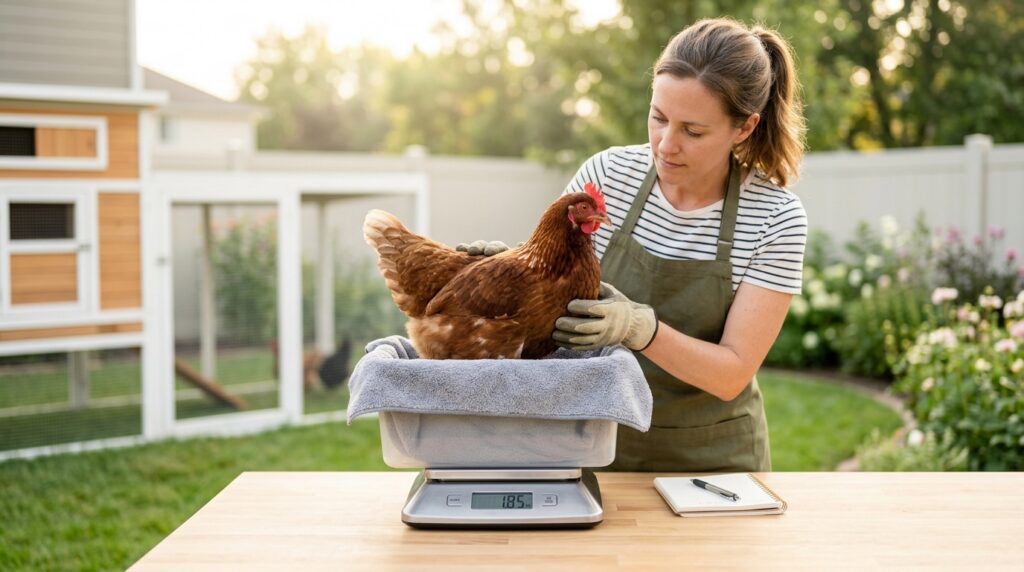
- Towel or nonslip liner: Helps prevent slipping and provides a more comfortable surface.
- Notebook or spreadsheet: Record the date, weight, appetite, behavior, and any unusual symptoms.
Choose a scale that can handle your bird’s weight and provides consistent readings. For adult chickens, a platform scale or a suitable container-and-scale arrangement may be more practical than a small kitchen scale.
⚖️ 2. How to Weigh a Chicken Safely at Home
A calm chicken is easier to weigh accurately. Choose a quiet location and avoid chasing or repeatedly handling a frightened bird.
Step 1: Prepare the scale
Place the scale on a firm, level surface. If you are using a container, put it on the scale first and reset the reading to zero using the tare function.
Make sure the container is large enough for your chicken to sit or stand comfortably without becoming trapped.
Step 2: Gently place the chicken inside
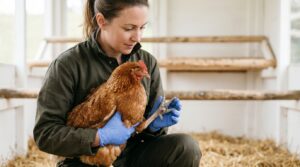
Support the bird’s body securely, keeping its wings close to its sides without squeezing. Place it in the container or on the weighing platform.
Never suspend a chicken by its legs, wings, or neck. Avoid compressing its chest, because birds need unrestricted movement of the breastbone and chest to breathe normally.
Step 3: Wait for a stable reading
Chickens naturally move around, so the displayed weight may fluctuate. Wait until the reading settles, and repeat the measurement if necessary.
If the bird is extremely distressed, struggling heavily, or having difficulty breathing, stop and prioritize its safety.
Step 4: Record the measurement
Write down the weight, date, and any observations. Use the same scale and weighing method whenever possible to make comparisons more meaningful.
For routine monitoring, weighing at a similar time of day and under similar conditions can also reduce variation caused by differences in recent feeding or drinking.
📋 3. How Often Should You Weigh Your Chicken?
The ideal schedule depends on the bird’s age, purpose, and health.
| Situation | Practical approach |
|---|---|
| Healthy adult backyard chicken | Establish a baseline, then weigh periodically, such as weekly or monthly, depending on your monitoring needs. |
| Growing chick or pullet | Weigh weekly to follow growth, especially when monitoring development or comparing birds of similar age and breed. |
| Chicken recovering from illness | Follow a veterinarian’s recommended schedule; daily measurements may be useful in some cases. |
| Chicken with suspected weight loss | Recheck under consistent conditions and arrange veterinary advice if the loss persists or other symptoms appear. |
These are general monitoring suggestions, not universal medical rules. A veterinarian may recommend more frequent measurements for a sick bird.
Breed, age, body frame, reproductive status, and individual variation all affect expected weight. Avoid comparing a small bantam directly with a large laying breed.
🔎 4. What Weight Changes May Signal Illness?
A single measurement rarely tells the whole story. The direction and persistence of change matter more than an isolated number.
Gradual weight loss
A chicken that steadily loses weight may not be eating enough, may have difficulty accessing feed, or may have an underlying health problem.
Possible causes include parasites, chronic infections, digestive problems, reproductive disease, and other conditions. Weight loss alone cannot identify the cause.
Sudden changes in weight
A surprising reading may reflect scale placement, movement, different weighing conditions, or an incorrect measurement. Repeat the measurement if the bird appears otherwise normal.
However, genuine rapid weight change accompanied by weakness, poor appetite, abnormal droppings, or other symptoms deserves prompt veterinary attention.
Weight gain that seems unusual
Weight gain is not automatically a problem. Growing birds naturally gain weight, and body condition can change with age and reproductive status.
Unexpected gain in an adult bird may warrant closer observation, particularly if the abdomen looks enlarged or the chicken has difficulty walking or breathing. Do not assume the change is simply fat.
🩺 5. Track More Than Weight
A useful health record combines numbers with observations. Alongside each measurement, check the following:
- Appetite: Is the chicken eating its usual amount?
- Water intake: Is it drinking normally?
- Droppings: Have their color, consistency, frequency, or appearance changed?
- Activity: Is the bird walking, scratching, and interacting with the flock as usual?
- Feathers and posture: Does it look unusually fluffed up, hunched, or withdrawn?
- Breathing: Is breathing quiet and effortless?
- Egg production: For laying hens, has production changed unexpectedly?
These observations provide context. For example, a modest weight change in an otherwise active chicken that eats normally may call for a different response than the same change in a bird that refuses food and sits alone.
Do not diagnose illness from any one sign. Chickens can hide signs of disease, so a combination of subtle changes should not be ignored.
📝 6. How to Calculate Weight Change
Tracking the difference between measurements helps you identify a trend.
Use this formula:
Percentage weight change = (Current weight − Previous weight) ÷ Previous weight × 100
For example, suppose a chicken weighed 2,000 grams last week and weighs 1,900 grams today.
- Previous weight: 2,000 g
- Current weight: 1,900 g
- Difference: −100 g
- Percentage change: −5%
This means the bird’s measured weight decreased by 5% compared with the previous measurement.
This calculation describes the change, not its cause or severity. There is no single percentage that reliably diagnoses illness in every chicken. Consider the bird’s normal weight, age, measurement consistency, other symptoms, and how quickly the change occurred.
If you repeatedly see a downward trend, contact a poultry veterinarian rather than waiting for the weight loss to become severe.
🚨 7. When Should You Contact a Veterinarian?
Seek veterinary advice if your chicken has persistent or unexplained weight loss, reduced appetite, unusual droppings, a swollen abdomen, or a noticeable decline in activity.
Seek urgent veterinary care if your chicken has severe breathing difficulty, collapses, cannot stand, has a major injury, or becomes markedly unresponsive. Do not delay care while trying to collect additional weight measurements.
If several chickens become ill, die unexpectedly, or develop similar symptoms, separate sick birds when practical, use appropriate hygiene precautions, and contact a veterinarian or local animal-health authority for guidance.
Avoid giving medications or dewormers solely because a chicken has lost weight. The correct treatment depends on the underlying cause, and unnecessary medication can delay appropriate care.
🐣 8. Common Mistakes to Avoid
A few simple habits make your records more reliable.
- Using different scales: Different devices may produce slightly different readings.
- Weighing a struggling bird repeatedly: Stress can make the process unsafe and the results unreliable.
- Ignoring small but persistent changes: A series of modest losses can be more informative than one dramatic reading.
- Comparing unrelated birds: Breed, age, and body size influence normal weight.
- Focusing only on the number: Appetite, activity, breathing, droppings, and body condition matter too.
- Waiting for severe symptoms: Chickens may conceal illness until they are significantly unwell.
Final Thoughts
Weighing a chicken at home is a straightforward habit that can help you become more familiar with your flock’s normal condition. With a suitable scale, gentle handling, and consistent records, you can recognize changes earlier and share useful information with a veterinarian.
Remember, the goal is not to make every chicken match a particular number on the scale. It is to understand what is normal for each bird and notice when something changes.
A weight record is an early-warning tool, not a diagnosis. When unexplained weight loss appears alongside changes in appetite, behavior, or general condition, take it seriously and seek professional guidance. 🐔