
Introduction
When a chicken suddenly becomes weak, stops eating normally, limps, or gets injured, having a safe recovery space ready can make caring for her much easier.
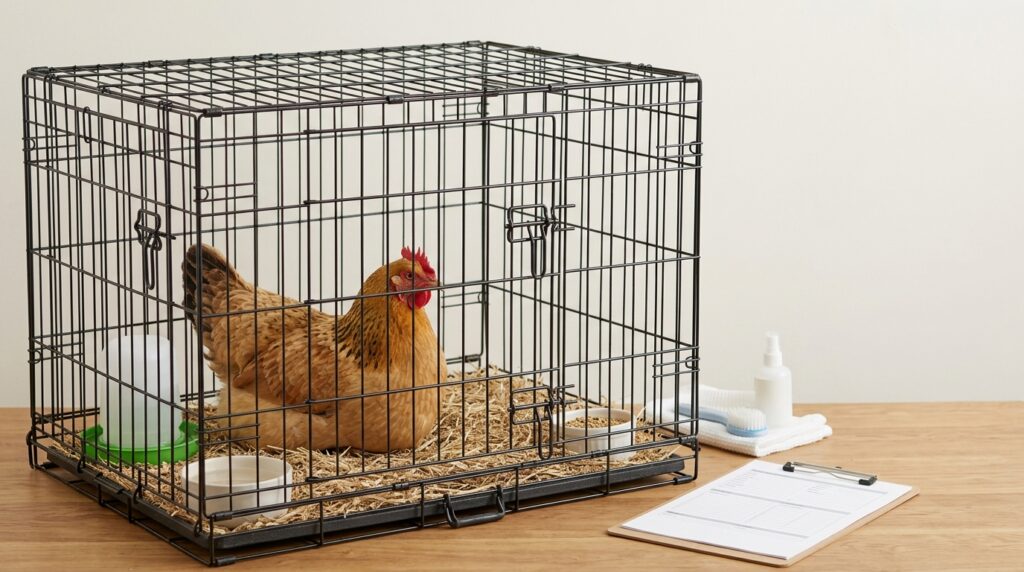
A chicken hospital crate is a temporary, controlled space where a sick or injured bird can rest, access food and water, and be monitored without interference from the rest of the flock. It can also help reduce pecking, competition, and the risk of spreading certain infectious diseases.
However, isolation is not a substitute for veterinary care. Chickens can hide signs of illness, and symptoms such as difficulty breathing, severe weakness, or inability to stand may require urgent attention.
The goal is simple: create a clean, secure, quiet, and comfortable space that supports recovery while helping you observe changes in your chicken’s condition. 💚
1. Choose the Right Hospital Crate
<AsyncImage query=”clean spacious ventilated plastic pet recovery crate with flat washable floor and soft nonslip liner for a backyard chicken” aspectRatio=”16:9″ width=”100%” />
A hospital crate does not need to be expensive. A sturdy pet crate, appropriately sized plastic animal carrier, or secure temporary enclosure can work if it meets the bird’s needs.
Look for these features:
- Good ventilation: Fresh air must circulate freely without exposing the bird to harsh drafts.
- Enough space: Your chicken should be able to stand naturally, turn around, stretch, and reach food and water.
- Secure sides and doors: Prevent escapes and protect the bird from household pets or predators.
- Easy cleaning: Smooth, washable surfaces make it easier to remove droppings and disinfect the enclosure.
- A stable floor: Avoid slippery surfaces that can worsen mobility problems.
Avoid using a tiny transport carrier for prolonged confinement. A crate that restricts normal movement can cause additional stress and make it harder for the bird to access essentials.
If the chicken is unable to stand or has a suspected leg or spinal injury, ask a veterinarian how much movement restriction is appropriate.
2. Prepare Safe, Comfortable Bedding
<AsyncImage query=”backyard chicken resting comfortably on clean absorbent paper bedding in a ventilated recovery pen” aspectRatio=”16:9″ width=”100%” />
The floor should provide traction, absorb moisture, and allow you to monitor droppings.
Good options include:
- Plain paper towels: Useful for short-term monitoring because droppings are easy to see and the towels can be replaced frequently.
- Clean, low-dust bedding: Suitable for many birds when it is absorbent, dry, and not easily eaten.
- Washable, nonslip mats: Can help provide traction if they are safe for poultry and cleaned regularly.
Avoid slippery newspaper as the only floor covering, dusty materials that irritate the respiratory tract, and bedding that remains wet or heavily soiled.
Replace contaminated bedding promptly. If you are monitoring diarrhea, blood in droppings, or changes in stool color, clean paper towels may make observations easier, but droppings alone cannot establish a diagnosis.
3. Manage Temperature and Ventilation 🌡️
A sick chicken may struggle to regulate body temperature, especially if she is very young, weak, or already stressed.
Keep the crate in a quiet, sheltered location away from direct sun, rain, strong drafts, and household traffic. Provide adequate ventilation and check the bird regularly rather than assuming the room temperature is comfortable for her.
If supplemental heat is needed:
- Use a suitable, safely installed heat source that the chicken cannot touch or knock over.
- Leave enough space for the bird to move away from the heated area.
- Monitor the temperature at bird level.
- Check frequently for signs of overheating, such as panting and holding the wings away from the body.
Not every sick adult chicken needs extra heat. A bird that is already overheated or panting may need a cooler environment, not additional warmth.
For chicks, the appropriate temperature depends on age, feather development, and behavior. Ask a veterinarian or qualified poultry specialist for guidance when the bird’s needs are uncertain.
4. Place Food and Water Within Easy Reach
<AsyncImage query=”backyard chicken recovery pen with shallow stable poultry waterer and small feed dish placed within easy reach” aspectRatio=”16:9″ width=”100%” />
A chicken recovering from illness or injury should be able to reach clean water and appropriate feed without excessive effort.
Set up the crate with:
- A stable, shallow water container or suitable poultry drinker.
- A small feed dish that is easy to access.
- The bird’s usual complete poultry feed, unless a veterinarian recommends a different diet.
- Enough space between containers to reduce spills and bedding contamination.
Check water and feed frequently. Sick birds may eat or drink less than usual, and a tipped container can leave them without access to water.
Do not force water into a chicken’s beak or syringe-feed without appropriate veterinary instruction. Liquid or food can enter the airway if administered incorrectly.
If your chicken cannot swallow normally, is too weak to reach water, or refuses food and water, seek veterinary advice promptly. Do not assume that placing food nearby is enough.
5. Keep the Hospital Crate Separate From the Flock
Isolation can reduce pecking and competition, and it may help limit exposure to infectious disease. However, the correct level of separation depends on the suspected illness.
For basic biosecurity:
- Keep the crate away from shared feeders and drinkers.
- Use separate cleaning tools and feed and water containers.
- Wash your hands after handling the sick bird.
- Care for healthy birds before handling the isolated chicken when practical.
- Change contaminated clothing or footwear as appropriate.
- Clean and disinfect equipment using a product suitable for the intended use, following its label directions.
If multiple birds become sick, deaths occur unexpectedly, or a contagious disease is suspected, contact a veterinarian or local animal-health authority. Some poultry diseases require specific containment and reporting measures.
Isolation may also be stressful for social birds. Provide a calm environment and suitable visual contact with other chickens only if it does not compromise biosecurity or worsen distress.
6. Monitor Your Chicken Every Day 📝
A hospital crate makes it easier to notice changes, but observation should be systematic.
Use a simple record such as this:
| What to check | What to record |
|---|---|
| Appetite | Eating normally, eating less, or refusing food |
| Water intake | Drinking normally or noticeably less |
| Droppings | Frequency, consistency, unusual blood, or major changes |
| Breathing | Normal, noisy, labored, or open-mouth breathing |
| Movement | Standing, walking, limping, or unable to rise |
| General behavior | Alert, unusually quiet, weak, or unresponsive |
| Injuries | Changes in swelling, bleeding, or visible wounds |
| Weight, if practical | Measurements taken consistently with a suitable scale |
Record when symptoms began and whether they are improving, worsening, or staying the same. Photographs can help document visible changes for your veterinarian.
Seek urgent veterinary care for severe breathing difficulty, collapse, uncontrolled bleeding, seizures, inability to stand, suspected major injury, or marked unresponsiveness. Prompt professional advice is also important for a bird that stops eating or drinking, has severe diarrhea, or deteriorates rapidly.
Do not delay care while waiting to see whether the hospital crate solves the problem.
7. Clean the Crate Without Spreading Infection
A recovery space should be cleaned regularly, but cleaning must not expose the bird to irritating fumes or wet disinfectant.
- Move the chicken to a safe temporary location if necessary.
- Remove droppings, discarded feed, and soiled bedding.
- Wash visible dirt away with an appropriate cleaning method.
- Apply a poultry-safe or otherwise suitable disinfectant according to its label.
- Observe the required contact time and rinse if instructed.
- Allow the enclosure to dry and ventilate before returning the chicken.
Never mix cleaning chemicals, particularly bleach with ammonia or acids. Keep the bird away from fumes and follow all product safety instructions.
If an infectious disease is suspected, ask your veterinarian which disinfectant and cleaning protocol are appropriate. Not all products work against every pathogen.
8. When Is It Safe to Return Your Chicken to the Flock?
A chicken looking more energetic does not automatically mean she is ready to return.
Before reintegration, consider whether she is eating and drinking adequately, moving comfortably, and recovering from the original problem. Any wounds should be assessed, and contagious causes of illness should be considered before reintroducing her.
Follow your veterinarian’s advice about treatment completion and isolation duration. There is no single number of isolation days that is appropriate for every illness.
When it is safe to return her, gradual reintroduction may reduce conflict. Supervise interactions and ensure she can access food, water, and resting areas without being bullied. Watch for renewed symptoms or aggressive pecking.
Final Thoughts 💚
A well-prepared chicken hospital crate is a practical part of responsible backyard poultry care. A secure enclosure, dry nonslip bedding, suitable temperature, accessible food and water, and careful hygiene can help create a better environment for a sick or injured bird.
Most importantly, use the crate to support observation and recovery, not to replace diagnosis or treatment.
Prepare the space before you need it. Keeping a few suitable supplies ready can make a stressful situation more manageable when one of your chickens suddenly needs extra care.




