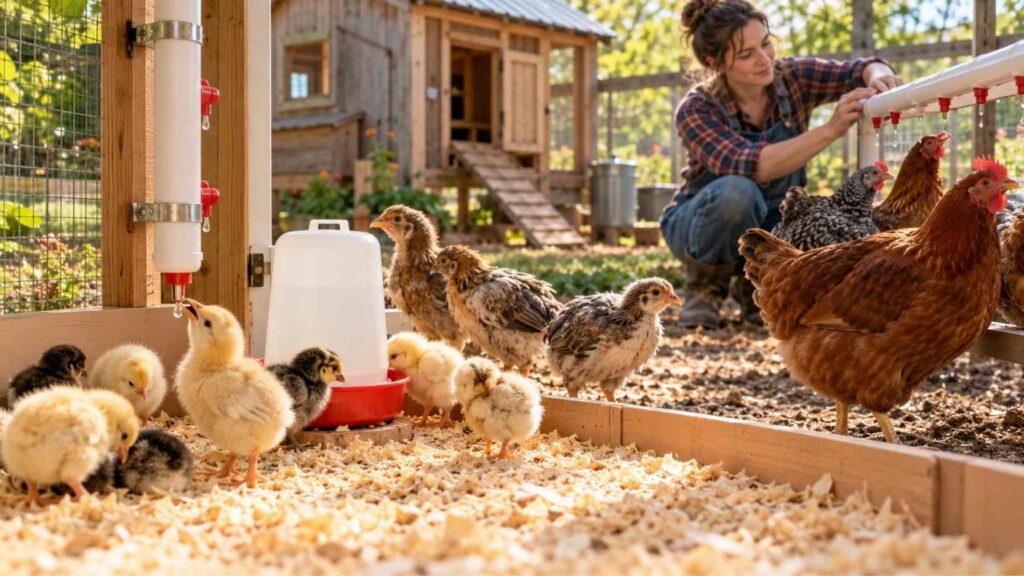
If you are wondering when chicks can use a nipple waterer, the answer is earlier than many new chicken keepers assume. 🐥 Some chicks can learn a properly positioned nipple system during their first days of life, while others transition later from a traditional brooder drinker without any problem. Age matters less than whether the chicks can physically activate the nipple, recognize it as a water source, and reliably get enough water from it.
That means there is no single birthday when every flock should suddenly switch watering systems. Vertical nipples, horizontal nipples, chick size, mounting height, water pressure, temperature, and previous experience all affect how smoothly the transition goes. 💧 The safest strategy is therefore to follow an age-by-age learning process while watching the birds, rather than removing their familiar water source because a calendar says they should be ready.
Do You Have To Start Chicks On Nipple Waterers Early?
You do not have to introduce nipples immediately after chicks hatch for the system to work later. Chickens are capable of learning new drinking methods well beyond the brooder stage, and even adult birds can generally investigate and learn a nipple or cup system when it is introduced correctly. 🐔 Starting young can make the equipment familiar, but there is no tiny developmental window that permanently closes.
This is good news for beginners who start with the common chick-sized gravity drinker and later become tired of bedding, feed, and droppings getting into the tray. You can make the change gradually after the chicks have settled into the brooder and developed reliable drinking habits. The real objective is not switching early; it is ensuring that every bird understands where dependable drinking water comes from.
Day-Old Chicks: Make Sure They Know How To Drink First
During the first day in the brooder, the priority is simple: make sure newly arrived chicks locate water and begin drinking. 💦 Chicks coming from shipping, a hatchery box, or an incubator are dealing with several changes at once, including a new environment, feed, heat source, and flockmates. A shallow, stable chick drinker can therefore make the first introduction to water particularly obvious and easy to monitor.
Some keepers successfully begin with nipple drinkers from the start, especially with equipment designed for young chicks, but there is little benefit in making the first hours unnecessarily complicated. If you want to introduce nipples immediately, demonstrate the nipple while closely observing whether chicks actually drink rather than simply pecking curiously at the equipment. Keep an easily accessible backup source available until you are confident the entire group understands the new system.
When Can Chicks Start Using Vertical Nipples?
Vertical nipples can often be introduced very early, including during the first week, provided chicks can reach and activate them comfortably. 🐣 These nipples hang downward, and pecking the small pin releases droplets directly around the chick’s beak, which can make the cause-and-effect relationship relatively easy to discover. Their height should allow chicks to reach upward slightly without stretching excessively or crouching awkwardly.
Because chicks grow quickly, nipple height cannot be treated as a one-time adjustment. Check the setup frequently and raise it as the flock becomes taller so birds continue approaching the nipple naturally. A system that worked perfectly several days ago can become awkward simply because the chicks have grown.
When Are Chicks Ready For Horizontal Nipples?
Horizontal nipples extend from the side of a bucket, pipe, or reservoir and release water when the bird manipulates the valve. They can keep the surrounding area relatively dry because they typically leak less than many vertical designs, but young chicks may need more deliberate instruction depending on the particular valve. 🚰 Some horizontal nipples also require more force to activate than others, which is why equipment design matters as much as chick age.
Rather than declaring that every chick should move to horizontal nipples at a specific week, test the actual system you intend to use. A slightly older, stronger chick that can comfortably reach the valve and trigger water repeatedly is ready regardless of whether another flock learned earlier. If several birds peck at the nipples but cannot consistently release water, keep the familiar drinker available and try again as they grow.
How To Tell Whether Every Chick Is Actually Drinking
Seeing one adventurous chick operate the nipple does not mean the transition is complete. 👀 Spend a few minutes watching the flock at different points in the day and confirm that multiple chicks approach the waterer, activate it, swallow normally, and return later. Also pay attention to birds at the bottom of the social hierarchy because confident chicks sometimes learn new equipment before their quieter flockmates.
You can also monitor the reservoir to make sure water is actually being consumed and check the equipment itself for blockages or incorrectly adjusted valves. Normal activity, feeding, drinking behavior, and droppings provide additional clues that the flock’s routine is functioning properly. If chicks become persistently weak or inactive or you cannot confirm that they are drinking, immediately provide an easily accessible water source and investigate the problem rather than waiting for them to figure it out.
How To Transition From A Brooder Waterer To Nipples
The safest answer to when to switch a chick waterer is usually to overlap the systems briefly instead of performing an abrupt overnight change. Install the nipple waterer while the chicks still recognize their traditional drinker, then actively teach them where the new water comes from. 🐤 Once you repeatedly observe the flock drinking confidently from the nipples, you can begin removing the old system.
Avoid leaving two waterers indefinitely simply because you are nervous about making the switch. Chickens may continue choosing the easier open water source and have little motivation to investigate the nipples, especially if they already know that the familiar tray works. The goal is a short teaching period followed by a controlled transition once you have evidence that the birds understand the new equipment.
Show Them Where The Water Comes From
Gently activate a nipple so that a visible drop of water forms on the valve. 💧 Chickens are naturally curious about small moving or reflective objects, and one chick investigating the droplet may quickly discover that pecking produces more water. You usually do not need an elaborate training process once the connection becomes obvious.
Repeat the demonstration in several locations if your system contains multiple nipples. Make sure water flows correctly before assuming confusion is the bird’s fault, because airlocks, plugged valves, incorrect pressure, or installation problems can make a perfectly trained chicken appear unable to use the system. Test every drinking point yourself before relying on it.
Let One Chicken Teach The Flock
Social learning can do much of the work once one curious bird discovers the nipple. 🐔 Other chicks frequently investigate what their flockmates are pecking, so the first confident drinker can effectively demonstrate the system to everyone nearby. This is one reason nipple training sometimes appears to happen almost instantly after the initial discovery.
Still, do not assume every bird has learned simply because a crowd gathers around the waterer. Watch long enough to see quieter chicks actually trigger water rather than merely standing beside birds that do. In larger brooders, multiple nipple locations also help prevent one busy drinking point from becoming a bottleneck.
When To Keep A Backup Water Source
Keep the original waterer temporarily when you are still uncertain whether all chicks can operate the nipple system. 🌡️ A backup becomes especially important during very hot conditions, after moving chicks into an unfamiliar space, or whenever you notice that several birds appear confused by the new equipment. Water access is too important to turn the transition into a test of persistence.
The backup should remain clean, stable, and easy to reach while you continue demonstrating the nipples. Once you have directly observed consistent drinking from the new system across the flock, remove the unnecessary second source and continue checking nipple operation every day. A nipple waterer requires less visible cleaning than an open bowl, but it still requires inspection.
Moving From The Brooder To The Coop
The brooder-to-coop transition is an excellent time to think about the adult watering system because equipment height, capacity, and placement usually change anyway. 🏡 If chicks already understand nipples, installing a similar system in the coop can make the move straightforward. Show them the new drinking locations again rather than assuming that recognizing one nipple means they automatically understand where water is located in an unfamiliar building.
Make sure the system is positioned where every bird can reach it comfortably and where leaking water will not continually soak bedding. Provide enough drinking points that lower-ranking birds are not easily excluded, particularly as the flock grows. Continue adjusting height as young chickens approach adult size.
Can Adult Chickens Learn Nipple Waterers?
Yes, older chickens can learn nipple systems even if they spent their entire early life drinking from open containers. 🐓 Adult birds may actually be easier to observe during training because their larger size makes drinking behavior obvious and they can usually operate standard poultry nipples without difficulty. The same basic teaching method applies: activate the valve, create a visible droplet, and allow curiosity and flock behavior to take over.
This means you do not need to abandon a cleaner watering system simply because you did not start it during chickhood. Transition carefully, verify that every bird understands the system, and avoid assuming that enthusiasm around the equipment equals successful drinking. Training quality matters more than the age at which training begins.
What To Observe First → When To Worry
During any transition, first observe whether chicks approach the waterer voluntarily, trigger droplets, swallow, and return to normal activities. ✅ Check that the reservoir level gradually falls, each nipple operates correctly, and the water remains clean and available. A flock confidently using the system should not spend long periods frantically investigating it without apparently obtaining water.
Take action when birds repeatedly peck without producing water, several chicks cannot reach the nipples, the reservoir level never changes, or flock behavior becomes noticeably abnormal. Restore the familiar water source immediately if you are uncertain about access, then troubleshoot height, valve movement, water pressure, blockages, or training. Serious weakness, persistent lethargy, or other concerning signs deserve prompt attention from a poultry-experienced veterinarian rather than continued experimentation with the waterer.
Simple Waterer Timeline For New Chicken Keepers
Day 0–3: prioritize obvious, dependable water access while introducing nipples only if you can closely supervise their use. Week 1 and beyond: vertical nipples can be practical for chicks that comfortably activate them, while horizontal systems can be introduced whenever birds are large and strong enough to operate the specific valve. 📅 Later brooder weeks and coop transition: gradually move toward the permanent watering system once every bird has demonstrated reliable use.
For adult chickens, there is no need to assume you missed your opportunity because they grew up with bowls or gravity waterers. Install the new system, demonstrate it, observe the flock closely, and keep a temporary backup until successful drinking is unmistakable. 💧 The best answer to “When can chicks use nipple waterers?” is therefore not one exact age—it is as soon as they can comfortably operate the system and you can verify that every chick is actually drinking.