Introduction
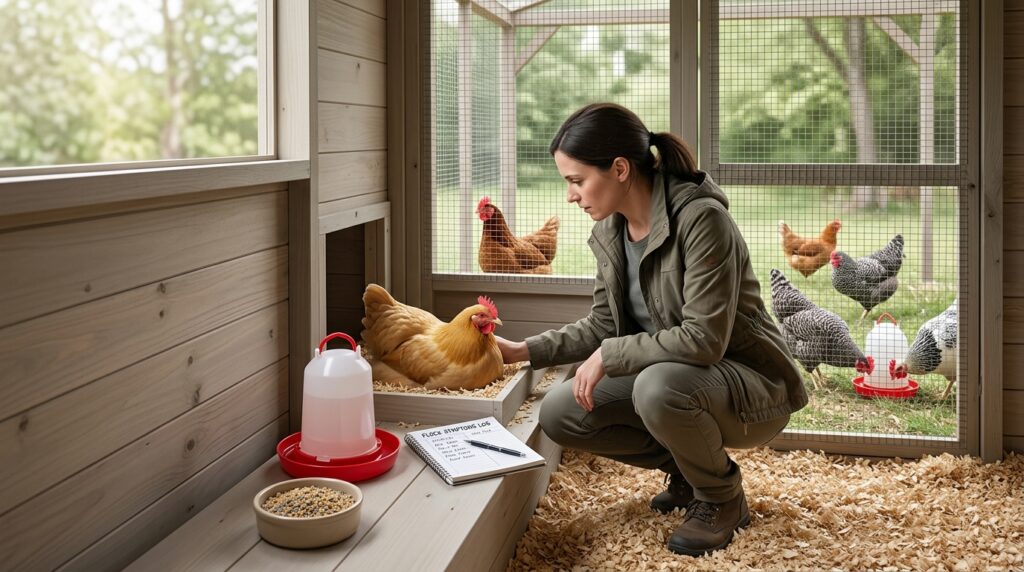
A healthy chicken is usually alert, curious, and interested in scratching the ground, eating, and interacting with the flock. So when your hen suddenly sits in one spot, keeps her eyes closed, or seems too tired to move, it’s natural to worry.
Lethargy is not a disease by itself. It’s a sign that something may be wrong. The cause can range from heat stress or dehydration to parasites, infection, injury, or reproductive problems.
The key is to notice what has changed, look for other symptoms, and recognize when your chicken needs veterinary attention. This guide explains common causes of lethargy, warning signs to watch for, and practical steps you can take to protect your bird and the rest of your flock.
🐓 What Does Lethargy Look Like in Chickens?
A lethargic chicken is noticeably less active than usual. Instead of moving around with the flock, she may appear weak, uninterested in food, or reluctant to stand.
Watch for these changes:
- Sitting or standing in one place for long periods
- Fluffed-up feathers and a hunched posture
- Closed or half-closed eyes during normal active hours
- Reduced interest in food or water
- Walking slowly or reluctance to move
- Separating herself from other chickens
- Reduced egg production alongside other changes
- Unusual droppings or changes in breathing
One quiet afternoon does not automatically mean your chicken is ill. Chickens rest throughout the day, and their activity changes with temperature, age, and laying status.
What matters most is whether the behavior is unusual for that individual bird, especially when it appears alongside other symptoms.
🌡️ 1. Heat Stress
Hot weather is a common concern for backyard flocks, particularly in warm, humid climates.
Chickens cannot cool themselves by sweating. They release heat through mechanisms that include panting, so high temperatures and humidity can make it difficult for them to maintain a safe body temperature.
Warning signs
- Panting or breathing with an open beak
- Holding the wings away from the body
- Seeking shade and avoiding movement
- Reduced appetite
- Weakness or loss of coordination in severe cases
What to do
Move the affected chicken to a cooler, shaded, well-ventilated area. Provide easy access to clean, cool drinking water and reduce handling and activity.
Avoid suddenly immersing a weak bird in ice-cold water or forcing water into its beak. Severe heat stress requires urgent veterinary attention, especially if the chicken collapses, cannot stand, or has difficulty breathing.
Prevention tip: Provide reliable shade, good airflow, clean water, and enough space for birds to spread out. During hot weather, check the flock more frequently.
💧 2. Dehydration
A chicken that cannot access enough water may become weak and less active. Dehydration can develop during hot weather, after illness, or when water containers are empty, dirty, frozen, or difficult to reach.
Warning signs
- Reduced activity
- Weakness or reluctance to walk
- Reduced food intake
- Dry-looking tissues or sunken-looking eyes
- Reduced droppings or other changes in droppings
These signs are not specific to dehydration and can occur with other illnesses.
What to do
Check that clean water is available and that the drinker is working properly. Make sure other birds are not preventing the affected chicken from drinking.
If the bird is alert and able to swallow normally, allow her access to water without forcing it. Do not pour water into the beak of a weak or unresponsive chicken because it may enter the airway.
A chicken that remains weak, refuses water, or shows signs of severe dehydration needs veterinary assessment.
🪱 3. Internal or External Parasites
Parasites can affect a chicken’s health by irritating the skin, causing blood loss, interfering with digestion, or contributing to poor body condition.
Possible signs
- Pale comb or wattles
- Weight loss despite access to feed
- Reduced egg production
- Diarrhea or other persistent changes in droppings
- Scratching, feather damage, or restlessness
- Visible lice or mites, or signs of mites in the coop
Internal parasites do not always cause obvious symptoms, and external parasites can be difficult to spot. A pale comb, for example, may also occur with anemia, illness, or other conditions.
What to do
Inspect the bird gently and check the coop, especially cracks and crevices where some poultry mites hide. If internal parasites are suspected, a veterinarian may recommend fecal testing or other assessment.
Avoid automatically giving dewormers or applying random pest-control products. The appropriate treatment depends on the parasite, the product, and whether the bird produces eggs or meat for consumption.
Prevention tip: Keep housing clean and dry, inspect birds regularly, and follow a suitable parasite-monitoring and control plan.
🦠 4. Infection or Other Illness
Lethargy can accompany bacterial, viral, fungal, and other diseases. Some conditions affect one chicken, while others spread through a flock.
Warning signs
Look for lethargy combined with:
- Persistent sneezing, coughing, or noisy breathing
- Discharge from the eyes or nostrils
- Swelling around the face
- Diarrhea or bloody droppings
- Reduced appetite or drinking
- Sudden drops in egg production
- Neurological signs, such as tremors, twisting of the neck, or loss of coordination
These symptoms overlap across many diseases, so they cannot reliably identify the cause on their own.
What to do
Separate the sick bird from the flock when appropriate, use dedicated equipment if possible, and wash your hands after handling her. Keep the isolation area clean, dry, and well ventilated.
Contact a veterinarian promptly if symptoms persist, worsen, or occur with reduced eating and drinking.
Important: If several chickens become ill within a short period, birds die suddenly, or you notice severe respiratory or neurological symptoms, contact a veterinarian or local animal health authority immediately. Do not wait to see whether the entire flock develops symptoms.
🥚 5. Egg-Binding or Other Reproductive Problems
A laying hen that becomes lethargic may have a reproductive problem. Egg binding, in which an egg cannot pass normally, can become life-threatening.
Warning signs
- Repeated straining
- Frequent trips to the nesting area without laying
- An unusual upright or penguin-like posture
- A swollen-looking abdomen
- Tail pumping or repeated abdominal contractions
- Weakness, reduced appetite, or difficulty standing
These signs are not proof of egg binding, and other reproductive conditions can look similar.
What to do
Seek prompt veterinary advice if egg binding is suspected. Do not squeeze the abdomen, insert objects into the vent, or attempt to pull out an egg yourself. These actions can cause serious injury.
A hen that is straining repeatedly, becoming weak, or unable to stand needs urgent attention.
🩹 6. Injury, Pain, or Foot Problems
Sometimes a chicken becomes quiet because movement hurts. Injuries can result from falls, predator encounters, pecking, entanglement, or problems affecting the feet and legs.
Warning signs
- Limping or refusing to bear weight
- Swelling in a leg or foot
- A visible wound or damaged feathering
- A painful reaction when approached or moved
- Hiding from the flock
- Reduced access to food and water because walking is difficult
Foot problems, including bumblefoot, can cause pain and reduced mobility.
What to do
Observe how the bird stands and walks. If she tolerates gentle handling, inspect her feet and legs for obvious injuries, swelling, or wounds.
Keep her in a safe, clean area and prevent other birds from pecking at an injury. Significant bleeding, suspected fractures, severe pain, or inability to stand requires prompt veterinary care.
Do not cut into swollen feet or attempt invasive treatment without veterinary guidance.
🥣 7. Nutritional Problems or Poor Feed Quality
A nutritionally unbalanced diet can affect a chicken’s body condition, egg production, and general health. Spoiled or contaminated feed can also make birds sick.
Warning signs
- Weight loss or poor growth
- Dull or damaged feathers
- Reduced laying performance
- Weakness
- Changes in appetite
- Several birds showing similar symptoms after eating the same feed
Lethargy alone cannot establish a nutritional deficiency. Similar signs occur with infections, parasites, and other illnesses.
What to do
Check that the flock receives an appropriate complete feed for its age and production stage. Treat scratch grains, kitchen scraps, and other extras as additions rather than substitutes for balanced feed.
Inspect stored feed for moisture, mold, unusual odors, pests, or contamination. Discard questionable feed safely and prevent birds from accessing it.
If several birds become ill after a feed change or possible exposure to contaminated food, contact a veterinarian promptly.
🐔 8. Stress and Environmental Changes
Chickens can become less active after transport, introduction to a new flock, predator disturbances, changes in housing, or repeated handling.
Stress may affect eating, drinking, and laying. However, do not assume lethargy is merely stress until more serious causes have been considered.
What to check
- Has a new chicken recently joined the flock?
- Was there a predator scare?
- Has the coop become crowded or poorly ventilated?
- Have feed, water, or daily routines changed?
- Is one bird being bullied or prevented from accessing resources?
What to do
Reduce unnecessary handling, provide a quiet and safe environment, and ensure the chicken can reach food and water without competition.
If she remains lethargic, stops eating, or develops additional symptoms, arrange veterinary assessment.
🚨 When Is a Lethargic Chicken an Emergency?
Do not wait for symptoms to resolve if your chicken shows any of these warning signs:
- Severe difficulty breathing or persistent gasping
- Collapse or inability to stand
- Seizures, marked tremors, or severe loss of coordination
- Heavy bleeding or a serious injury
- Severe weakness with inability to drink
- Suspected egg binding with deterioration
- Sudden death or multiple birds becoming ill within a short period
Seek urgent veterinary help. If a contagious or reportable poultry disease is possible, follow instructions from your veterinarian or local animal health authority before moving birds or equipment off the property.
📋 Your Quick Sick-Chicken Checklist
If you notice lethargy, record what you observe before contacting a veterinarian.
- Note when the change in behavior started.
- Check whether the chicken is eating and drinking.
- Observe breathing and posture.
- Look at the eyes, nostrils, comb, and wattles.
- Observe walking and balance.
- Check droppings for persistent or severe abnormalities.
- Inspect the feet and legs gently if safe.
- Check water availability, feed quality, temperature, and ventilation.
- Find out whether other birds are affected.
- Separate the bird when appropriate and use good hygiene.
- Record recent feed changes, medications, and other relevant history.
- Contact a veterinarian if symptoms are serious, persistent, or worsening.
Photos or short videos of unusual behavior can help a veterinarian, provided you can record them without delaying urgent care or stressing the bird.
Final Thoughts 💚
A lethargic chicken is sending a signal that deserves attention. Heat stress, dehydration, parasites, infection, injury, reproductive problems, and environmental stress are all possible explanations, but appearance alone rarely reveals the exact cause.
Start by checking breathing, activity, food and water intake, and any additional symptoms. Improve immediate environmental conditions where appropriate, protect the rest of the flock, and seek veterinary advice when warning signs appear.
The most important rule is simple: a chicken that is collapsing, struggling to breathe, unable to stand, or becoming rapidly weaker needs urgent help, not a wait-and-see approach.
By observing your flock regularly and responding early to unusual behavior, you can make better decisions and give your chickens a safer chance of recovery.