Do chickens have to lay before you let them out?
You do not have to wait for every hen to lay before giving the flock outdoor access. 🐔 The better question is, “If I open the door now, how likely is a hen to choose a hidden spot instead?” Established nest habits matter more than forcing every chicken to finish laying before the yard opens.
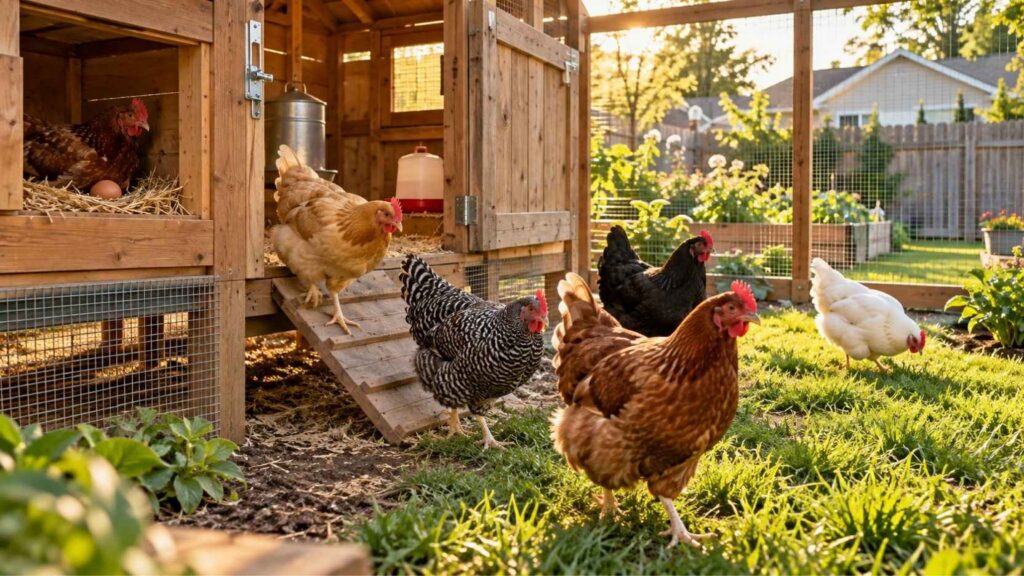
It also helps to separate “keeping hens contained” from “keeping hens shut inside the coop.” 🌿 If nest training or safety requires temporary containment, a secure run with access to nest boxes is often more practical than a small sleeping house. Predator pressure, traffic, neighborhood rules, and property security may still justify restricted roaming even when egg laying is not a concern.
Situation 1: Your hens reliably return to the nest boxes
If mature hens have spent weeks choosing the same nest boxes, there is less reason to hold the whole flock until the last egg appears. ✅ Chickens often develop strong routines, and a familiar, quiet, dry, dim nest can remain attractive even after the yard opens. Watch what your own flock does instead of assuming one late-laying hen must determine everyone’s schedule.
Test an earlier release on a day when you can check the boxes and likely hiding areas later. If the expected eggs still appear in the coop, that is good evidence that the hens understand where to lay. If eggs go missing, shorten the ranging window, search for hidden nests, and rebuild the habit before trying again.
Situation 2: Your pullets just started laying
New layers deserve more patience because their routine is still developing, and first eggs sometimes appear on the floor or in odd corners. 🥚 Keeping their daytime access centered around the coop and secure run for part of the morning can make the preferred nesting location easier to learn. Think of this as temporary training, not a permanent rule that a chicken must produce an egg before earning outdoor time.
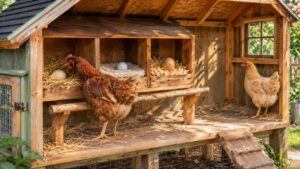
Prepare the nest boxes before laying begins, keep the bedding clean and dry, and place nests in a quieter, more secluded part of the coop. A common small-flock recommendation is approximately one nest for every four to five hens, although several hens may still favor the same box. If a pullet keeps choosing another location, improve the official nest and block the competing spot when practical instead of simply extending confinement.
Situation 3: Eggs disappear after free-ranging
When egg numbers drop after the flock gains yard access, consider a hidden nest before assuming the hens stopped laying. 🔎 Search sheltered places such as beneath shrubs, behind stored materials, inside open sheds, under decks, or in tall vegetation. A secret nest can accumulate multiple eggs because a hen may repeatedly return to the same secure-feeling location.
If you find one, remove access to that hiding place when possible and temporarily reduce unsupervised ranging while encouraging the coop nests again. Keep the nest boxes appealing, collect eggs regularly, and consider a clean ceramic or wooden training egg to make the preferred location look established. Once the hens resume using the boxes consistently, expand outdoor time gradually rather than jumping straight to unrestricted all-day roaming.
Situation 4: Your chickens lay through the afternoon
Waiting for the “last egg” can consume most of the day because not every hen follows the same clock, and egg formation generally takes a little more than 24 hours. ⏰ Many hens lay in the morning, but some eggs naturally arrive later as an individual hen’s laying time shifts. A flock with afternoon layers can make a strict “nobody leaves until every egg is laid” rule impractical.
Imagine five hens finish by late morning while one frequently lays around 4 p.m.; keeping all six contained means the entire schedule is designed around the latest bird. If that hen reliably returns to the coop and uses the nest box, waiting for her egg may add little practical value. Judge the system by where the eggs end up, not by whether every hen finishes before a certain hour.
How to establish strong nest-box habits
Good nest design reduces the temptation to create alternative nests, so make the official location more appealing than the yard’s hidden corners. 🪺 Keep boxes dry, comfortably bedded, relatively dim, and away from heavy traffic or roosting areas. University poultry guidance likewise recommends secluded, darker nesting areas with clean nesting material.
Collect eggs regularly so a favorite nest does not become overcrowded, especially when several hens insist on sharing it. Block attractive floor-level hiding places inside the coop when possible, and avoid repeatedly chasing hens out of nests because disturbance can make another location seem safer. The goal is to create a consistent place where laying feels routine, then let that learned habit do more of the work.
A practical weekday and weekend routine
For a workday, open the coop into a secure attached run in the morning so hens can eat, drink, move, dust bathe, and return to the nests as needed. 🏡 If your birds have proven nest-box habits and your property is suitable, you can offer supervised or fenced ranging later without waiting for every possible afternoon egg. An automatic door may simplify timing, but it does not replace predator protection.
Weekends are ideal for testing earlier release because you can observe where individual hens go and whether late layers return indoors to nest. Start with a controlled window, check the boxes, and extend outdoor time over several days if eggs continue appearing where expected. This replaces a rigid rule with evidence from your actual flock and property.
“Can I let them out yet?” decision flowchart
Start here: Are your hens consistently laying in the coop’s nest boxes? ➜ Yes: Try controlled outdoor access and confirm that eggs still appear there; No: Keep daytime access centered on the coop and secure run while strengthening the habit. Did eggs begin disappearing after ranging? ➜ Yes: Search for hidden nests, block favorite hiding areas, and temporarily shorten the ranging window; No: Continue the routine that is working. Do one or two hens lay late but still return to the boxes? ➜ Yes: You probably do not need to hold the entire flock just to wait for those eggs; Unsure: Observe a few more days before expanding access.
The most useful rule is not “keep chickens locked up until they lay,” but use the least restrictive routine that still gives you safe birds and reliably findable eggs. 🐓 New pullets or flocks with hidden-nest history may benefit from temporary morning containment, while established hens can often handle earlier access. If confinement stretches into most of the day, ask whether it is actually correcting a nesting problem or simply compensating for one hen’s late schedule.
When confinement is solving the wrong problem
If chickens spend nearly the whole day contained because one egg might appear at 4 or 5 p.m., the problem may no longer be nest training. A secure run, better nest placement, blocked hiding spots, or gradual ranging may solve the issue without making one late layer the flock’s timekeeper. 💡 Management should make daily care easier while still giving chickens appropriate space, safety, and opportunities for normal activity.
There are valid reasons to restrict outdoor access that have nothing to do with egg timing, including predators, temporary disease-control measures, unsafe weather, local rules, or an unsecured property. In those cases, containment is a safety decision and should be planned around the safest run or supervised setup available. For the ordinary hidden-egg problem, keep returning to one question: Do my hens know where to lay, and can I trust that habit when I open the door?