
Introduction 🐔
Keeping backyard chickens can be rewarding, but caring for a flock also means protecting it from diseases that spread between birds. One important concern is avian influenza, commonly called bird flu.
Wild birds, particularly some waterfowl and other wild bird species, can carry avian influenza viruses. Infected birds may spread the virus through saliva, respiratory secretions, and droppings. Domestic chickens can become infected through direct contact with infected birds or through contaminated water, feed, equipment, footwear, and clothing.
You cannot completely eliminate the risk of bird flu, especially if wild birds visit your property. However, you can make your backyard flock less exposed by improving everyday biosecurity.
The goal is not to panic or treat every wild bird as dangerous. It is to create simple habits that reduce contact between domestic chickens, wild birds, and potentially contaminated materials.
1. Understand How Bird Flu Can Reach Your Backyard
Avian influenza viruses can spread through several routes. Understanding these routes helps you focus on the areas you can control.
Common potential exposure routes include:
- Direct contact: Domestic chickens encounter infected wild birds.
- Droppings: Wild bird feces contaminate soil, water, feed, or surfaces.
- Shared water sources: Wild birds and backyard chickens use the same pond, puddle, or uncovered water container.
- Contaminated equipment: Feed scoops, crates, buckets, and tools move between poultry areas.
- Footwear and clothing: People may carry contaminated material from one area to another.
- New or returning birds: Newly purchased birds or birds returning from shows and other locations may introduce disease.
Wild birds do not all carry avian influenza, and not every exposure leads to infection. Still, preventing unnecessary contact is a sensible precaution.
2. Keep Wild Birds Away From Chicken Feed and Water
One of the most practical steps is protecting feed and drinking water.
Open feeders and water containers can attract wild birds, rodents, and other animals. If wild birds have access to these areas, they may contaminate them with droppings or other secretions.
Try these measures:
- Use covered feeders designed for domestic poultry.
- Place feeders inside a protected coop or covered run.
- Avoid scattering feed outdoors where wild birds can easily reach it.
- Use poultry drinkers that reduce access by wild birds.
- Clean spilled feed promptly.
- Replace dirty drinking water with fresh water.
- Prevent chickens from drinking from ponds, puddles, or untreated surface water that wild birds may use.
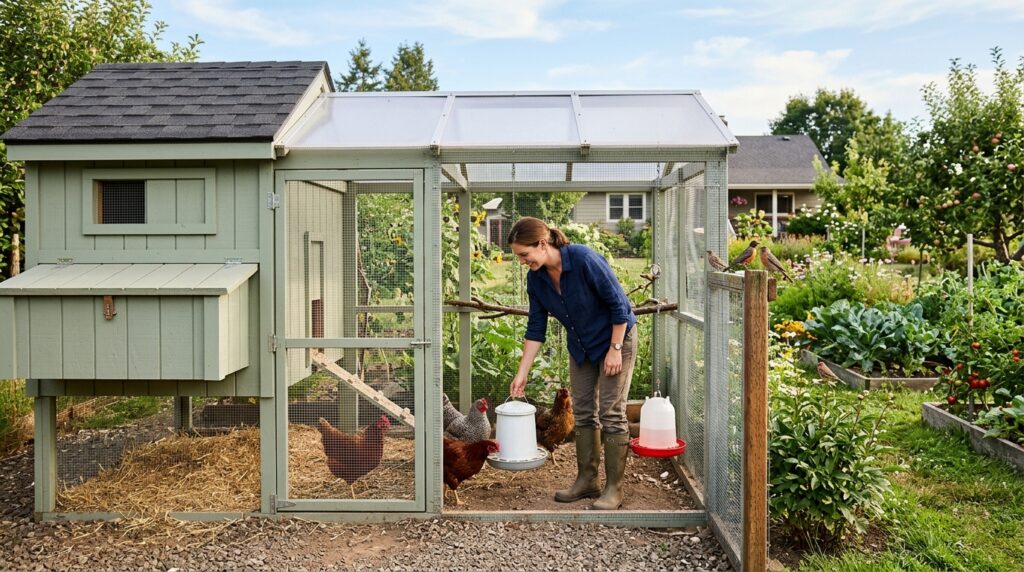
If your chickens have access to an outdoor run, consider adding a suitable roof or protective covering. This can reduce contact with wild birds and limit exposure to droppings from birds flying overhead.
3. Create a Protected Chicken Run
A secure run helps separate your domestic flock from wild birds.
Consider these improvements:
- Install strong fencing around the run.
- Use suitable mesh or netting overhead where practical.
- Repair holes, gaps, and damaged sections.
- Cover areas where wild birds regularly perch or roost.
- Keep the run free from accumulated wild bird droppings.
- Avoid placing chicken feed or water near areas frequented by wild birds.
Choose materials that are durable, safe for chickens, and appropriate for your local predators and weather.
Netting should be installed and maintained carefully. Loose or damaged netting can trap birds or other wildlife. Check it regularly and repair problems promptly.
A fully enclosed run may not be practical for every backyard. Even partial improvements, such as covering feeders and protecting the main feeding area, can reduce exposure.
4. Practice Good Biosecurity When Entering the Coop
You can unintentionally carry contaminated material into the chicken area.
This is why everyday cleaning habits matter.
Set up a simple coop-entry routine:
- Keep a pair of dedicated boots or shoes for the chicken area.
- Clean visible dirt and droppings from footwear.
- Wash your hands before and after handling poultry.
- Avoid wearing poultry-area footwear in other animal areas.
- Clean and disinfect equipment when appropriate.
- Keep feed containers, water containers, and cleaning tools in a designated area.
If you visit another poultry farm, bird market, poultry show, or location where birds are kept, take extra precautions before returning to your flock.
Do not share crates, feeders, drinkers, or other equipment between poultry owners unless they have been properly cleaned and disinfected.
Important: Disinfectants work best when surfaces are first cleaned to remove dirt and organic material. Follow the product label for dilution, contact time, ventilation, and safety precautions. Never mix cleaning chemicals.
5. Be Careful When Introducing New Chickens
Adding new birds can introduce diseases into an otherwise healthy flock.
Before bringing new chickens home:
- Buy from a reputable source with a clear health history.
- Ask about recent illness or unexplained deaths in the source flock.
- Keep new birds separate from your established flock.
- Use separate feeders, drinkers, and equipment.
- Wash your hands and change footwear after caring for the new birds.
- Monitor their health before considering integration.
A quarantine period of around 30 days is a common poultry-management practice, but it does not guarantee that a bird is free from avian influenza or other infections. Follow local veterinary guidance, particularly if bird flu has been reported in your area.
Do not assume that a bird is safe to introduce simply because it looks healthy.
6. Recognize Possible Signs of Avian Influenza
Avian influenza can cause different signs depending on the virus strain and the affected birds. Some infections may cause severe illness and sudden death, while others may produce less obvious symptoms.
Possible warning signs include:
- Sudden or unexplained deaths
- Severe weakness or unusual lethargy
- Reduced appetite or drinking
- A sudden drop in egg production
- Swollen head, eyelids, or comb
- Purple or bluish discoloration of the comb or wattles
- Coughing, sneezing, or difficulty breathing
- Diarrhea
- Unusual lack of coordination, tremors, or other nervous-system signs
These symptoms are not unique to bird flu. Other poultry diseases, toxins, and environmental problems can cause similar signs.
Do not attempt to diagnose avian influenza based on appearance alone. Laboratory testing and veterinary investigation may be necessary.
7. Know What to Do if You Suspect Bird Flu
If several chickens become sick or die suddenly, treat the situation as urgent. Do not wait for more birds to become ill before seeking help.
Take these steps:
- Stop moving birds. Do not sell, give away, transport, or introduce chickens from the affected flock.
- Limit access to the coop. Keep visitors, pets, and unnecessary people away from the poultry area.
- Contact a veterinarian or animal-health authority. Report unusual illness or sudden deaths and ask about testing and the next steps.
- Avoid handling sick or dead birds unnecessarily. Do not open carcasses or attempt to collect samples unless instructed by trained personnel.
- Keep equipment and footwear separate. Do not carry potentially contaminated items to other poultry areas.
- Follow official instructions. Authorities may recommend testing, movement restrictions, cleaning, disinfection, or other disease-control measures.
If you are in the Philippines, contact your local veterinarian, municipal or city veterinary office, or appropriate animal-health authority for reporting and guidance.
Do not independently dispose of suspected infected carcasses by throwing them into waterways, open areas, or ordinary household waste. Follow local instructions for safe disposal.
8. Handle Wild Birds and Dead Birds Safely
Finding a dead wild bird in your yard can be concerning, particularly if chickens are nearby.
However, avoid touching it with bare hands. You do not know what caused its death, and some diseases can spread through contact with infected birds or contaminated material.
Instead:
- Keep children and pets away.
- Prevent chickens from approaching the carcass.
- Do not pick it up, move it, or dispose of it yourself unless authorities instruct you to do so.
- Contact your local wildlife or animal-health authority for advice, especially if several wild birds are found dead in the same area.
- Follow instructions for reporting and safe handling.
If you accidentally touch a dead or sick bird, wash your hands thoroughly with soap and water. Remove potentially contaminated clothing and footwear, and seek medical advice if you develop symptoms after a suspected exposure.
9. Protect Yourself When Caring for Poultry
Avian influenza viruses primarily infect birds, but some strains can infect people. Human infections are uncommon, but exposure to infected birds or contaminated environments can create a risk.
When handling sick or dead poultry, avoid direct contact whenever possible. If contact is unavoidable, follow guidance from animal-health or public-health authorities about appropriate protective equipment.
Basic precautions include:
- Wear gloves when handling poultry waste or cleaning contaminated areas.
- Avoid touching your eyes, nose, and mouth while working.
- Wash your hands thoroughly after poultry care.
- Clean and disinfect footwear and equipment appropriately.
- Avoid handling sick or dead birds without guidance.
- Seek medical advice promptly if you develop fever, cough, breathing difficulties, or eye irritation after a possible exposure to infected birds.
Tell the healthcare professional about your contact with poultry or wild birds. Do not rely on home treatment if you suspect a significant exposure.
10. Keep Your Chicken Area Clean and Manageable
Good biosecurity does not have to mean an expensive backyard renovation. Consistent routines can make a meaningful difference.
Try a simple weekly checklist:
- Check the run for holes, damaged netting, and gaps.
- Remove spilled feed that may attract wild birds.
- Clean feeders and drinkers.
- Replace contaminated or dirty water.
- Remove accumulated droppings and waste safely.
- Check for signs of wild bird access.
- Inspect chickens for unusual behavior or illness.
- Make sure cleaning equipment is stored separately.
Daily observation is equally important. Spend a few minutes watching your chickens eat, drink, move, and interact. Changes in normal behavior may be an early indication that something is wrong.
Common Bird Flu Prevention Mistakes to Avoid
Assuming healthy-looking birds cannot be infected: Some infected birds may show few obvious signs. Do not rely on appearance alone.
Leaving feed outside overnight: Exposed feed can attract wild birds and other animals.
Using untreated surface water: Ponds and puddles may be visited by wild birds. Provide clean drinking water from a protected source.
Sharing equipment between flocks: Crates, footwear, and tools can transfer contaminated material.
Handling dead birds without protection: Avoid unnecessary contact and follow local reporting instructions.
Ignoring sudden deaths: Multiple unexplained deaths require prompt veterinary or animal-health attention, even when bird flu is not confirmed.
Final Thoughts 🐓
Reducing bird flu risk around backyard chickens starts with limiting contact between domestic poultry and wild birds. Covered feeders, protected drinking water, secure runs, clean equipment, careful introduction of new birds, and consistent hygiene all contribute to better flock biosecurity.
You cannot control every wild bird that visits your property, and no backyard setup can guarantee complete protection. What you can control is how accessible your feed and water are, how clean your poultry area stays, and how quickly you respond to unusual illness.
Most importantly, sudden deaths or several sick chickens should never be treated as an ordinary backyard problem. Stop bird movements, avoid handling carcasses, and contact a veterinarian or animal-health authority promptly.
A few sensible daily habits can help protect your flock, your household, and other poultry keepers in your community.




