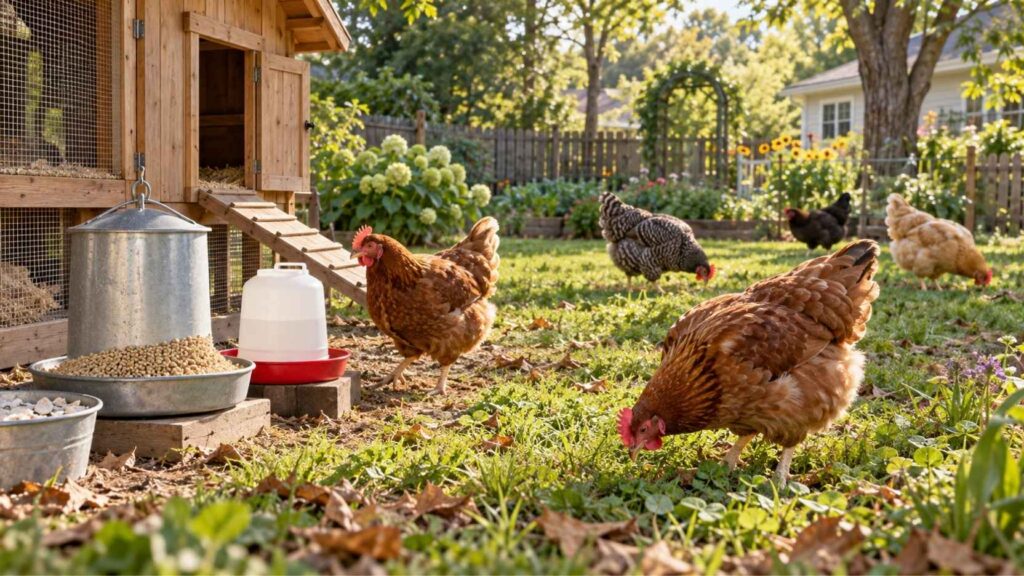
Watching chickens roam across a yard can make their diet look wonderfully self-sufficient: they scratch through grass, chase insects, sample leaves, uncover seeds, and occasionally discover things you did not even realize were edible. 🐔 That natural behavior is valuable, but it can also create one of the most common misconceptions about what to feed free range chickens—that access to enough land automatically provides a nutritionally complete diet. In reality, poultry guidance recommends keeping an age- and production-appropriate complete formulated feed available even when chickens forage outdoors, because free-ranging alone rarely supplies nutrients in consistently balanced amounts.
The simplest feeding principle is therefore: foraging is enrichment and supplemental nutrition, not a reliable replacement for a balanced feeding program. What chickens find outside can change from one week to another, while formulated poultry feed is designed to deliver predictable proportions of protein, energy, vitamins, and minerals for the type of bird being fed. 🌱 Free range may reduce how much time chickens spend standing around the feeder, but it should not convince a keeper that the feeder, waterer, calcium plan, or basic monitoring system is no longer necessary.
What Free-Range Chickens Actually Find
A productive ranging area can offer an impressive buffet that may include insects, worms and other invertebrates, seeds, tender grasses, leafy vegetation, fallen fruit, and miscellaneous plant material. Chickens also scratch through soil and litter, uncovering tiny stones and other coarse particles that may function as natural grit when they consume fibrous or whole foods. 🌿 The exact menu, however, is impossible to standardize because the birds are eating whatever happens to be available rather than a ration formulated to meet defined nutrient requirements.
That variety is one reason free ranging can be excellent behavioral enrichment, encouraging scratching, pecking, exploration, and other normal chicken activities. It does not mean every mouthful improves the nutritional balance of the day’s diet, because some discoveries may contain plenty of energy while supplying relatively little of another nutrient the bird requires. A chicken that spends the afternoon filling up on treats, seeds, fruit, or other favored foods may consequently consume less complete ration, which is why supplemental foods should never crowd the balanced feed out of the feeding system.
Why Two Backyards Are Not Nutritionally Equal
Calling two flocks “free range” says very little about what those chickens actually eat. A flock exploring a diverse half-acre with grasses, weeds, leaf litter, shrubs, and abundant insects has a completely different opportunity from ten hens repeatedly scratching the same small suburban lawn. 🌾 Yard size, season, rainfall, temperature, vegetation, soil conditions, flock size, and time spent on the same ground can all affect how much useful material remains available.
Seasonal change alone can transform the value of a ranging area, with insects and green plant growth abundant during some periods and scarce during others. Flock pressure matters too: several chickens can gradually strip favored vegetation, consume easily found insects, and turn previously productive ground into a heavily scratched run. For that reason, you cannot judge the adequacy of a chicken’s diet merely by looking at how much land surrounds the coop; available forage is not the same thing as a balanced ration.
What Foraging Should Not Automatically Replace
The first thing free ranging should not replace is complete feed appropriate to the chicken’s age and production stage. Commercial complete feeds are formulated to supply energy, protein, vitamins, and minerals in appropriate proportions, while layer diets are formulated differently from starter or grower diets because actively laying hens have different nutritional requirements. 🥚 Layer feed should not simply be given to chicks or immature birds because its higher calcium level is intended for birds in egg production.
Foraging also cannot replace reliable fresh water, because chickens need continual access regardless of how lush their yard appears. Calcium deserves similar planning: laying hens should receive an appropriately formulated layer ration, and many backyard management systems also provide a calcium source such as oyster shell separately so laying hens can consume additional calcium as needed. 💧 Finally, continue monitoring egg production and shell quality, because changes can reveal that something in the overall management system deserves attention even though nutrition is only one possible cause.
What About Grit?
Grit and calcium are not interchangeable, even though both may look like containers of crushed rock beside the feeder. Insoluble grit consists of hard particles retained in the muscular gizzard, where they help chickens mechanically grind coarse foods such as vegetation, seeds, and whole grains. 🪨 Calcium sources such as oyster shell have a different job: they provide calcium that laying hens can use as part of their mineral supply, including the large calcium demand associated with eggshell formation.
Free-ranging birds sometimes find suitable stones naturally, especially where they have access to varied soil and gravel, but you should not assume every property supplies appropriate material in useful quantities. Chickens consuming only properly manufactured crumble or pellets have less grinding work to do than birds consuming substantial amounts of coarse forage or whole foods, yet free-ranging diets often make access to suitable grit sensible. The memory trick is simple: grit helps grind food; calcium contributes to the laying hen’s mineral requirements—one cannot substitute for the other.
The “Free Range Doesn’t Mean Free Nutrition” Checklist
A good feeding routine does not have to be complicated, and beginners usually benefit more from consistency than from constantly modifying the ration. 🌅 In the morning, make sure an appropriate complete feed is available and refresh the flock’s clean water; during the day, allow safe foraging where practical without treating the yard as the birds’ only food source. In the evening, check how much formulated feed is being consumed, collect eggs, glance at shell quality, and make sure the flock still looks active and well conditioned.
Daily Feeding Checklist
- Morning: Supply complete age-appropriate feed and fresh water.
- Daytime: Allow safe forage as enrichment and supplemental food.
- Laying hens: Maintain an appropriate calcium strategy, such as correctly formulated layer feed with separate oyster shell where used.
- Evening: Check feed use, collect eggs, and inspect shells.
- Regularly: Watch body condition, production trends, and changes in forage availability.
The objective is not to calculate every insect a hen eats or subtract it from the amount of feed in the feeder. Instead, keep the nutritionally predictable portion of the diet dependable and let whatever the birds discover outdoors remain the variable bonus. That approach is especially useful when weather suddenly changes, insect populations decline, vegetation disappears, or chickens exhaust an area that once provided abundant forage.
Three Management Levels For Free-Range Flocks
A low-effort system can work well for many backyard keepers: keep suitable complete feed available, provide clean water, maintain an appropriate calcium source for laying hens, and let the flock forage during permitted hours. 🐓 This removes the need to estimate the nutritional value of every patch of lawn while still giving chickens the behavioral advantages of outdoor exploration. Complete poultry feeds are specifically intended to supply a balanced nutritional foundation, which is why excessive grain, scraps, and supplements can unintentionally dilute that balance.
A medium-control system adds occasional observation of feed consumption, shell quality, seasonal forage changes, and general flock condition, while a high-control system records feed used, eggs collected per day, recurring shell abnormalities, weather, seasonal changes, and forage availability. 📋 High control can be useful when you want to understand patterns, but more data is not automatically better husbandry if the basic feed-and-water system is unreliable. Choose the level you can maintain consistently rather than designing an elaborate tracking system that disappears after two weeks.
| Management Level | Feeding Approach | Monitoring |
|---|---|---|
| Low-Effort | Complete feed + water + appropriate calcium access | Basic daily flock check |
| Medium | Same nutritional foundation + forage | Occasionally track feed use, eggs, shells, and seasonal changes |
| High-Control | Managed complete ration + controlled forage access | Track feed intake, eggs, shell issues, condition, weather, and forage availability |
What To Observe First
Start with the birds rather than obsessing over exact quantities of grass or insects eaten. Ask whether hens are maintaining normal body condition, whether eggshells generally look normal, whether production makes sense for their breed, age, season, daylight, and life stage, and whether birds continue consuming their formulated ration. 👀 Egg production naturally changes for reasons unrelated to forage—including age, molt, daylight length, weather, and genetics—so a modest seasonal decline does not automatically prove that the feeding plan has failed.
One particularly useful clue is a major change in consumption of the regular ration. If birds are filling themselves with scratch grains, kitchen scraps, or abundant supplemental foods and barely touching their complete feed, the supposedly “extra” foods may no longer be supplemental at all. Utah State and Mississippi State both caution that excessive additions to complete poultry feeds can displace the balanced ration and disturb its intended nutrient proportions.
When To Worry
Pay closer attention when chickens increasingly reject their normal ration, lose body condition, show a persistent decline in eggs, develop recurring poor shell quality, or simply appear unwell. 🚩 Those observations do not identify a nutritional deficiency by themselves, because illness, parasites, heat, molt, age, stress, daylight, and other management factors may produce similar changes. If abnormalities persist or birds appear sick, involve a poultry veterinarian or qualified poultry professional rather than attempting to diagnose the problem from eggshells or feed consumption alone.
Shell quality deserves particular attention because calcium is a major component of eggshells, but poor shells are not permission to continually dump more calcium into every bird’s diet. A complete layer ration is designed with laying requirements in mind, while non-laying birds require diets appropriate to their own age and production status. 🥚 Treat the entire feeding system—complete ration, forage, water, calcium, grit, and observation—as connected pieces rather than searching for one ingredient that supposedly fixes everything.
Free-Range Feeding System Diagram
COMPLETE AGE-APPROPRIATE FEED
↓
Nutritional foundation: protein + energy + vitamins + minerals
↓
FRESH WATER AVAILABLE CONTINUOUSLY
↓
SAFE FREE-RANGE FORAGE → insects + seeds + vegetation + other natural foods
↓
LAYING HENS: APPROPRIATE CALCIUM ACCESS → layer ration + separate calcium source where used
↓
GRIT WHEN NEEDED → helps grind coarse foods; does not replace calcium
↓
DAILY OBSERVATION → feed use + body condition + eggs + shell quality + seasonal forage changes
The important word in that diagram is foundation: free range sits on top of a reliable feeding program rather than underneath it. Chickens are remarkably capable foragers, but your backyard changes too much across seasons and properties to guarantee the same nutrient supply every day. 🌿 Give the flock a balanced ration first, let nature add variety second, and you can enjoy free ranging without asking the lawn to perform the job of a poultry nutritionist.