When you bring home your first laying hens, counting every egg can feel almost automatic because each one is exciting and you want to know exactly how the flock is doing. 🥚 Before long, however, tracking chicken eggs can turn into another daily chore: collect eggs, count eggs, open the spreadsheet, remember which hen laid what, and wonder whether yesterday’s number was ever entered. The best recordkeeping system is therefore not necessarily the most detailed one—it is the one simple enough that you will actually keep using.
Learning how to track chicken eggs can still be extremely useful because records help establish what “normal” looks like for your particular flock. Instead of panicking because today’s basket contains fewer eggs than yesterday’s, you can look at a week or month of information and see whether production has truly changed. 📊 Backyard keepers do not need perfect data to gain that benefit, and for many small flocks a one-minute daily note or simple weekly total is enough.
Why Do Backyard Chicken Owners Track Their Eggs?
Egg records are most useful as a baseline, not as a competition to maximize production. A flock’s laying pattern naturally changes with factors such as age, season, daylight, molt, broodiness, weather, stress, and individual differences between hens. 🐔 Knowing your flock’s ordinary range makes unusual changes easier to recognize without assuming that every low-production day means something is wrong.
Records can also answer practical questions that memory handles poorly, such as whether production has slowly declined over several weeks or whether one particularly productive week merely felt better than usual. They can help you compare seasonal patterns, notice when younger pullets begin laying, and understand how flock changes affect your egg supply. The goal is useful observation, not creating administrative work for a hobby that is supposed to be enjoyable.
Do You Really Need To Count Every Egg?
No backyard chicken rule says you must write down every egg your hens produce. 🙂 Some owners are perfectly satisfied with casual observation: they collect eggs, know approximately what the flock usually produces, and investigate only when something noticeably changes. This approach works especially well once you have kept the same flock long enough to recognize its normal rhythms.
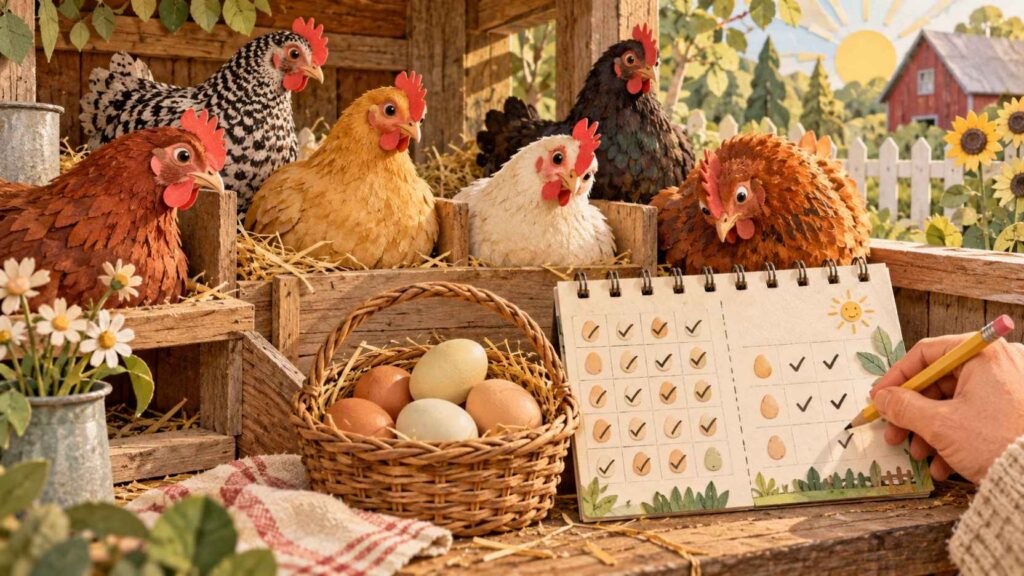
Other owners prefer weekly egg tracking, which provides more information without requiring a daily spreadsheet habit. You might keep a running tally on a small notepad near the nesting boxes, add marks to a calendar, or simply enter the week’s total on your phone every Sunday. Detailed daily records are most valuable when you genuinely enjoy the data, are evaluating a change in your flock, or want a clearer picture of production over time.
The One-Minute Egg Tracking Routine For Busy Owners
The easiest system attaches recordkeeping to something you already do: collecting the eggs. 🧺 When you bring the day’s eggs inside, record the total before putting them away, using the same notebook, calendar, note app, or printed log each time. The entire process should take only a few seconds because any system that requires several steps becomes easier to postpone.
Do not automatically expand the routine by recording temperature, feed amounts, individual hens, laying times, egg weights, and twelve other details unless those numbers answer a question you actually care about. Start with a date and egg count, then add a short note only when something significant happens. ✏️ A sustainable record with a few useful data points usually teaches you more than an elaborate spreadsheet abandoned after two weeks.
What Should You Write Down Besides The Number Of Eggs?
Your notes become more useful when they capture unusual events rather than ordinary details. For example, you might write “first pullet egg,” “molt starting,” “very hot week,” “broody hen,” “new hens introduced,” or “unusual shell” beside the day’s total. 📝 These small notes provide context later when a production change appears in the numbers.
You can also record repeated shell changes, unusual laying locations, or noticeable changes in flock behavior, but avoid trying to diagnose health problems from an egg log alone. Soft or abnormal shells and reduced production can have multiple possible explanations, so persistent changes—especially when accompanied by illness, lethargy, poor appetite, breathing difficulty, or other concerning signs—deserve closer investigation and appropriate veterinary guidance. Think of the log as an early-warning observation tool, not a diagnostic test.
What If You Forget To Record Eggs For Several Days?
Missing a few entries does not ruin your entire record. 🚫 If you genuinely do not remember whether you collected five eggs or seven on Tuesday, mark the day as blank or “not recorded” rather than guessing a number simply because an empty box bothers you. Invented information creates false precision and can make later comparisons less reliable.
You can still record a combined total when you know it accurately, such as “18 eggs collected over Friday through Sunday,” but make clear that it represents several days rather than pretending you know each day’s number. This is another reason weekly tracking works well for busy chicken owners because the system tolerates occasional missed daily entries. Good-enough honest data beats perfect-looking fictional data every time.
When Is It Okay To Stop Tracking Every Day?
Many keepers discover that daily records become less necessary after they understand their flock. 🐓 Once you know that production normally rises and falls in certain seasons and recognize how molt, broodiness, or flock changes typically look, you may decide that a weekly total provides all the information you need. Moving from daily tracking to weekly tracking is not failing at recordkeeping; it is adjusting the system to match your experience.
You can also temporarily return to detailed tracking whenever you have a reason. For example, daily counts may become useful after adding new layers, changing the flock setup, noticing an unexplained production shift, or simply becoming curious about a seasonal pattern. 🔄 Recordkeeping should be scalable, allowing you to track more when the information matters and less when everything is routine.
Daily Tracking Vs Weekly Tracking
Daily tracking gives you a more detailed production curve, which can be satisfying if you enjoy numbers or are watching a specific flock change. Weekly tracking smooths out normal day-to-day fluctuations and reduces the chance that one unusually low day will seem more important than it really is. 📅 Neither method is automatically better because the right choice depends on what information you want and how much effort you are willing to maintain.
A practical compromise is to use daily counts during your first laying season and gradually move toward weekly totals once you understand the flock’s baseline. You will still know approximately how many eggs your hens produce without feeling obligated to document every trip to the nest box. The best system should make chicken keeping clearer and easier, not make you feel guilty whenever you miss an entry.
One-Minute Egg Log: Daily Option Template
Use this version when you want to watch production more closely without recording unnecessary information.
| Day | Eggs Collected | Anything Unusual? |
|---|---|---|
| Monday | ______ | __________________________ |
| Tuesday | ______ | __________________________ |
| Wednesday | ______ | __________________________ |
| Thursday | ______ | __________________________ |
| Friday | ______ | __________________________ |
| Saturday | ______ | __________________________ |
| Sunday | ______ | __________________________ |
| Weekly Total | ______ |
Your “anything unusual” column can stay completely blank on normal days. ✅ Only record events that could be useful later, such as the beginning of a molt, unusually hot weather, a broody hen, a new layer, or a strange egg. Keeping most boxes empty is actually evidence that the system is working efficiently rather than demanding unnecessary observations.
One-Minute Egg Log: Weekly Option Template
If daily tracking already sounds annoying, start here instead. Keep a simple running count during the week—or count from whatever reliable collection method you use—and record only the weekly total plus important events. 🥚 This gives you enough information to compare longer-term production without turning every egg collection into paperwork.
| Week | Total Eggs | Major Flock Notes |
|---|---|---|
| Week 1 | ______ | __________________________ |
| Week 2 | ______ | __________________________ |
| Week 3 | ______ | __________________________ |
| Week 4 | ______ | __________________________ |
| Week 5 | ______ | __________________________ |
After several weeks, look for patterns rather than individual numbers. A single unusually productive or quiet day matters much less than a consistent change across several weeks, especially when you can connect that change with something recorded in your notes. 📈 That broader view is one of the biggest advantages of keeping even a very basic egg log.
Track Enough To Learn, Not Enough To Hate It
Chicken recordkeeping should serve the keeper rather than becoming another standard you feel obligated to meet. If writing down every egg makes the hobby less enjoyable, switch to weekly totals; if weekly totals still feel unnecessary because you already understand the flock well, rely more heavily on observation and temporarily restart tracking when you have a specific question. 🌿 There is no prize for maintaining the most complicated backyard chicken spreadsheet.
The simple rule is track what you will actually use. Record enough information to establish normal production, recognize meaningful changes, and remember important flock events, while allowing ordinary days to remain ordinary. For most backyard owners learning how to track chicken eggs, a ten-second daily count or one-minute weekly entry provides far more value than a perfect system they eventually stop using.