Introduction
If you keep backyard chickens long enough, you will eventually hear about Corid.
Corid is a commonly known brand of amprolium, a medication used in poultry for the treatment of coccidiosis, a disease caused by microscopic parasites called Eimeria.
For beginners, the confusing part is that diarrhea, lethargy, poor appetite, weight loss, and ruffled feathers can have many different causes. Not every sick chicken has coccidiosis, and amprolium is not a general-purpose treatment for every poultry illness.
That is why it is important to understand what amprolium does, when coccidiosis is a reasonable concern, how treatment differs from prevention, and when a sick chicken needs veterinary attention.
Important: Product concentrations, approved uses, withdrawal periods, and dosing directions can vary by country and formulation. Always follow the label for the specific product you have and consult a veterinarian when possible.
🦠 First: What Is Coccidiosis?
Coccidiosis is caused by protozoan parasites in the genus Eimeria.
Chickens become infected when they ingest infective oocysts, which can accumulate in contaminated litter, soil, feeders, drinkers, or other areas where chickens live.
The parasites multiply inside the intestinal tract. Depending on the Eimeria species involved and the severity of infection, intestinal damage can range from mild to life-threatening.
Young chickens are particularly vulnerable because they have not yet developed strong immunity to the coccidia species present in their environment.
Signs can include:
- Reduced appetite
- Lethargy or weakness
- Ruffled feathers
- Weight loss or poor growth
- Reduced activity
- Diarrhea
- Dehydration
- Pale appearance
- Blood in the droppings in some cases
- Reduced production in older birds
However, these signs are not specific to coccidiosis.
A chicken with diarrhea, for example, could have a parasitic infection, bacterial disease, dietary problems, environmental stress, or another health problem.
💊 What Is Corid?
Corid is a brand associated with amprolium.
Amprolium works primarily by interfering with the parasite’s ability to use thiamine, or vitamin B1, which is important for the parasite’s metabolism.
The goal is to reduce the growth and multiplication of susceptible coccidia while the chicken’s immune system helps control the infection.
This is different from an antibiotic.
Amprolium is not an antibiotic, and it should not be treated as a universal medication for sick chickens.
That distinction is important for beginners who may be tempted to reach for one familiar product whenever a chicken becomes unwell.
🐥 When Should You Suspect Coccidiosis?
Coccidiosis becomes more concerning when several factors occur together.
For example:
A young flock suddenly becomes weak
Coccidiosis commonly affects young birds, particularly when they are exposed to contaminated environments.
Several chickens develop similar digestive symptoms
If multiple birds sharing the same environment become sick around the same time, an infectious or environmental cause deserves investigation.
There is blood in the droppings
Blood can occur with certain forms of intestinal coccidiosis, although it is not proof of coccidiosis.
Other conditions can also produce abnormal or bloody droppings.
Birds are losing weight
Poor weight gain or weight loss can occur with significant intestinal disease.
Litter is wet or heavily contaminated
Moisture and fecal contamination can contribute to conditions that allow coccidia oocysts to accumulate and sporulate.
This is one reason litter management is part of coccidiosis control, rather than simply treating birds after they become sick.
🔬 Why You Shouldn’t Assume Every Case Is Coccidiosis
One of the biggest beginner mistakes is thinking:
“The chicken has diarrhea, so it needs Corid.”
That’s not a reliable diagnostic process.
Chicken droppings naturally vary. A chicken can also experience loose droppings from diet, stress, heat, or other noninfectious causes.
More serious diseases can produce similar symptoms.
If a chicken is severely weak, unable to stand, dehydrated, struggling to breathe, repeatedly producing bloody droppings, or rapidly deteriorating, do not rely on amprolium alone.
A veterinarian can help determine whether coccidiosis is actually involved. Fecal examination can also be useful when evaluating suspected intestinal parasites.
🧪 Treatment Is Different From Prevention
This is one of the most important things for new chicken keepers to understand.
Treating an active disease problem is not the same as routinely giving medication to healthy chickens.
Some poultry management systems use anticoccidial medications in feed or water as part of a planned prevention or control program. Other systems rely more heavily on vaccination, management, litter practices, and gradual exposure that allows birds to develop immunity.
The appropriate approach depends on the birds, age, environment, local disease pressure, management system, and veterinary guidance.
Don’t automatically turn an emergency treatment product into a routine daily supplement.
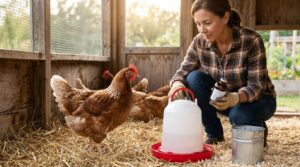
🚰 Why Water Intake Matters During Treatment
Many amprolium products intended for poultry are administered through drinking water.
That creates an important practical issue:
A sick chicken may not drink normally.
A severely ill bird that is drinking very little may therefore receive less medication than expected.
This is one reason seriously ill chickens should not simply be left in the flock with medicated water and assumed to be receiving adequate treatment.
Monitor:
- Whether the chicken is actually drinking
- Whether the drinker is clean
- Whether dominant birds are preventing weaker birds from accessing water
- Whether the water supply is being replaced according to product directions
- Whether the bird’s condition is improving or worsening
For severe cases, veterinary assessment is especially important.
⚠️ Don’t Guess the Dose
Amprolium products can come in different concentrations and formulations.
That means copying a dose from a random internet post can be risky.
Before administering a product, check:
- The exact product name
- The concentration of amprolium
- The species listed on the label
- The approved method of administration
- The label’s treatment instructions
- Any withdrawal information
- Warnings and contraindications
If you are unsure, ask a veterinarian or qualified poultry professional.
A teaspoon of one formulation is not automatically equivalent to a teaspoon of another.
🥚 What About Eggs?
This is especially important for backyard chicken keepers who eat or sell their eggs.
Do not assume that an amprolium product is automatically safe for consumption at all times simply because it is commonly used in poultry.
Withdrawal requirements depend on the specific product, formulation, animal, country, and regulatory approval.
Always check the label applicable to your location.
If the product does not clearly provide the information you need, ask a veterinarian or your local veterinary authority before consuming or selling products from treated birds.
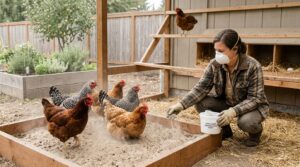
🧼 Management Still Matters
Medication doesn’t replace good flock management.
Coccidia are transmitted through contaminated fecal material, so reducing excessive contamination can help reduce disease pressure.
Keep litter as dry as practical
Wet litter can create a more favorable environment for infectious oocysts.
Clean drinkers regularly
Prevent chickens from standing in or contaminating their drinking water.
Reduce overcrowding
Crowding increases fecal contamination and makes it harder for birds to avoid contaminated areas.
Keep feeders clean
Feed should not routinely become contaminated with droppings.
Watch young birds carefully
Young chickens deserve particularly close observation because severe coccidiosis can develop quickly.
Avoid unnecessary medication
Routine medication without a clear reason can make it harder to recognize what is actually happening in the flock.
🐔 What Should a Beginner Do If a Chicken Looks Sick?
Instead of immediately reaching for Corid, use a simple triage process.
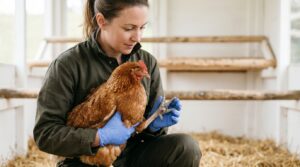
Step 1: Separate the obviously sick bird
A quiet isolation area can make monitoring easier and can reduce the risk of some infectious diseases spreading through the flock.
Step 2: Check basic needs
Make sure the bird has access to:
- Clean drinking water
- Appropriate feed
- Comfortable temperature
- Dry bedding
- A quiet environment
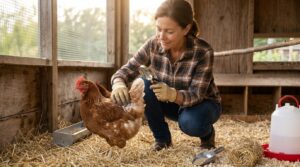
Step 3: Observe the droppings
Look at the overall pattern rather than assuming that one unusual dropping confirms a diagnosis.
Step 4: Check hydration and behavior
Is the bird drinking?
Is it standing normally?
Is it alert?
Is it eating?
Is it producing droppings?
Step 5: Consider the flock
Are other chickens showing similar symptoms?
A single sick bird and an entire group becoming sick require different levels of concern.
Step 6: Contact a veterinarian when the situation is serious
Seek professional help promptly when a bird is severely weak, deteriorating quickly, unable to eat or drink, has significant bleeding, has difficulty breathing, or when several birds become seriously ill.
🚨 When Corid Is Not Enough
Amprolium only addresses susceptible coccidia.
It does not treat every cause of diarrhea, weakness, weight loss, or sudden death.
A chicken may need a completely different intervention if the underlying problem is:
- Bacterial disease
- Viral disease
- Worm infestation
- Toxic exposure
- Nutritional deficiency
- Heat stress
- Injury
- Reproductive disease
- Crop or digestive problems
- Another intestinal disorder
This is why a medication cabinet should never replace observation and diagnosis.
📝 A Beginner’s Corid Checklist
Before using amprolium, ask yourself:
☐ What symptoms am I seeing?
☐ How old are the affected chickens?
☐ Is one bird sick or are several affected?
☐ Is there blood in the droppings?
☐ Are the chickens eating and drinking?
☐ Is the litter unusually wet or contaminated?
☐ What exactly does my product label say?
☐ What is the product concentration?
☐ What are the applicable egg or meat withdrawal requirements?
☐ Does this chicken need veterinary examination instead of home treatment?
That short checklist can prevent a surprisingly common mistake: treating a symptom without understanding its cause.
💡 The Big Takeaway
Corid and amprolium can be useful tools when coccidiosis is the problem, but they are not a general treatment for every sick chicken.
For beginners, the safest mindset is:
Identify the problem → check the product → follow the correct label → monitor the bird → seek veterinary help when needed.
And remember that coccidiosis control is bigger than medication. Clean water, dry litter, sensible stocking density, good sanitation, observation, and appropriate flock management all matter.
Your goal isn’t simply to have a bottle of Corid in the chicken-care cabinet.
It’s to know when medication makes sense, when it doesn’t, and when a sick bird needs more help than a backyard treatment can provide. 🐔❤️
Final Thoughts
Keeping chickens becomes much easier when you learn to separate “something looks wrong” from “I know what is wrong.”
Amprolium has a specific purpose. Understanding that purpose helps you use it responsibly instead of treating every loose dropping or quiet chicken as coccidiosis.
For a beginner flock, good observation is one of the most valuable tools you can have. Keep records, watch changes in behavior, maintain clean housing, and don’t hesitate to involve a veterinarian when the symptoms are severe or the diagnosis is uncertain.
A small flock doesn’t need a complicated medicine cabinet.
It needs a careful owner. 🐔🌱