Watching a chicken survive a dangerously hot afternoon only to refuse its usual feed can leave backyard owners worried about what to do next. 🐔 A chicken not eating after heat stress may still be struggling with overheating, dehydration, exhaustion, or another underlying health problem that needs attention. Although tempting foods such as watermelon, pumpkin, and softened feed might encourage interest in eating, the first priority is making sure the bird is cool, alert, and able to drink safely.
Heat stress can reduce a chicken’s appetite because eating and digesting food produce additional metabolic heat, making an already overheated body work harder. However, a bird that continues refusing food after cooling down should not automatically be considered a normal recovery case, especially if weakness, abnormal breathing, or reduced drinking continues. 💧 Understanding when to offer regular feed, when to try a moist mixture, and when to seek veterinary care can help prevent well-intentioned feeding mistakes.
Why Do Chickens Lose Their Appetite After Overheating?
Chickens cannot sweat like humans, so they primarily rely on panting, changes in posture, and other heat-loss mechanisms to manage rising body temperatures. ☀️ During hot weather, many birds naturally reduce feed consumption while increasing water intake, a response that can limit heat generated through digestion. University of Minnesota Extension identifies decreased feeding, increased drinking, and panting as common responses to elevated temperatures.
However, severe overheating can affect more than appetite, potentially disrupting normal body functions and leaving chickens weak even after environmental temperatures improve. A recovering hen might spend more time resting, show less interest in pellets, or hesitate to approach the feeder when she normally eats enthusiastically. ⚠️ Because appetite loss can also accompany infections, digestive disorders, injuries, and other illnesses, heat exposure should never be assumed to explain every symptom.
What To Observe Before Offering Different Foods
Before searching for what to feed a sick chicken, examine its overall condition without causing unnecessary handling or stress. 👀 Look for continued heavy panting, inability to stand, unusual head positioning, poor coordination, extreme weakness, or changes in responsiveness, because these signs may indicate a serious emergency. A collapsed or severely distressed chicken needs immediate cooling measures and urgent veterinary assistance rather than a feeding experiment.
Next, determine whether the bird can stand comfortably, move toward water, swallow normally, and show interest in its surroundings. Check whether its drinking container is accessible, whether other chickens are preventing access, and whether the recovery area has adequate shade and ventilation. 📝 Record when the bird last ate or drank normally, what symptoms appeared during the heat exposure, and whether its condition is improving or worsening.
Can You Soften Regular Chicken Feed With Water?
For a chicken that is alert, swallowing normally, and beginning to show interest in food, moistening its usual complete feed can be a reasonable option. 🥣 Mix a small quantity of the familiar poultry ration with clean water until it becomes a soft, crumbly mash that the bird can peck voluntarily. This changes the texture and adds moisture without replacing the carefully formulated nutrients already present in the regular feed.
Prepare only a small fresh portion because moistened feed can spoil more quickly, particularly in warm and humid conditions. Remove uneaten leftovers promptly, wash the feeding dish, and continue providing clean drinking water separately rather than treating wet feed as a substitute for hydration. 💧 If the chicken refuses both dry and moistened feed, do not keep changing ingredients indefinitely, because persistent refusal requires veterinary assessment.
Are Pumpkin, Watermelon, And Other Treats Helpful?
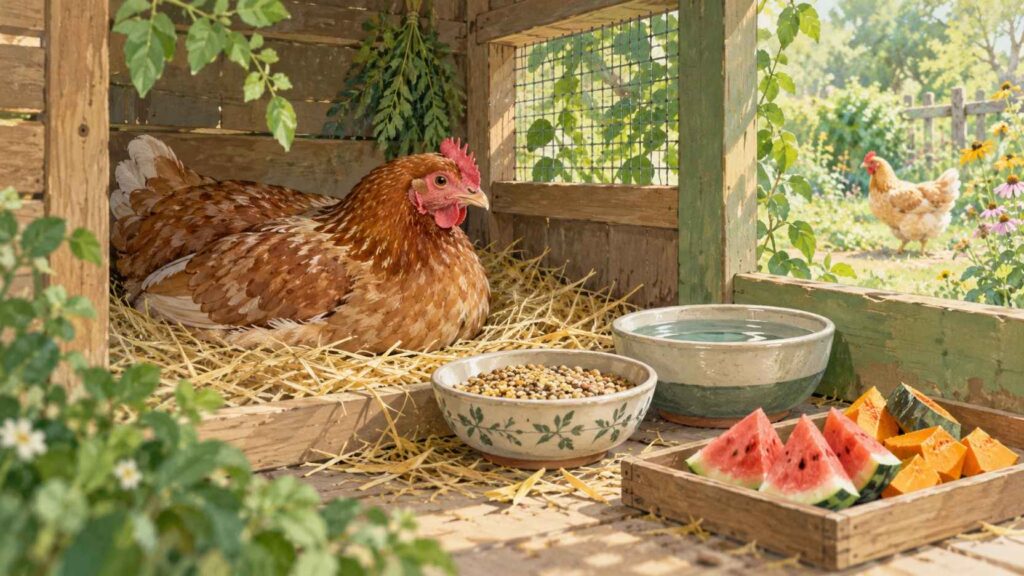
Watermelon contains considerable moisture, while plain pumpkin can provide variety and additional dietary nutrients, making small portions appealing to some chickens. 🍉 These foods may encourage voluntary pecking in an alert bird, but their water content and nutritional composition do not make them replacements for complete poultry feed. University of Arizona Cooperative Extension guidance recommends limiting treats during extreme heat so they do not further reduce the consumption of balanced laying rations.
A chicken that eagerly eats watermelon but ignores its regular pellets has not necessarily recovered its normal appetite or nutritional intake. Offering repeated servings of fruit or pumpkin can fill the bird without supplying the complete balance of amino acids, vitamins, minerals, and energy needed for normal maintenance and egg production. 🎃 Keep treats limited, prioritize the correct formulated ration, and remember that eating a favorite snack does not rule out ongoing illness.
How To Make Feed And Water Easier To Access
A recovering chicken should not have to compete with energetic flock members or travel across a hot enclosure to reach essential supplies. 🐓 Place a stable, shallow feeding dish and a clean water container within comfortable reach, ideally in a quiet, shaded, well-ventilated recovery space where the bird can remain calm. If separation is necessary for observation, use secure housing that protects against predators while avoiding additional heat buildup or stressful isolation conditions.
Fresh, cool drinking water is especially important because chickens can increase water consumption substantially during heat stress, making reliable access essential. Check containers frequently, replace water that becomes excessively warm, and consider additional accessible drinking stations if the flock’s existing system is crowded. 💦 Poultry-specific electrolyte products may be appropriate in certain heat-stress situations when used according to veterinary advice or manufacturer instructions, but they cannot replace professional treatment for a severely dehydrated or distressed bird.
Why Force-Feeding A Weak Chicken Can Be Dangerous
When a chicken refuses food, owners sometimes consider using a syringe to push liquid feed or water into its mouth. ⚠️ This can be dangerous because an exhausted, disoriented, or poorly responsive bird may not swallow normally, allowing liquid or food to enter its respiratory tract instead of passing safely into the digestive system. Aspiration can cause serious respiratory complications, and improper restraint can make breathing even harder for an already struggling chicken.
Never pour water directly into a weak chicken’s beak, force its mouth open to deliver food, or attempt crop-tube feeding without appropriate veterinary instruction and training. 🩺 Birds requiring assisted feeding may first need evaluation of hydration, body temperature, swallowing ability, and crop function to determine a safe treatment approach. If the chicken cannot drink independently or is too weak to swallow, arrange urgent veterinary care instead of attempting to correct the problem through force-feeding at home.
When Does Refusing Food Require Veterinary Help?
A chicken showing severe weakness, collapse, loss of coordination, seizures, or persistent labored breathing requires emergency attention regardless of whether it accepts a small treat. 🚨 Immediate priorities include moving the bird away from heat, improving airflow, beginning gentle cooling with cool rather than icy water when appropriate, and contacting a veterinarian experienced with poultry. Do not delay emergency care while waiting to see whether softened feed, pumpkin, or watermelon will stimulate eating.
Even without dramatic emergency signs, continued refusal of normal feed after the bird has cooled down deserves prompt veterinary advice, particularly when drinking is reduced or the chicken remains unusually quiet. Contact a veterinarian the same day if appetite is absent or substantially reduced, rather than waiting through prolonged fasting to see whether the situation resolves independently. 🐔 A veterinarian can assess whether the problem is residual heat stress, dehydration, injury, infection, crop dysfunction, or another condition requiring treatment.
Recovery Feeding Decision Chart: What Should You Offer?
Choosing food during recovery should depend on the chicken’s condition rather than how eagerly it responds to a favorite snack. 📋 The following chart separates voluntary feeding options from situations that require professional care, helping owners avoid treating a potentially serious illness as simple pickiness. Use it as a practical observation guide, not as a substitute for veterinary diagnosis.
| Recovery Situation | Safer Feeding Decision |
|---|---|
| Alert, drinking, and interested in normal feed | Offer the usual complete poultry ration and fresh water. |
| Alert and swallowing but reluctant to eat dry feed | Try a small, freshly moistened portion of the regular ration. |
| Accepting pumpkin or watermelon but refusing feed | Keep treats limited and seek veterinary advice for continued feed refusal. |
| Weak, not drinking, or swallowing abnormally | Avoid force-feeding and contact a veterinarian urgently. |
| Collapsed, disoriented, or breathing with difficulty | Begin appropriate emergency cooling and seek immediate veterinary assistance. |
The goal is not to make the chicken eat something at any cost, but to identify whether it is capable of eating safely while receiving appropriate care. A bird voluntarily pecking at familiar feed and drinking normally is generally more reassuring than one accepting only a few juicy treats while remaining weak. 💚 Continue monitoring behavior and intake because apparent interest in food is only one part of recovery.
Returning To A Balanced Feeding Routine After Heat Stress
Once the chicken is behaving normally, drinking adequately, and returning to its usual feeding pattern, maintain a nutritionally complete ration appropriate for its age and production stage. 🌾 Starter, grower, and layer feeds serve different nutritional needs, so choosing the correct formula remains important even when a chicken has temporarily lost its appetite. For additional guidance, the feeding timeline explained in What to Feed Chickens: The Starter → Grower → Layer Timeline can help owners understand which ration belongs at each developmental stage.
Remember that preventing another episode is equally important because repeated heat exposure can undermine feeding consistency, egg production, and overall flock welfare. ☀️ Maintain reliable shade, airflow, sufficient drinking stations, and opportunities for birds to eat during cooler parts of the day while minimizing unnecessary disturbance during extreme heat. A chicken refusing food after overheating needs more than an appealing snack: it needs safe cooling, reliable hydration, balanced nutrition, careful observation, and timely veterinary help whenever recovery is uncertain.