Introduction
You walk into the coop and notice one hen standing quietly in the corner.
Her feathers are puffed up. Her eyes look less alert than usual. She isn’t rushing toward the feeder with the rest of the flock.
Is she simply cold?
Is she tired?
Could she be stressed?
Or is she actually sick?
A chicken that is lethargic and unusually fluffed up deserves attention. Fluffed-up feathers, reduced activity, sleeping more than usual, changes in appetite, and altered behavior can all be signs of illness in birds. Chickens can also hide illness, which means subtle changes may be important.
The good news is that you don’t have to diagnose the problem yourself.
Your first job is to observe, check, document, and decide what needs to happen next.
Here’s a simple backyard-chicken checklist.
1. Watch Her Before You Catch Her 👀
Start from a distance.
This is important because handling can temporarily change a bird’s breathing, posture, and behavior. Veterinary examinations of poultry begin with observing the bird before restraint.
Compare her with the rest of the flock.
Ask:
- Is she standing normally?
- Is she walking?
- Is she interested in food?
- Is she drinking?
- Is she interacting with other chickens?
- Are her eyes open?
- Is she responding when you approach?
- Are her feathers continuously puffed up?
- Is she sitting apart?
A healthy chicken should generally be alert, have a good appetite, and interact normally with the flock.
The key question
Is this normal behavior for this particular hen?
A naturally quiet chicken is different from a normally active hen that suddenly becomes withdrawn.
2. Check the Environment First 🌡️
Puffed-up feathers don’t automatically mean disease.
Chickens can fluff their feathers when they are cold because the feathers help trap insulating air around the body.
So before assuming illness, look at the environment.
Check:
- Temperature
- Wind exposure
- Rain or dampness
- Shade and shelter
- Bedding condition
- Coop ventilation
- Access to clean water
- Access to feed
If the hen is cold but otherwise alert, active, eating, and behaving normally, environmental conditions may explain some of the behavior.
However, persistent fluffed-up feathers combined with lethargy should not simply be blamed on cold weather.
Lethargy and changes in food or water consumption are recognized early signs of possible illness in backyard poultry.
3. Look at Her Breathing 🫁
This is one of the most important checks.
Watch her while she is calm.
Look for:
- Open-mouth breathing
- Obvious breathing effort
- Tail movement associated with breathing
- Wheezing
- Repeated coughing or sneezing
- Nasal discharge
- Gasping
Increased respiratory effort and tail bobbing are abnormal findings during a poultry physical examination.
🚨 Don’t keep examining a bird in respiratory distress
If a hen is struggling to breathe, minimize handling and seek veterinary assistance promptly.
Extreme respiratory difficulty is considered an emergency finding in backyard poultry.
4. Check Her Appetite 🍽️
A sick chicken may have access to food but not actually eat.
Watch what she does.
Does she:
Approach the feeder?
Peck at food?
Actually swallow?
Walk away after a few bites?
A change in food consumption can be an early sign that something is wrong.
Also check the feeder itself.
Make sure:
- Feed is available
- The feed hasn’t become wet or moldy
- Other chickens aren’t preventing her from eating
- The feeder is easy for her to access
If she isn’t eating normally, don’t assume she’ll “get over it” without monitoring her closely.
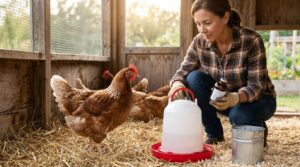
5. Check Water 💧
Water is just as important.
Make sure your hen can reach clean, fresh water.
Look for:
- Reduced drinking
- Excessive drinking
- Difficulty reaching the waterer
- Dirty water
- An empty waterer
- Water contaminated with bedding or droppings
A reduction or increase in drinking can accompany illness in birds.
If the hen is weak, observe whether she can actually reach and use the waterer.
6. Look at Her Eyes and Face 🔍
You don’t need to perform a complicated examination.
Simply observe her head and face.
Eyes
Look for:
- Clear, open eyes
- Swelling
- Cloudiness
- Discharge
- An eye that remains closed
Nostrils
Check for:
- Nasal discharge
- Crusting
- Obvious blockage
Face and head
Look for:
- Swelling
- Unusual discoloration
- Visible lesions
Veterinary poultry examinations specifically include checking the eyes, nostrils, beak, mouth, comb, and surrounding tissues.
7. Check the Comb and Wattles 🐔
The comb and wattles can provide useful visual information, but don’t try to diagnose a disease from their color alone.
Look for:
- Major swelling
- Scabs
- Lesions
- Unusual discoloration
- A dramatic change compared with the hen’s normal appearance
Some serious poultry diseases can cause swelling or purple discoloration of the comb, wattles, eyelids, head, or legs, particularly when combined with other signs such as lethargy, respiratory problems, diarrhea, or sudden deaths.
The important point is the combination of signs, not one isolated color change.
8. Check Her Posture and Movement 🚶♀️
A lethargic chicken may also show changes in the way she stands or walks.
Watch for:
- Difficulty standing
- Limping
- Weakness
- Stumbling
- Falling
- Loss of balance
- Drooping wings
- Head tilt
- Abnormal head or neck position
These are more concerning than simply being less energetic for a short period. Veterinary guidance identifies weakness, unusual posture, head tilt, and other neurological abnormalities as important abnormal findings.
If she cannot stand or walk normally, don’t force her to move around for your examination.
9. Look at the Droppings 💩
Droppings can provide another useful clue.
Check the coop or an area where the hen has been resting.
Look for a persistent or significant change, such as:
- Very watery droppings
- Unusual greenish diarrhea
- Blood
- Excessive mucus
- Major changes in quantity
- Feathers heavily soiled around the vent
One unusual dropping isn’t enough to diagnose a disease.
However, abnormal droppings combined with lethargy, poor appetite, respiratory problems, or other changes deserve more attention.
Greenish, watery diarrhea is among the signs listed by USDA APHIS as a possible indicator of serious poultry disease, including avian influenza.
10. Check Her Feathers and Vent 🪶
Puffed-up feathers can be an important clue, but look beyond the overall appearance.
Check whether the feathers are:
- Normally groomed
- Dull or unusually unkempt
- Wet
- Soiled
- Missing in unusual areas
Then look around the vent for:
- Feces stuck to feathers
- Blood
- Scabs
- Signs of pecking
- Other obvious abnormalities
Veterinary guidance recommends checking feather distribution and the condition of feathers around the vent during a poultry examination.
11. Consider Her Egg Production 🥚
If she’s a laying hen, think about whether her normal egg production has changed.
Ask:
- Has she stopped laying?
- Has production suddenly decreased?
- Are eggs soft-shelled or misshapen?
- Are several hens laying fewer eggs?
A decrease in egg production can occur for many reasons, including normal reproductive changes, environmental factors, stress, and illness.
But a sudden reduction together with lethargy or other physical signs deserves attention.
USDA APHIS lists decreased egg production and soft-shelled or misshapen eggs among signs that can accompany serious poultry diseases.
12. Check the Rest of the Flock 🐔🐔🐔
Don’t stop with the sick-looking hen.
Watch everyone else.
Ask:
- Is another bird lethargic?
- Are several birds eating less?
- Are multiple chickens sneezing?
- Are several birds having diarrhea?
- Has egg production dropped across the flock?
- Has anyone died unexpectedly?
One sick chicken may have an individual problem.
Several chickens becoming sick around the same time raises a different level of concern.
Some infectious poultry diseases can produce respiratory, digestive, neurological, or reproductive signs, and clinical signs alone cannot reliably identify the specific disease.
13. Think About Recent Changes 📝
Make a quick mental timeline.
What happened during the last few days?
New chicken?
A recently introduced bird can change flock dynamics and may also introduce infectious disease.
New feed?
A sudden feed change can affect consumption and digestion.
Extreme weather?
Heat, cold, rain, and other environmental conditions can affect poultry behavior and health.
Predator scare?
A stressful event can temporarily alter flock behavior.
New equipment or housing?
Even seemingly small environmental changes can affect chickens.
Possible toxin or spoiled feed?
Consider whether the flock had access to anything unusual.
You don’t need to decide that one of these is the cause.
Simply record the information because it can help a veterinarian evaluate the situation.
14. Know the Difference Between “Watch” and “Act” 🟢🟠🔴
A useful way to organize your response is with three levels.
🟢 Mild change
The hen is quieter than normal but:
- Eating
- Drinking
- Walking normally
- Breathing normally
- Alert when approached
- Showing no obvious physical abnormalities
Continue close observation and record changes.
🟠 Concerning change
The hen is lethargic and also has one or more of these:
- Reduced appetite
- Reduced drinking
- Abnormal droppings
- Eye or nasal discharge
- Persistent puffed-up appearance
- Weight loss
- Lameness
- Unusual posture
- Reduced egg production
Contact a veterinarian for advice, particularly if the signs persist or worsen.
🔴 Emergency
Seek urgent veterinary assistance if you see:
- Extreme breathing difficulty
- Severe weakness
- Seizures
- Major neurological abnormalities
- Open fracture
- Significant trauma
- Acute heavy bleeding
- Inability to stand
These are specifically identified as emergency findings in backyard poultry.
15. Be Extra Alert When Several Birds Are Sick ⚠️
A single lethargic hen is concerning.
Several sick birds are a flock-health issue.
Take particular notice of:
- Multiple sudden deaths
- Several birds losing energy
- Multiple birds refusing food
- Respiratory signs across the flock
- Sudden drops in egg production
- Swelling of heads or eyelids
- Purple combs or wattles
- Neurological problems
- Greenish, watery diarrhea
These signs can occur with serious contagious diseases, including avian influenza. They are not proof of avian influenza, because many poultry conditions can produce overlapping symptoms.
If multiple birds become sick or die unexpectedly, contact a veterinarian or the appropriate animal-health authority promptly.
16. Should You Separate the Hen? 🏠
If a chicken is clearly sick, separating her can make monitoring easier.
You can observe:
- Exactly how much she eats
- How much she drinks
- Her droppings
- Her activity
- Her breathing
- Whether she can stand and walk
It can also protect a weak bird from being bullied by flock mates.
Use a clean, quiet, appropriately ventilated area with easy access to food and water.
Isolation itself isn’t treatment, though.
If the cause is infectious, simply moving one bird away doesn’t eliminate the risk to the rest of the flock. Follow veterinary or animal-health guidance if contagious disease is suspected.
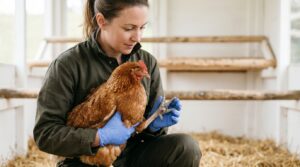
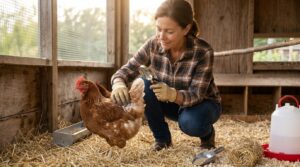
17. Handle Her Gently 👐
A sick bird can become stressed easily.
If you need to pick her up, keep the handling calm and controlled.
Don’t:
- Hold her upside down
- Squeeze her chest
- Chase her around repeatedly
- Force her through a long examination
Merck Veterinary Manual specifically warns that squeezing a chicken’s breast can interfere with breathing, while upside-down restraint increases stress and other risks.
If she is already struggling to breathe or extremely weak, avoid unnecessary handling and seek veterinary help.
18. Don’t Start Random Treatments 💊
Lethargy and puffed-up feathers aren’t a diagnosis.
The same general signs can occur with many different problems.
That means randomly giving antibiotics, dewormers, supplements, or other medications can create more confusion and may delay appropriate treatment.
Instead:
Observe → document → reduce unnecessary stress → seek veterinary advice when indicated.
This approach gives you much better information about what is actually happening.
A Quick Sick-Chicken Checklist 📋
Save this on your phone:
🐔 Chicken:
📅 Date/time:
👀 Activity: Normal / Reduced
🍽️ Appetite: Normal / Reduced / None
💧 Drinking: Normal / Reduced / Increased
🫁 Breathing: Normal / Difficult / Abnormal sounds
💩 Droppings: Normal / Changed
🚶 Movement: Normal / Weak / Limping
👁️ Eyes: Clear / Swollen / Discharge
👃 Nostrils: Clear / Discharge
🐔 Comb/wattles: Normal / Swollen / Discolored
🪶 Feathers: Normal / Fluffed / Soiled / Missing
🥚 Eggs: Normal / Reduced / Abnormal
🐔 Other birds sick: Yes / No
🌦️ Recent changes: Weather / Feed / New bird / Housing / Other
Take photographs when appropriate.
A dated photo of a swollen eyelid, abnormal dropping, comb change, or unusual posture can be much more useful than trying to remember what the chicken looked like yesterday.
Final Thoughts 🌿🐔
A lethargic, puffed-up chicken shouldn’t automatically send you into panic mode, but it also shouldn’t be ignored.
Fluffed feathers plus lethargy is a reason to look closer.
Start with the basics: observe her before handling, check the environment, watch her breathing, confirm that she’s eating and drinking, look at her eyes and comb, check her movement and droppings, and then look at the rest of the flock.
Most importantly, look for combinations of signs and changes from normal, rather than trying to identify a disease from one symptom.
And remember that chickens can hide illness. A bird that looks only mildly unwell may need attention sooner than you expect.
If your hen is having severe breathing difficulty, is extremely weak, cannot stand, has neurological signs, has major trauma or bleeding, or several birds suddenly become sick or die, skip the home detective work and seek professional help.
Notice the change. Check the basics. Protect the flock. Get help when the signs are serious. 🐔❤️