Keeping chickens becomes much easier when you stop thinking of care as one giant list and start organizing jobs by frequency. A practical chicken care checklist separates the things that truly require daily attention from chores that belong on a weekly, monthly, seasonal, or condition-based schedule. 🐔 For beginners, that means fewer forgotten essentials without turning backyard chickens into an endless cleaning project.
The foundation is surprisingly simple: chickens need clean water, adequate feed, safe housing, reasonably clean bedding, egg collection, and regular observation. Your exact routine will vary with flock size, climate, coop design, bedding method, automatic equipment, and whether the birds free-range or remain in a run. Think of this checklist as a dependable starting point that becomes easier to customize once you learn what normal looks like for your own flock.
What Do Chickens Actually Need Every Day?
Start with water because chickens should have continuous access to fresh, drinkable water, and a dirty, tipped, frozen, or empty waterer can quickly become a problem. Check the level, remove obvious debris, and confirm nipples, cups, or gravity-fed openings are actually working rather than assuming a full container means the birds can drink. 💧 Hot weather may require additional checks, while freezing conditions require a dependable way to keep water available.
Next, confirm feed is available, collect eggs, and make sure the flock can safely enter or leave the coop at the appropriate time. Regular egg collection reduces broken and dirty eggs, while checking the coop door prevents chickens from accidentally being locked outside overnight. Before finishing your daily chicken care, scan the run and coop perimeter for digging, damaged wire, loose latches, or anything else that changed since your previous check.
The 5-Minute Flock Check Beginners Should Learn
One of the most valuable chicken chores costs nothing: stand quietly and watch your birds for about five minutes. Look for ordinary behaviors such as eating, drinking, scratching, dust bathing, preening, walking, resting, and moving normally between food, water, shade, and shelter. 👀 You are not trying to diagnose every unusual movement; you are learning the flock’s normal rhythm so meaningful changes become easier to recognize.
Notice whether one chicken repeatedly separates herself, ignores food or water, moves unusually, remains abnormally quiet, or spends long periods hunched and inactive. Changes in posture, breathing, feather appearance, movement, or droppings around favorite resting areas may deserve closer attention, although one unusual moment does not automatically mean a bird is sick. If concerning changes persist or appear serious, investigate further and consider contacting a qualified poultry or avian veterinarian rather than guessing at a diagnosis.
Weekly Chicken Chores
Once a week, give feeding and watering equipment more attention than the quick daily inspection by washing waterers and checking feeders for buildup, moisture, or old feed. Remove concentrated manure beneath roosts where necessary, refresh visibly dirty nesting material, and make sure nest boxes remain reasonably dry and comfortable. 🧹 These targeted jobs usually matter more than trying to make every surface of a working chicken coop look perfectly clean.
Weekly maintenance is also a useful time to review grit and calcium access according to your flock’s needs. Chickens that cannot obtain suitable grit naturally may need insoluble poultry grit, while actively laying hens are commonly offered a separate free-choice calcium source such as oyster shell. Walk through the coop and run looking for wet bedding, broken perches, sharp edges, loose fasteners, blocked ventilation, or minor damage that could become a larger problem.
Monthly Chicken Coop Checks
Monthly chicken maintenance should concentrate heavily on the structures responsible for safety. Inspect fencing, hardware cloth, doors, latches, roof edges, vents, corners, and the ground around the enclosure for digging, chewing, rust, gaps, loose fasteners, or weakened material. 🔍 Physically test doors and locks instead of only looking at them because a latch can appear closed while still being surprisingly easy for a predator to manipulate.
Inside the coop, look for leaks, damp wood, repeated wet spots, unstable roosts, damaged nest boxes, and areas where manure keeps building up unusually fast. Inspect stored feed and surrounding areas for spilled grain, gnawing, droppings, or other evidence of rodents, and keep feed securely contained whenever possible. Monthly inspections are also a good opportunity to reconsider the routine after adding birds, changing equipment, enlarging the run, or moving into a wetter, hotter, or colder season.
What Doesn’t Necessarily Need a Monthly Schedule?
Not every coop requires a complete bedding replacement or deep clean on the exact same calendar schedule. Instead, check the condition and act when necessary, because a dry coop containing a small flock may require a very different cleaning frequency from a crowded enclosure during weeks of heavy rain. 🪶 Dry, loose bedding with little odor should be treated differently from bedding that is saturated, heavily manure-packed, moldy, or producing a strong ammonia smell.
Use moisture, odor, manure accumulation, pest activity, and bedding condition as practical triggers for deeper cleaning. Repairs should similarly happen when damage is discovered instead of waiting for a designated repair day, while pest treatment should respond to an identified problem and follow poultry-safe product instructions. This approach makes routine care flexible without confusing condition-based cleaning with simply allowing the coop to become dirty.
Seasonal Jobs That Don’t Fit the Daily Checklist
Seasonal chicken care focuses on predictable changes in weather and environment rather than creating dozens of additional everyday chores. During hot weather, prioritize shade, airflow, and dependable water; during freezing weather, keep drinking water available while maintaining a dry coop with adequate ventilation. ☀️❄️ After major storms or heavy rain, examine fencing, roofs, drainage, run surfaces, and loose materials because weather can create wet bedding or new predator entry points.
Molting periods also deserve additional observation because chickens may look rougher and egg production can decrease while feathers are being replaced. Seasonal changes may influence daylight, mud, insects, predator activity, water requirements, and the amount of time the flock spends inside its shelter. A useful beginner question is simply: what changed outside, and what does that change inside my coop or run?
Printable Daily, Weekly & Monthly Chicken Checklist
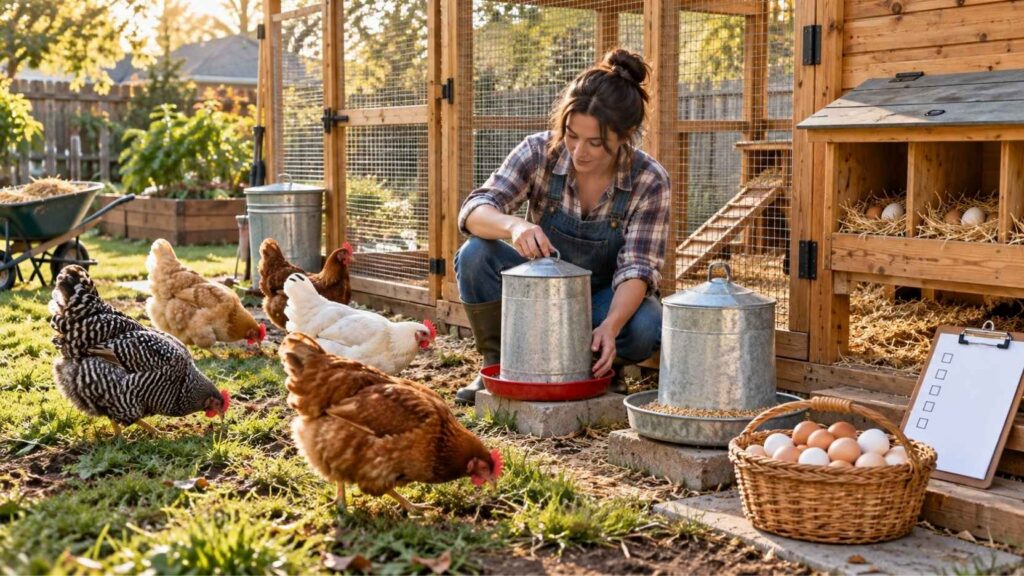
For your morning routine, check water, feed, the coop door, eggs, flock behavior, and basic security; in the evening, collect remaining eggs, account for the flock, and confirm the coop is securely closed. ✅ Weekly, clean waterers thoroughly, inspect feeders, remove concentrated manure, refresh dirty nesting material, check grit or oyster shell where appropriate, and inspect the coop and run for small problems. Monthly, examine fencing and hardware cloth, test latches, inspect roofing and ventilation, look for rodents, check roosts and nest boxes, and address recurring maintenance issues.
A printable version can be divided into five simple areas: Morning | Evening | Weekly | Monthly | Seasonal, with a small notes section for repairs, supplies, or behavior that deserves another look. The strongest checklist is not the one containing the largest number of chores; it is the one simple enough to follow consistently while helping you notice changes quickly. 📝 For most beginners, dependable feeding, watering, observation, egg collection, security, and condition-based cleaning form the practical foundation of how to care for chickens without turning a backyard flock into a full-time job.