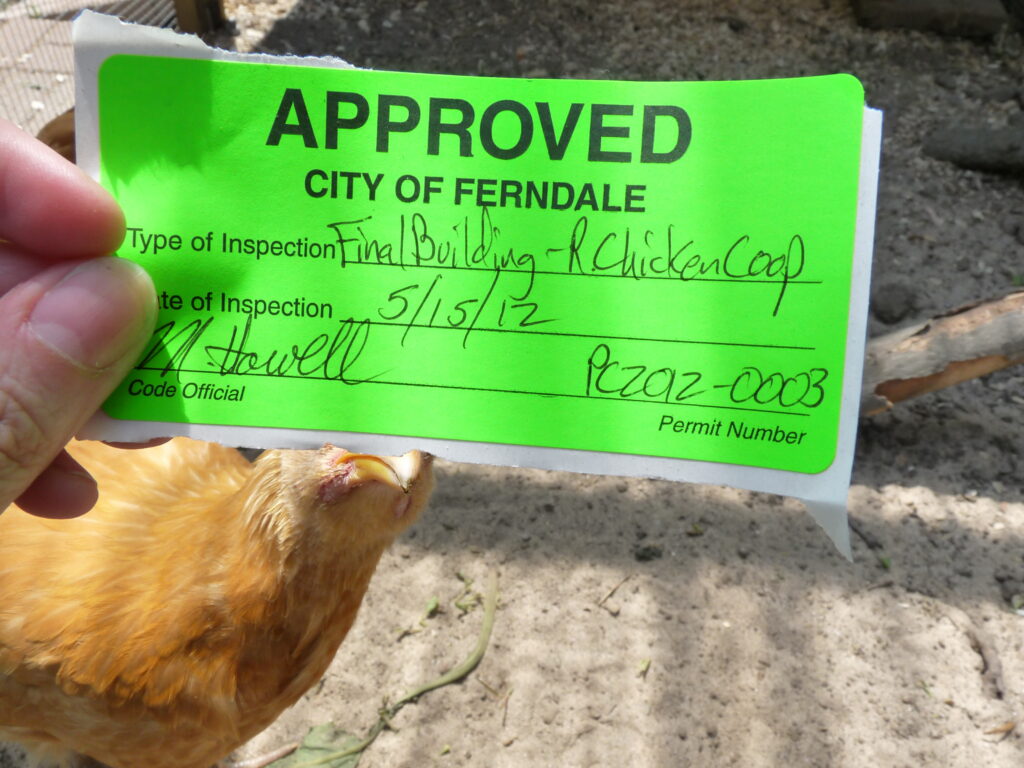
If you are thinking about raising chickens in your backyard, you may have already started researching breeds, chicken coops, feeders, and fresh egg production. But there is another question that should come before all of those purchases:
Do you need a permit to keep backyard chickens?
The answer depends on where you live.
There is no single permit requirement for all backyard chicken owners in the United States. Local governments can establish their own rules, and those rules may depend on the number of chickens, property zoning, lot size, coop location, or other factors.
Some communities may allow a small backyard flock without a special poultry permit. Others may require registration, licensing, inspection, or approval. A separate permit may also apply to the construction of the chicken coop.
The key is to determine which requirements apply to your specific property before buying chicks or building a coop.
Permit Does Not Always Mean the Same Thing
One reason backyard chicken regulations can be confusing is that several different types of government requirements may be involved.
A permit generally refers to official authorization to conduct a particular activity or make a particular improvement.
A registration may simply require you to provide information about your flock or property to a government agency.
A license can involve authorization to conduct a regulated activity under specified conditions.
An inspection means an official may need to verify that your animals, enclosure, or property meet applicable requirements.
A special-use permit or similar zoning approval may be required when a proposed use is not automatically allowed under ordinary zoning rules.
These terms are not interchangeable.
When someone says, “You need a permit for chickens,” ask what type of approval they actually mean.
Small Flocks May Be Treated Differently
One important factor is the size of your flock.
Some local regulations may distinguish between a small number of backyard hens and larger poultry operations.
For example, a jurisdiction might allow residents to keep a limited number of hens under ordinary residential rules while requiring additional approval once the flock exceeds a certain threshold.
This means you should not only ask:
“Are chickens legal?”
You should also ask:
“Are chickens legal without a permit on my specific property and at the number I plan to keep?”
That distinction can prevent misunderstandings.
If you plan to start with four hens but eventually expand to ten or twelve, check whether the requirements change when the flock gets larger.
Your Zoning District Matters
Permit requirements can be connected to zoning.
A property inside a residential zoning district may have different poultry rules from a property in an agricultural or rural district.
Even within the same city, different zoning classifications may have different requirements.
Before contacting a government office, find out your property’s zoning designation if possible.
You can then ask a much more precise question:
“I live at a property in [zoning district]. I want to keep a small number of hens. What permits or approvals are required?”
This is more useful than asking a general question about backyard chickens.
The Chicken Coop May Need Its Own Approval
Another common mistake is assuming that if no poultry permit is required, you can build any chicken coop you want.
That may not be true.
The chickens and the structure that houses them can be subject to different rules.
A local government may regulate the coop as an accessory structure, animal enclosure, shed, or other type of improvement.
Depending on local requirements, factors such as the coop’s:
- Size
- Height
- Location
- Foundation
- Electrical connections
- Setbacks
- Construction method
could potentially affect whether additional approval is needed.
A small temporary enclosure may be treated differently from a large permanent structure.
Before ordering a substantial coop, check the applicable building and zoning requirements.
What Is a Registration?
A registration requirement can be different from a permit.
Some jurisdictions or agencies may require residents to provide information about poultry kept on a property.
Registration can help a government agency maintain records, communicate disease-control information, or manage animal-related regulations.
If you hear that your city requires “registration,” ask exactly what that means.
Find out:
- Who must register?
- Which animals must be registered?
- Is registration required for all flock sizes?
- Is there a fee?
- How often must registration be renewed?
- Does registration involve an inspection?
- What information must be submitted?
Do not assume that registration means you have permission to ignore other zoning or HOA requirements.
What Is an Inspection?
An inspection requirement means that an authorized official may need to evaluate the property, coop, enclosure, or animals.
The purpose can vary depending on the local regulation.
An inspection might concern sanitation, enclosure conditions, animal welfare, structural requirements, or compliance with an approved plan.
If an inspection is required, ask when it occurs.
Does it happen before chickens arrive? After the coop is constructed? Only after an application is submitted? Is a recurring inspection required?
Understanding the timing is important because you do not want to purchase animals before completing a required approval process.
What Is a Special-Use Permit?
Some zoning systems distinguish between uses that are automatically permitted and uses that require additional approval.
A special-use permit, conditional-use permit, or similar zoning mechanism can involve a more formal review process.
Whether backyard poultry falls into this category depends entirely on local rules.
If you are told that you need special zoning approval, ask what process applies and whether your proposed flock size, property type, or location triggers the requirement.
Do not assume that a special-use process is necessary simply because a neighbor told you so.
Ten Questions to Ask Your Local Government
When you contact your city or county, having a prepared list of questions can save time.
Here are ten useful questions:
1. Are backyard chickens allowed at my property address?
2. What zoning classification applies to my property?
3. How many chickens can I legally keep?
4. Are roosters permitted?
5. Do I need a poultry permit?
6. Do I need to register my flock?
7. Is an inspection required?
8. Does the chicken coop require a building or zoning permit?
9. What setback requirements apply to the coop and run?
10. Are there additional animal, sanitation, noise, or nuisance requirements?
Write down the department name, date, and information you receive.
If possible, ask for the relevant ordinance or official webpage so you can review the actual requirements yourself.
Which Department Should You Contact?
There may not be one universal office responsible for every backyard chicken issue.
Depending on your location, different questions may belong to different departments.
Planning or zoning:
Ask about land use, zoning districts, setbacks, and permitted uses.
Animal control:
Ask about poultry ownership, animal limits, nuisance rules, and potentially registration.
Building department:
Ask whether the coop qualifies as a regulated structure.
Code enforcement:
Ask about enforcement of local property and animal regulations.
County or city clerk:
In some jurisdictions, this office may direct you to the appropriate permit or registration process.
If the first person you contact cannot answer the question, ask which department handles backyard poultry.
Don’t Forget Your HOA
A government permit does not necessarily mean your HOA allows chickens.
If your property is subject to HOA rules, review the CC&Rs and other governing documents separately.
An HOA may have restrictions concerning poultry, livestock, outdoor structures, noise, or nuisances.
This creates two separate compliance questions:
Does the government allow it?
Does the HOA allow it?
You may need to satisfy both.
What About Neighbors Who Already Have Chickens?
Never assume that because your neighbor has chickens, you do not need a permit.
Their property may have different zoning, different restrictions, an existing approval, or a different flock size.
They may also simply be operating without approval.
Use official information for your own property rather than copying another homeowner’s setup.
When Should You Apply?
The safest time to investigate permits is before purchasing chicks.
Ideally, follow this sequence:
Research the rules → confirm zoning → determine flock limit → check rooster rules → determine permit requirements → verify coop requirements → obtain required approvals → build the setup → bring home the chickens.
This order reduces the chance of having animals on the property before you know whether the arrangement is permitted.
Final Thoughts
Whether you need a permit for backyard chickens depends on your location and circumstances.
The important thing is not to search for a universal yes-or-no answer. Instead, determine whether your city or county requires a permit, registration, license, inspection, special-use approval, or separate authorization for the coop.
Then check zoning, flock limits, rooster restrictions, setback requirements, and HOA rules.
Before buying chicks, contact the appropriate local government departments and ask specific questions about your property and planned flock.
Backyard chicken keeping can be a rewarding hobby, but the easiest way to avoid a regulatory headache is to handle the paperwork first.
Research first, buy chicks second.