Fresh eggs from your own backyard sound wonderful. You get to care for your own flock, collect eggs, and enjoy a little more connection to where your food comes from.
But before buying your first chicks, there is one question worth asking: Can you afford to care for chickens throughout their lives, including the years when they lay fewer eggs?
Backyard chickens are not automatically a way to save money. Feed, housing, equipment, bedding, veterinary care, predator protection, and replacement supplies all add up. And the expenses do not disappear when a hen stops laying regularly.
The honest way to approach chicken keeping is to treat it as a long-term responsibility, not a guaranteed source of cheap eggs.
This guide breaks down the major expenses, explains which costs beginners often overlook, and gives you a practical way to estimate your own flock budget before getting started.
🥚 1. Start With the Right Expectation: Chickens May Not Make Eggs Cheaper
It is tempting to compare the price of supermarket eggs with the cost of keeping a few hens. But that comparison is incomplete.
Your backyard eggs come with ongoing expenses, including:
- Complete poultry feed.
- Coop construction and repairs.
- Bedding and cleaning supplies.
- Feeders and waterers.
- Health care and parasite management.
- Predator protection.
- Replacement equipment.
- Care for older hens that lay less frequently.
You may also spend money on things that are difficult to predict, such as emergency veterinary treatment or repairs after a predator damages the run.
The value of backyard chickens is not purely financial. Many people enjoy fresh eggs, the daily routine, learning about animal care, and having a small food-producing flock.
A better goal is to build a flock you can comfortably afford, rather than expecting every egg to cost less than one from the store.
🛒 2. Feed: The Expense You Will Keep Paying
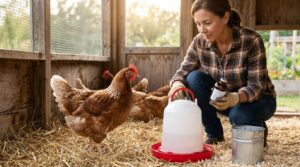
Feed is usually one of the largest recurring costs of keeping backyard chickens. Unlike a coop, which may last for years with proper maintenance, feed must be purchased regularly.
An adult laying hen commonly eats around 100–150 grams of feed per day, although consumption varies with body size, breed, weather, activity, and feed quality. Alabama Cooperative Extension System+1
That means even a small flock can go through a surprising amount of feed.
For example, using 120 grams per hen per day as a planning estimate:
| Flock size | Approximate daily feed | Approximate monthly feed |
|---|---|---|
| 3 hens | 360 g | 10.8 kg |
| 4 hens | 480 g | 14.4 kg |
| 6 hens | 720 g | 21.6 kg |
| 10 hens | 1.2 kg | 36 kg |
These are estimates for budgeting, not fixed feeding instructions. Check your birds’ actual consumption and adjust your calculations accordingly.
Why you should not rely on scraps alone
Kitchen scraps, garden greens, insects, and occasional treats can add variety to a chicken’s diet. But they should not replace a nutritionally complete poultry ration.
Hens need the right balance of protein, energy, vitamins, and minerals. Laying hens also have specific calcium requirements for eggshell production.
A poorly balanced homemade diet can cause nutritional problems and reduce flock performance. MSD Veterinary Manual+1
Smart budgeting tips:
- Compare feed prices by weight, not just by bag price.
- Buy quantities your flock can use while the feed is still fresh.
- Store feed in clean, dry, rodent-resistant containers.
- Use suitable feeders to reduce spillage.
- Track how long each bag lasts.
Cheap feed is not necessarily economical if it is nutritionally unsuitable or creates more waste.
🏠 3. Housing: The Biggest Startup Expense
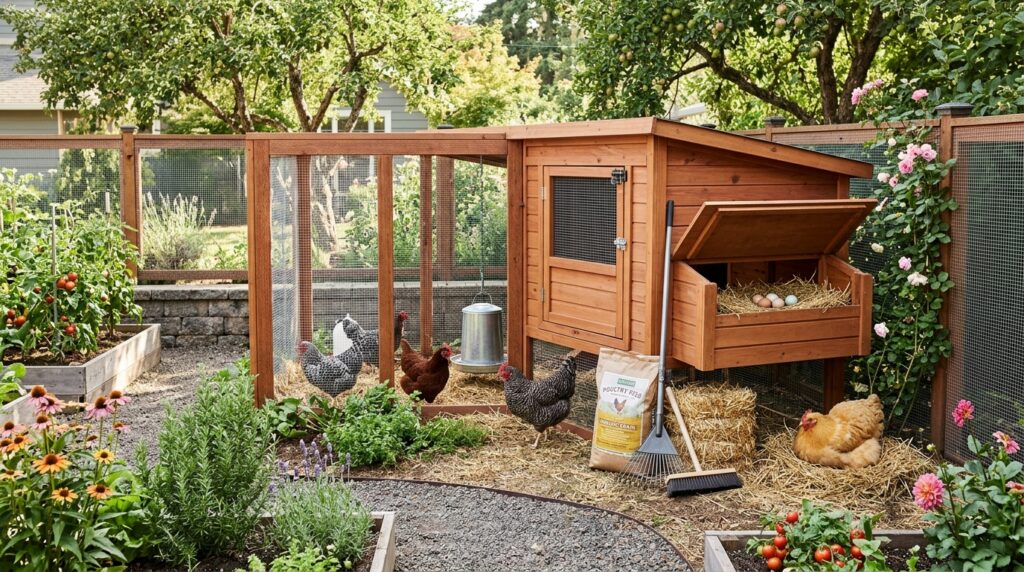
Your coop is more than a place for chickens to sleep. It protects them from rain, heat, predators, and other environmental hazards.
Your initial housing budget may include:
- Coop framing and roofing.
- Predator-resistant wire mesh.
- Secure doors and latches.
- Nesting boxes and perches.
- Run fencing and support posts.
- Drainage and weather protection.
- Feeders and waterers.
- Feed storage containers.
The price can vary dramatically depending on whether you build the coop yourself, adapt an existing structure, or purchase a ready-made model.
However, the cheapest coop is not always the least expensive option over time.
Weak mesh, loose doors, poor drainage, and gaps around the structure can lead to injuries, predator losses, repeated repairs, and additional expenses.
Plan for maintenance, not just construction
Even a well-built coop needs attention.
Budget for:
- Replacing damaged mesh and fasteners.
- Repairing doors and hinges.
- Replacing worn roofing materials.
- Adding or refreshing bedding.
- Improving drainage after heavy rain.
- Cleaning and disinfecting when appropriate.
A good approach is to calculate your initial coop cost separately from your annual repair and maintenance allowance.
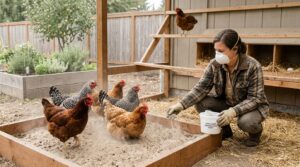
🧹 4. Bedding, Cleaning, and Daily Supplies
These smaller expenses are easy to overlook because they may not seem expensive individually.
But they are recurring costs.
Depending on your housing system and local availability, you may use suitable wood shavings, chopped straw, or another absorbent bedding material.
You may also need:
- Coop cleaning tools.
- Scrub brushes and buckets.
- Poultry-safe cleaning products.
- Gloves.
- Nest-box material.
- Waste disposal supplies.
- Replacement waterers and feeders.
Bedding needs depend on the coop’s design, moisture levels, ventilation, stocking density, and cleaning routine.
In hot or humid environments, moisture management is especially important. Wet bedding can contribute to unpleasant odors and unhealthy housing conditions.
Do not budget only for the materials you need on opening day. Think about how frequently you will need to replace them.
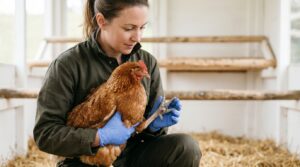
🩺 5. Healthcare: Prevention Costs Less Than Ignoring Problems
Healthy chickens still need monitoring and appropriate care.
Some health problems can be managed with early intervention, while others require professional veterinary attention. The cost depends on the condition, number of birds affected, availability of poultry veterinarians, and treatment required.
Possible expenses include:
- Veterinary consultations.
- Diagnostic testing.
- Prescribed medication.
- Parasite treatment when indicated.
- Wound care supplies.
- Quarantine or isolation equipment.
- Biosecurity and cleaning supplies.
You should also have a plan for emergencies. A hen that suddenly becomes weak, stops eating or drinking, has difficulty breathing, or shows signs of serious injury may need prompt veterinary attention.
Do not spend money on unnecessary treatments
A common beginner mistake is buying multiple supplements, medicines, or parasite products without knowing whether they are needed.
Instead:
- Observe your flock daily.
- Keep track of changes in appetite, activity, droppings, and egg production.
- Maintain clean water and suitable feed.
- Quarantine new or sick birds appropriately.
- Ask a poultry veterinarian for guidance when symptoms are concerning.
Prevention is not a promise that your flock will never become sick. It is a way to reduce avoidable risks and recognize problems earlier.
🐓 6. Older Hens: The Expense Beginners Often Forget
This is one of the most important parts of an honest chicken-keeping budget.
Many beginners calculate the cost of raising chicks until they start laying eggs. But what happens when those hens become older?
Egg production generally changes with age. Many hens produce fewer eggs as they get older, although the timing and degree of decline vary by breed, individual bird, health, and management.
Some hens may continue laying for several years, but you should not expect every bird to maintain its early production level indefinitely. University of Maryland Extension+1
The important point is that lower egg production does not mean lower responsibility.
Older hens still need:
- Complete, appropriate nutrition.
- Fresh water every day.
- Safe and comfortable housing.
- Protection from predators and extreme weather.
- Regular health monitoring.
- Veterinary care when necessary.
Some older birds may also develop mobility problems or other age-related health concerns that require additional attention.
What should you do with older hens?
You have several responsible options:
Keep them as long-term flock members. If you have enough space and resources, you can continue caring for them even when egg production declines.
Maintain a mixed-age flock. You can introduce younger hens over time, following appropriate quarantine and introduction practices. This allows egg production to continue while older hens remain part of the flock.
Plan replacement birds carefully. If you intend to maintain a certain number of laying hens, account for the cost of raising or purchasing replacements. Do not assume you can replace older birds without additional expense.
Your budget should include the possibility of supporting non-laying or low-production hens.
🐣 7. Chicks and Replacement Birds Cost More Than Their Purchase Price
Buying chicks may seem inexpensive compared with purchasing mature laying hens. But chicks need appropriate care before they become productive members of your flock.
Their expenses can include:
- Chick starter feed.
- Brooder equipment.
- Safe heating equipment when required.
- Bedding.
- Suitable feeders and waterers.
- Vaccination or veterinary expenses, depending on your location and health plan.
- Additional housing as they grow.
Chicks also need different feed from mature laying hens. Feeding the wrong ration can create nutritional problems, so follow appropriate age-specific feeding guidance. USU+1
There is also a waiting period before pullets begin laying. During that time, you are paying for their care without receiving eggs.
If you purchase point-of-lay pullets instead, you may pay more upfront but spend less time raising them. Compare the total cost and the health history of the birds rather than looking only at the purchase price.
⚡ 8. Electricity, Water, Predator Protection, and Other Hidden Costs
Some expenses are easy to forget because they are not directly connected to collecting eggs.
Depending on your climate and setup, you may need to budget for:
| Expense | Why it matters |
|---|---|
| Electricity | Lighting, brooding equipment, or climate-related needs |
| Water | Daily drinking and cleaning |
| Predator protection | Secure mesh, latches, fencing, and repairs |
| Rodent control | Protecting stored feed and reducing contamination |
| Transportation | Collecting feed or taking birds to a veterinarian |
| Emergency supplies | Temporary housing, isolation, and basic care equipment |
In warm climates, shade, ventilation, and reliable water access are especially important. Chickens can become stressed in excessive heat, so a safe environment is not an optional luxury.
Predator protection also deserves a proper budget. A secure run and strong latches may cost more initially, but weak construction can become expensive if predators get inside.
📊 9. How to Calculate Your Real Backyard Chicken Budget
Instead of relying on a generic online estimate, use local prices and your actual flock size.
Here is a simple budgeting structure:
| Category | What to include | Your estimated cost |
|---|---|---|
| Initial birds | Chicks or pullets | ______ |
| Housing | Coop, run, mesh, roofing | ______ |
| Equipment | Feeders, waterers, nest boxes | ______ |
| Feed | Starter, grower, layer feed | ______ |
| Bedding | Nesting and floor material | ______ |
| Healthcare | Vet care, testing, treatments | ______ |
| Maintenance | Repairs and replacements | ______ |
| Utilities | Water and electricity | ______ |
| Replacement birds | Future additions | ______ |
| Emergency reserve | Unexpected expenses | ______ |
Calculate your costs in two separate groups:
Startup costs: One-time purchases such as the coop, fencing, feeders, and initial birds.
Ongoing costs: Feed, bedding, healthcare, utilities, repairs, and replacement birds.
If you want to estimate the cost of your eggs, use this formula:
\[ \text{Cost per dozen} = \frac{\text{Total flock expenses}}{\text{Number of dozens collected}} \]
For a more complete calculation, include the portion of startup costs used during the period you are measuring, as well as any value you assign to your own labor.
For example, if you spend money on a coop that lasts several years, it would be misleading to charge the entire construction cost to just one month’s egg production. Spread the cost across its useful life instead.
Also remember to count eggs actually collected and usable, not the number you hoped your hens would lay.
💡 10. How to Keep Costs Manageable Without Cutting Corners
You do not need an expensive setup to keep a healthy backyard flock. But saving money should never mean compromising basic animal care.
Try these practical strategies:
Start with a manageable flock. A few hens can help you understand the real workload and expenses before you expand.
Build for your climate. Prioritize ventilation, shade, drainage, and weather protection rather than decorative features.
Prevent feed waste. Use suitable feeders, store feed properly, and monitor consumption.
Buy supplies thoughtfully. Compare local prices and avoid purchasing equipment you do not need.
Maintain the coop regularly. Fix loose mesh, damaged doors, and leaks before they become bigger problems.
Keep simple records. Track feed purchases, veterinary expenses, repairs, egg collection, and flock changes.
Do not overcrowd. Adding more chickens does not automatically make the flock more economical. More birds also mean more feed, space, cleaning, and care.
The goal is not to make chicken keeping as cheap as possible. It is to make it sustainable for both you and your birds.
Final Thoughts: Budget for the Chickens, Not Just the Eggs ❤️
Backyard chickens can bring enjoyment, fresh eggs, and a rewarding daily routine. But they are living animals, not a shortcut to cheaper groceries.
The real cost includes more than chicks and a coop. It includes years of feed, housing maintenance, health care, predator protection, replacement planning, and the ongoing care of older hens.
Before starting, ask yourself whether you can afford to keep your chickens even when egg production slows down.
If the answer is yes, you are building a more realistic foundation for responsible backyard poultry keeping.
The best backyard flock is not necessarily the cheapest one. It is the one you can care for properly, through every stage of its life. 🐔