Introduction
Watching baby chicks grow is one of the most rewarding parts of keeping backyard chickens. But when they become bigger and more independent, an important question comes up: When can they safely join the adult hens?
It may be tempting to place growing chicks in the main coop as soon as they look strong enough. Unfortunately, being bigger does not automatically mean they are ready to live with adult chickens.
Adult hens have an established social order, different nutritional needs, and sometimes little patience for unfamiliar birds. A rushed introduction can lead to chasing, pecking, injuries, and competition for food and water.
The safer approach is gradual. Give the chicks time to grow, let both groups become familiar with one another, and create an environment where younger birds can retreat when necessary.
Here’s how to introduce chicks to adult hens while protecting the health and safety of your flock.
1. Wait Until the Chicks Are Ready
There is no universal age when every chick is ready to join adult hens. Readiness depends on more than age or feather development.
Consider these factors:
- Size: Chicks that are much smaller than adult hens may be especially vulnerable to injury.
- Feather development: They should be sufficiently feathered for their environment and able to maintain their body temperature.
- Health: They should be active, eating and drinking normally, and free from signs of illness.
- Weather: Young birds may still need protection from cold, heat, rain, or sudden temperature changes.
- Flock behavior: The adult hens’ temperament and the available space matter.
Many keepers wait until chicks are around 8–12 weeks or older before beginning gradual introductions, but this is not a guaranteed safe age. Some flocks need a longer separation, particularly when the chicks are small or the adult hens are aggressive.
Do not use age alone as your decision-making guide.
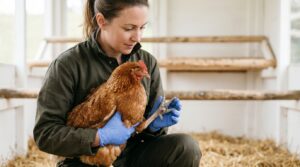
2. Complete a Health and Biosecurity Check First
Before introducing any new birds, consider disease prevention.
Even chicks raised on your own property can have different exposure histories from the adult flock. Birds arriving from another farm, breeder, or seller may introduce infectious diseases or parasites.
A common biosecurity recommendation is to quarantine newly acquired birds separately for about 30 days, with separate feeders, waterers, and equipment. Follow veterinary advice and local disease-control recommendations because the appropriate precautions can vary.
Before beginning introductions, check that the chicks:
- Have clear eyes and nostrils.
- Are active and alert.
- Have normal droppings for their age.
- Eat and drink normally.
- Show no obvious respiratory symptoms.
- Have no visible external parasites or unexplained feather loss.
Watch the adult flock for signs of illness too.
If any bird appears sick, postpone the introduction and seek veterinary advice. Mixing birds while disease is suspected can put the entire flock at risk.
3. Start With Separate but Visible Housing
<text> </text>
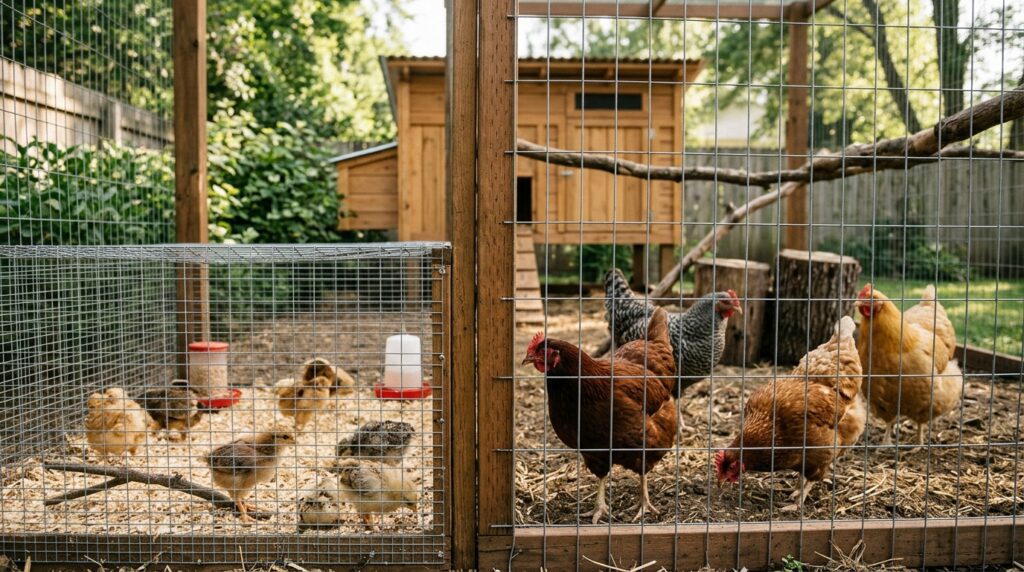
One of the safest first steps is allowing the chicks and adult hens to see one another without having direct physical contact.
Set up a secure enclosure for the growing chicks inside or beside the adult flock’s run. Use a sturdy barrier that prevents birds from reaching through and pecking one another.
This arrangement allows both groups to become familiar with:
- Each other’s appearance.
- Normal movement and activity.
- Sounds and calls.
- The presence of another group in their shared environment.
Keep the chicks protected from weather, predators, and accidental contact with adult birds.
Do not use a barrier with openings large enough for chicks to escape or become trapped. Check that the adult hens cannot injure chicks through the fencing.
The goal is familiarity, not forced interaction. Some curiosity, staring, or occasional pecking at the barrier may happen. Persistent attempts to attack through it mean the setup needs adjustment.
4. Give Them Time to Adjust
There is no fixed number of days that guarantees a successful introduction.
Some flocks become accustomed to one another relatively quickly. Others need a longer period of visual contact, especially when the adult hens are territorial or the chicks are significantly smaller.
Watch for signs that the birds are becoming more comfortable.
Encouraging signs:
- Adult hens can see the chicks without repeatedly charging the barrier.
- Both groups continue eating and drinking normally.
- The chicks remain active rather than constantly hiding.
- The hens gradually show less intense interest in the newcomers.
Warning signs:
- Repeated aggressive attacks against the barrier.
- Chicks panicking or piling up in corners.
- Adult hens guarding the area and preventing normal activity.
- Birds showing injuries or signs of prolonged stress.
Move forward based on behavior, not a calendar deadline.
5. Try Short, Supervised Meetings
Once both groups appear comfortable seeing each other, consider short supervised interactions in a spacious, neutral area.
Choose a location with good visibility, enough room to move away, and no narrow corners where chicks can become trapped.
During the first meetings:
- Stay nearby and observe continuously.
- Provide more than one feeding and drinking location.
- Avoid overcrowding.
- Give chicks places to retreat that adult hens cannot enter.
- Keep a safe way to separate the groups immediately.
A little investigation, brief chasing, or a warning peck may occur as the birds establish boundaries. However, repeated attacks, forceful pecking, pinning, or any injury are reasons to stop the meeting.
Do not leave the birds together unsupervised just because the first interaction seems peaceful.
6. Create Chick-Only Escape Spaces
A mixed-age flock needs an environment that works for both adults and younger birds.
One useful setup is a protected chick-only area with openings that allow the growing birds to pass through but prevent larger hens from entering.
This gives chicks access to their own food, water, and resting space while allowing them to interact with the flock.
Check the openings carefully as the chicks grow. They must not become trapped, and the barriers should not create sharp edges or predator access points.
You can also add multiple perches and visual barriers to help birds move away from one another.
The important principle is simple: a younger chicken should never have to fight an adult hen just to find food, water, or a safe place to rest.
7. Provide Enough Food and Water for Both Age Groups
One frequently overlooked problem is nutrition.
Chicks and laying hens do not necessarily need the same feed. Growing birds require a diet formulated for development, while laying hens need an appropriate layer ration.
When different age groups share housing, feeding becomes more complicated.
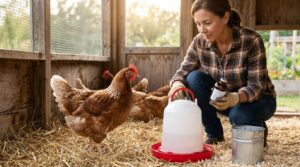
A practical arrangement may include:
- A chick-only feeding area with age-appropriate feed.
- A separate location for adult hens’ feed.
- Multiple waterers that every bird can reach.
- Enough distance between feeding points to reduce competition.
If chicks can freely access layer feed, their diet may become unbalanced for their stage of growth. Layer feed contains higher calcium levels intended for laying birds.
Likewise, adult hens eating chick starter or grower feed may need a separate calcium source appropriate for laying hens. Ask a poultry veterinarian or qualified poultry nutrition professional about the best feeding arrangement for your flock.
Do not assume that one feeder in the middle of the coop will be enough for every bird.
8. Watch for Bullying and Injuries
Even after several peaceful meetings, conflict can happen once the birds share more space.
Pay attention to the smallest or most timid chicks. They may be the first to experience bullying because they are less able to defend themselves.
Watch for:
- Repeated chasing by the same adult hen.
- Missing or damaged feathers.
- Peck marks or bleeding.
- Chicks hiding for extended periods.
- Birds being pushed away from food or water.
- Weight loss, weakness, or reduced activity.
If a chick is repeatedly attacked, separate it from the aggressor immediately.
Protect injured birds in a clean, safe recovery area. A bird with an open or bleeding wound should not be returned to a flock where other chickens may peck at the injury.
Seek veterinary help for deep wounds, eye injuries, severe weakness, or signs of infection.
9. Avoid These Common Introduction Mistakes
A few seemingly convenient shortcuts can create unnecessary risks.
Introducing chicks because they look big enough: Size is only one factor. Health, maturity, weather, flock temperament, and housing also matter.
Putting everyone together overnight: This removes your opportunity to observe and intervene during the initial interaction.
Using a small enclosure for introductions: Limited space makes it harder for younger birds to escape aggressive hens.
Providing only one feeder: Dominant birds may control access to food and water.
Ignoring persistent chasing: Repeated attacks are not automatically harmless pecking-order behavior.
Assuming a peaceful first meeting means the problem is solved: Continue monitoring the flock as the birds spend more time together.
10. When Is It Safe to Let Them Live Together?
There is no guaranteed date for a completely successful integration. The decision should depend on the birds’ size, health, behavior, and ability to share resources safely.
Before allowing full-time access to the same coop and run, make sure:
- The adult hens are no longer showing persistent aggression.
- The chicks can move around without being constantly chased.
- Every bird has reliable access to food and water.
- Younger birds have protected escape spaces.
- The coop has enough room for the combined flock.
- You can separate birds quickly if conflict develops.
Continue checking the flock during the first several days and weeks. Even after integration appears successful, changes in weather, feeding arrangements, or flock membership can affect behavior.
❤️ Final Thoughts
Introducing chicks to adult hens is not a race. A few extra weeks of preparation can be worthwhile when they help prevent injuries, stress, and unnecessary flock conflict.
Start with health checks and separate housing. Allow visual contact, progress to supervised meetings, and provide enough space, food, water, and chick-only escape areas.
Most importantly, let the chickens’ behavior guide the process. If the adult hens are repeatedly attacking the chicks, step back and give them more time.
A successful introduction isn’t simply getting all your chickens into one coop. It’s creating a flock where young and adult birds can coexist safely, with every bird able to eat, drink, rest, and move freely. 🐔