A sudden summer heat wave can leave backyard chicken keepers staring at an unusually empty nesting box, wondering why hens that normally lay consistently have started producing fewer eggs. 🐔 Even a few unusually hot days may affect feeding behavior, water consumption, and comfort, while prolonged heat stress can interfere with the nutritional and physiological processes involved in egg production. Understanding heat stress egg production chickens is important because hot weather can influence not only how many eggs hens lay but also the strength and quality of their eggshells.
The connection is more complicated than simply assuming chickens stop laying whenever temperatures rise. Heat can reduce appetite, increase water requirements, and alter the body’s ability to support normal eggshell formation, although individual hens respond differently depending on their age, breed, health, and environment. ☀️ By observing egg counts alongside feed intake, drinking behavior, temperature, and shell changes, owners can distinguish possible heat-related fluctuations from problems requiring further investigation.
Can a Few Hot Days Really Reduce Egg Production?
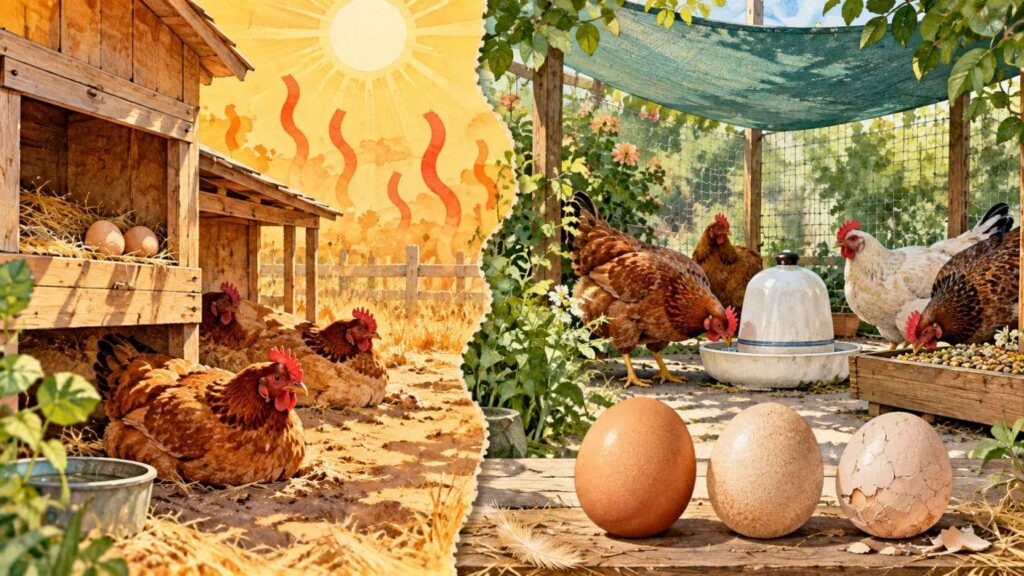
Yes, short periods of intense heat can affect laying hens, although the degree of disruption depends on temperature, humidity, airflow, exposure duration, and the birds’ condition. Unlike humans, chickens cannot sweat, so they rely heavily on panting, behavioral adjustments, and moving heat away from their bodies to remain comfortable. 🌡️ When temperatures climb, many hens spend more time resting, seek shade, spread their wings, and reduce activity to limit additional heat production.
Another important response involves eating less feed, since digestion and metabolism produce body heat. University of Arizona Cooperative Extension explains that consistently hot weather can reduce hens’ food consumption, potentially limiting the energy and nutrients available for egg production. Consequently, chickens laying fewer eggs in summer may be responding to reduced nutritional intake as well as the direct physiological effects of heat.
However, one missing egg after a hot afternoon does not prove that heat stress caused the change. Egg production naturally fluctuates, and factors such as age, daylight, molting, broodiness, and illness can influence the number of eggs collected. 📉 A more useful approach is to compare several days of observations with the flock’s previous laying pattern rather than drawing conclusions from one unusually quiet morning.
How Heat Stress Can Affect Eggshell Quality
Eggshell formation requires calcium, adequate nutrition, and properly functioning reproductive processes, all of which can become more difficult to maintain during significant heat stress. 🥚 When hens reduce their consumption of complete layer feed, they may also consume less calcium and other nutrients necessary for producing strong shells. This helps explain why some owners notice thinner, weaker, or more easily cracked eggs alongside reduced egg numbers during prolonged hot weather.
There is also a physiological explanation beyond reduced feed consumption, because heavy panting causes chickens to release more carbon dioxide through respiration. This can alter blood acid-base balance, a process known as respiratory alkalosis, which may interfere with calcium availability and the carbonate needed for eggshell formation. 🔬 Research on laying hens has connected severe heat stress with reductions in eggshell thickness, shell strength, feed intake, and egg production.
However, chicken eggshell quality during heat stress is not simply a matter of adding more calcium to every feeder. Some shell problems result from heat-related metabolic changes rather than an inadequate calcium concentration in the feed, while similar abnormalities can occur with aging, nutritional imbalance, disease, or reproductive conditions. Maintaining a balanced layer ration and offering appropriate supplemental oyster shell for laying hens can support normal calcium intake, but repeated abnormal eggs still deserve investigation.
What to Observe First When Egg Production Drops
Before adjusting feed or buying supplements, compare the number of eggs collected during the hot period with the flock’s usual production. 📋 Record daily egg counts, approximate daytime temperatures, humidity if available, and whether the hottest conditions lasted only a few hours or continued overnight. A consistent decline during a heat wave provides more useful information than an isolated drop involving one hen.
Next, observe whether birds are eating normally, visiting waterers frequently, resting excessively, or spending unusual amounts of time panting with their wings held away from their bodies. Increased drinking and reduced appetite can accompany heat exposure, but severe lethargy, weakness, collapse, or persistent heavy panting may indicate dangerous heat stress requiring immediate attention. 💧 Check that every chicken can access clean, cool drinking water and that dominant birds are not preventing others from reaching shaded resting areas.
Finally, inspect the nesting boxes and surrounding yard before assuming that every missing egg represents reduced production. Some hens choose hidden outdoor nests, become broody, or experience changes in laying behavior that are unrelated to temperature. 🔎 Also watch for broken eggs, egg eating, predator disturbances, and signs of molting, since these can complicate attempts to interpret summer egg counts.
What Should You Feed Laying Hens During Hot Weather?
The nutritional foundation should remain an appropriate complete layer feed rather than a collection of cooling snacks or homemade supplements. 🌾 Offer feed consistently and encourage consumption during cooler morning and evening periods, when birds may be more willing to eat than during the hottest afternoon hours. Avoid unnecessary feed changes during a heat wave because maintaining a familiar, balanced ration makes it easier to observe actual changes in appetite.
Watermelon, cucumber, and other moisture-rich treats can provide enrichment, but they should not replace substantial amounts of nutritionally complete feed. 🍉 Excessive scratch grains, corn, and other treats can displace protein, calcium, vitamins, and minerals that hens need to maintain their normal laying functions. Fresh drinking water is much more important for hydration than offering fruit, and additional water stations may be necessary when consumption increases during extreme heat.
How to Support Normal Laying After a Heat Wave
The first step toward supporting normal egg production is restoring comfortable environmental conditions rather than expecting a particular supplement to reverse the problem. 🌿 Provide reliable shade, improve ventilation, reduce overcrowding around resting areas, and consider appropriately installed fans or poultry-safe misting systems when weather conditions justify additional cooling. Make sure airflow reaches the birds without exposing electrical equipment to water or creating persistently wet, unhealthy coop conditions.
Continue providing clean water and balanced layer feed while monitoring whether the flock gradually returns to normal eating and activity patterns. 🐓 Some hens may resume their previous laying rhythm relatively quickly, while others need more time depending on the severity of heat exposure and other factors affecting reproduction. Avoid promising an immediate rebound, since egg production depends on ongoing physiological processes rather than simply whether the afternoon temperature has returned to normal.
When Does an Egg-Laying Drop Need Further Investigation?
A temporary reduction during unusually hot weather may be understandable, but persistent poor appetite, progressive weakness, weight loss, diarrhea, or other illness-related changes should not be dismissed as ordinary summer behavior. ⚠️ Severe panting, collapse, or inability to stand requires urgent cooling in a safe environment and prompt veterinary assistance because life-threatening heat exhaustion can develop. Move affected birds away from heat, begin gentle cooling with cool rather than icy water, and never force water into a weakened bird’s mouth.
Repeated shell-less eggs, unusually fragile shells, abnormal laying behavior, or a continuing decline in egg numbers may also justify professional evaluation. These findings can accompany nutritional problems, reproductive disorders, infectious conditions, aging, or other stressors that cannot be identified through temperature records alone. 🩺 A poultry-experienced veterinarian can help assess persistent abnormalities, particularly when multiple birds show concerning symptoms or production remains depressed after environmental conditions improve.
Seven-Day Egg Production And Flock Observation Tracker
Tracking several basic measurements can help identify whether reduced laying appears connected with hot weather, decreased feed consumption, or another recurring problem. 📊 Begin with the flock’s normal egg count whenever previous records are available, then record observations at approximately the same time each day throughout the monitoring period. The goal is not to diagnose heat stress from a spreadsheet but to provide a reliable picture of how the flock responds as conditions change.
7-Day Summer Egg Production Tracker
| Day | Temperature / Humidity | Egg Count | Shell Quality | Feed Intake | Water / Behavior |
|---|---|---|---|---|---|
| Day 1 | ____ | ____ | ____ | ____ | ____ |
| Day 2 | ____ | ____ | ____ | ____ | ____ |
| Day 3 | ____ | ____ | ____ | ____ | ____ |
| Day 4 | ____ | ____ | ____ | ____ | ____ |
| Day 5 | ____ | ____ | ____ | ____ | ____ |
| Day 6 | ____ | ____ | ____ | ____ | ____ |
| Day 7 | ____ | ____ | ____ | ____ | ____ |
When reviewing the tracker, look for patterns involving higher temperatures, reduced feeding, weaker shells, or more frequent panting. 📈 For example, if egg numbers decline during several hot afternoons and gradually improve as birds resume normal eating, heat may be contributing to the change without necessarily being the only cause. Keep recording beyond seven days when necessary, and investigate promptly whenever symptoms suggest illness or dangerous heat exposure.
Final Thoughts: Protecting Both Egg Production And Flock Health
Hot weather can influence both egg quantity and shell quality because chickens must prioritize maintaining a safe body temperature while continuing to meet the nutritional demands of egg formation. ☀️ Reduced feeding, increased water consumption, respiratory changes, and sustained environmental stress can contribute to lower production, but individual missed eggs and unusual shells do not automatically prove a heat-related problem. The most reliable management strategy combines environmental cooling, accessible fresh water, appropriate layer nutrition, and consistent observation.
If your flock produces fewer eggs during a heat wave, focus first on whether the birds are comfortable, hydrated, eating properly, and behaving normally. 🥚 Use daily egg and flock records to identify meaningful changes, and seek veterinary guidance whenever abnormal shells or reduced production persist alongside concerning symptoms. Healthy summer flock management is not about forcing chickens to maintain maximum egg output in extreme weather; it is about protecting their welfare while supporting normal laying whenever conditions allow.