
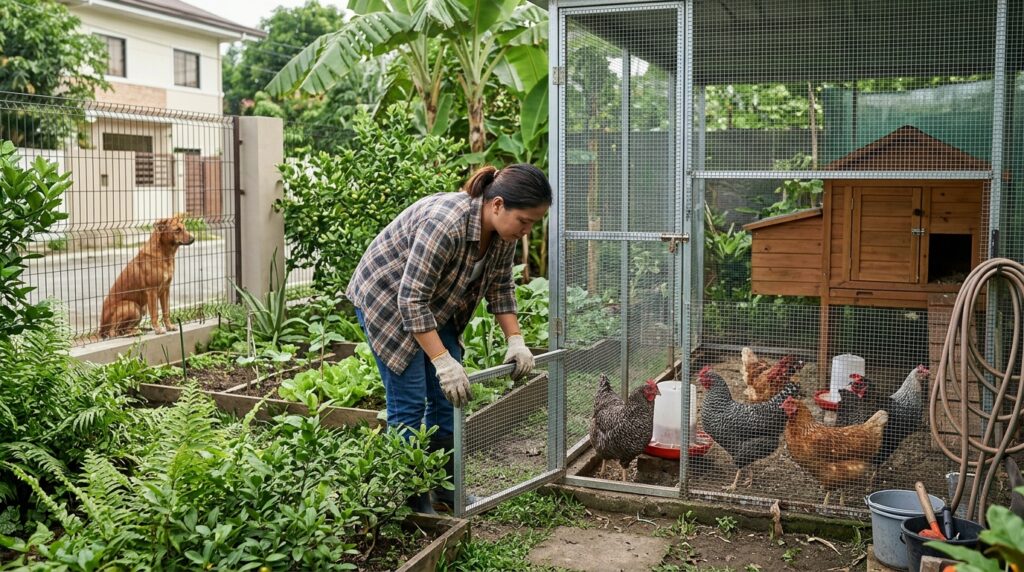
Losing a chicken to a neighbor’s dog can be heartbreaking. Backyard chickens are more than egg producers. They have routines, personalities, and a place in your everyday life. When a dog gets into your yard and kills one of them, you may feel upset, angry, or worried about whether the rest of your flock is safe.
You may also wonder what to do next. Should you contact your neighbor? Should you report the incident? Can you recover the cost of the chicken? And how can you prevent the same thing from happening again?
The first priority is protecting the chickens that remain. After that, document what happened, communicate carefully, and decide whether additional reporting or repairs are necessary.
Here is a practical, step-by-step guide to help you respond without escalating the situation.
🛡️ 1. Secure the Remaining Chickens Immediately
Before discussing responsibility or compensation, make sure the surviving flock is safe.
A dog that has chased or attacked chickens may return, particularly if it can easily enter the same yard again.
Take these steps:
- Move the remaining chickens into a secure coop or enclosed run. Do not leave them in the area where the dog entered until you have checked the enclosure.
- Inspect the entire perimeter. Look for damaged fencing, loose gates, holes beneath barriers, and gaps between panels.
- Check every chicken for injuries. Dogs can injure birds through bites, crushing, or rough handling, and some wounds may be hidden beneath feathers.
- Keep the flock calm. Provide access to clean water, familiar shelter, and a quiet environment.
- Temporarily suspend free-ranging. Wait until you have a safer setup and a clear plan for preventing another intrusion.
If a chicken has puncture wounds, bleeding, difficulty breathing, trouble standing, or marked weakness, contact a veterinarian promptly. Even a bird that appears to have only minor injuries may need assessment.
Do not assume the surviving chickens are unharmed simply because they are walking around normally.
📸 2. Document What Happened
Once the flock is secure and any urgent animal-care needs have been addressed, create a clear record of the incident.
Documentation may help when you speak with the dog’s owner, contact local authorities, or ask about compensation.
Record the following details:
- The date and approximate time of the incident
- The location where it happened
- The number of chickens killed or injured
- What you personally witnessed
- Any visible damage to your fence, gate, or chicken run
- The dog’s appearance and any identifying details you can safely establish
- Names and contact details of witnesses, if they are willing to provide them
Take photographs of the damaged enclosure and the affected area when it is safe to do so. Keep relevant veterinary records, receipts, and other expenses.
If a security camera recorded the incident, save the original footage and a backup. Avoid editing the original recording.
Important: Distinguish what you saw from what you believe happened. If you did not witness the attack directly, describe the evidence you found rather than stating uncertain details as facts.
This makes your account more credible and helps avoid unnecessary disputes.
🗣️ 3. Talk to Your Neighbor Calmly and Clearly
Talking to a neighbor can be difficult, especially when you are grieving the loss of an animal. You may feel that the owner should already know their dog needs to be contained.
Still, a calm, factual conversation is often a useful first step when it is safe to have one.
Explain what happened, identify the damage, and focus on preventing another incident.
You could say:
Hi, I need to talk to you about an incident involving your dog and my chickens. On [date], your dog entered my yard and killed one of my chickens. I’m upset about what happened, and I’m concerned about the safety of the rest of my flock. Could we discuss how to make sure your dog cannot enter my property again?
This message communicates the seriousness of the situation without making threats.
What if your neighbor becomes defensive?
The neighbor might deny responsibility, say the dog was only playing, or argue that the chickens should have been better protected.
You do not need to settle every disagreement during the first conversation.
Instead:
- Stick to the facts you can support.
- Explain the steps needed to prevent another intrusion.
- Keep communication in writing if conversations become tense.
- Avoid insults, threats, or arguments on social media.
- End the conversation if you feel unsafe.
You can be firm about protecting your flock without escalating the conflict.
If the dog is still loose or poses an immediate danger, prioritize safety and contact the appropriate local service rather than trying to handle the dog yourself.
⚖️ 4. Can You Ask for Compensation?
You may be able to seek compensation for a chicken killed by someone else’s dog, but the outcome depends on your local laws and the circumstances of the incident.
Depending on the jurisdiction, relevant factors may include the dog’s history, whether the owner knew of its behavior, applicable animal-control rules, property boundaries, and the evidence available.
Possible expenses to document include:
- The reasonable replacement value of the chicken
- Veterinary treatment for injured birds
- Necessary repairs to damaged fencing or enclosures
- Other losses that local law recognizes
Do not assume that every expense is automatically recoverable. The rules differ by location, and some claims may require proof of ownership, causation, value, or negligence.
A practical first step is to ask the neighbor whether they are willing to discuss reasonable reimbursement. Keep the request factual and provide copies of relevant receipts or other supporting evidence.
If the neighbor refuses, you can ask your local government, animal-control office, legal-aid service, or a qualified lawyer about the available process.
Avoid demanding an arbitrary amount or making threats. A clear record of actual losses is more useful than an emotional argument.
🚨 5. When Should You Report the Incident?
Not every incident follows the same reporting process. However, contacting local authorities may be appropriate when:
- The dog is repeatedly roaming loose.
- The owner refuses to take reasonable steps to contain it.
- The dog has attacked other animals or poses an ongoing safety risk.
- You are unsure which local animal-control rules apply.
- You need an official record of the incident.
- There is an immediate danger to people or animals.
Depending on where you live, the appropriate contact may be animal control, a municipal or local government office, a police service, or a local veterinary or agriculture office.
Explain what happened, provide your documentation, and ask what procedure applies. An authority may be able to explain local rules or record a complaint, but reporting does not guarantee that the owner will be fined or that you will receive compensation.
If you live in a community with a homeowners’ association or shared-property rules, check those rules as well. They may provide an additional way to address a recurring problem.
Never retaliate against the dog or attempt to poison, injure, or unlawfully trap it. Such actions can endanger people and other animals and may create legal problems of their own.
🔒 6. Strengthen Your Chicken Run Against Dogs
A conversation may help, but your flock also needs a physical barrier that does not depend entirely on the neighbor’s cooperation.
Check the fence from ground level upward
Dogs may push through weak panels, squeeze through gaps, jump over low barriers, or dig beneath fencing.
Inspect:
- Loose or broken fence sections
- Gaps beneath gates
- Weak corners and connections
- Openings around posts and buildings
- Areas where the ground slopes away from the fence
- Places where a dog could push against the enclosure
Repair obvious weaknesses before returning chickens to the area.
Choose appropriate fencing
Chicken wire is useful for containing chickens, but it is generally not strong enough to stop a determined dog from pushing through or tearing it.
Depending on your situation, sturdier welded-wire fencing, a stronger framed run, or a more secure gate may be appropriate.
The correct material depends on the dog’s size and behavior, your local weather, the enclosure design, and the other predators in your area.
Secure the bottom edge
If the dog is digging beneath the fence, consider a buried barrier or an outward-facing ground apron made from suitable wire mesh. A properly installed apron can make digging under the fence more difficult.
Check that the mesh is securely attached and does not have sharp exposed edges that could injure chickens, pets, or people.
Improve the gate and latch
A strong fence is less effective if the gate is easy to push open.
Use a secure latch that stays closed, inspect hinges, and make sure the gate meets the ground closely enough to prevent access beneath it.
If your budget is limited, start with the easiest entry points to repair, then improve the rest of the enclosure in stages.
💰 7. Protect Your Flock on a Limited Budget
You do not necessarily need to rebuild your entire chicken yard immediately. Prioritize the changes that address the actual weakness.
A sensible order is:
- Immediate: Keep the flock in the safest available enclosed area.
- Low cost: Repair gaps, secure the gate, and strengthen loose connections.
- Next priority: Reinforce weak lower sections or areas where digging is possible.
- Longer term: Upgrade to a stronger, more secure run if the existing structure cannot reliably contain the chickens and keep dogs out.
Use materials that are safe, weather-resistant, and suitable for the expected force. A quick patch that can be pushed aside easily may create a false sense of security.
Also consider your own schedule. If you cannot supervise the chickens throughout the day, a secure enclosure is generally more dependable than relying on someone being available to watch them.
🐔 8. Help the Surviving Flock Settle After the Attack
Chickens may become more alert, hide more often, or change their usual behavior after a frightening incident. However, these changes can also indicate pain or injury, so observe each bird carefully.
For the next several days:
- Keep the flock in a familiar, secure environment.
- Maintain their normal feeding and watering routine.
- Check that every bird is eating, drinking, and moving normally.
- Watch for limping, wounds, unusual weakness, or persistent isolation.
- Avoid introducing unnecessary changes while the flock settles.
If a bird stops eating or drinking, appears severely distressed, or develops concerning symptoms, seek veterinary advice rather than assuming it is only frightened.
Do not rush to resume free-ranging simply because the flock appears calmer. First address the entry point and make sure the enclosure offers adequate protection.
📝 9. Create a Prevention Plan With Your Neighbor
If you and your neighbor can communicate constructively, agree on specific actions rather than relying on a vague promise that the incident will not happen again.
For example, the neighbor may agree to keep the dog securely contained, repair a damaged section of their own fence, or prevent unsupervised roaming. You can agree to maintain your chicken enclosure and notify them if you observe another intrusion.
Keep the discussion focused on practical prevention, not blame.
If the neighbor refuses to cooperate, continue documenting incidents and seek guidance from the appropriate local authority. You should not have to rely on repeated informal conversations if the risk continues.
The goal is to establish a safer arrangement for your chickens, the dog, and the people living nearby.
Final Thoughts 💚
When a neighbor’s dog kills a chicken, it is understandable to feel angry and worried about the rest of your flock. You may need time to process the loss, but taking a few practical steps can help you regain control of the situation.
Secure the surviving birds first. Document the incident, communicate with your neighbor when safe, and ask about local reporting or compensation options if needed. Then strengthen the fence, gate, and lower barriers to reduce the chance of another attack.
You cannot control every action another pet owner takes, but you can make your own chicken setup more secure and create a clear record if the problem continues.
Protecting the rest of your flock starts with prevention, careful documentation, and calm, consistent action. 🐓🏡




