Summer can make the egg basket look surprisingly different even when you have not changed your hens’ feed, nesting boxes, or daily routine. ☀️ You may suddenly find thinner shells, rough surfaces, wrinkles, unusual shapes, smaller eggs, or fewer eggs, and the immediate assumption is often that the flock needs more calcium. Calcium certainly matters, but abnormal shells during a heat wave can also begin because heat changes how chickens eat, drink, breathe, and use nutrients.
That distinction matters because repeatedly adding calcium will not correct every summer shell problem. A better approach is to look at when the egg changes started, whether one hen or several hens are affected, how much the birds are eating, and how they are handling the temperature before deciding what needs to change. 🥚 Think of the strange egg as a clue rather than a diagnosis.
Your Eggs May Change Before Your Routine Does
A hen can be eating the same brand of layer feed she ate in spring while consuming less of it per day once temperatures climb. Chickens naturally generate heat while digesting food, and hot conditions can suppress feed intake as birds attempt to reduce additional body heat. 🌡️ Less feed can mean less total intake of energy, protein, vitamins, minerals, and calcium even though the formulation inside the feeder has not changed.
That helps explain why summer egg problems can seem to appear without warning. Egg production is demanding, and shell formation depends on a chain of processes rather than calcium alone, so disruption in feed intake, water balance, or normal laying physiology can show up in the egg basket. The result might be reduced production, changes in egg size, or poorer shell quality, particularly during prolonged periods of high heat.
Why Hot Chickens Often Eat Less
Chickens do not sweat the way people do, so they rely heavily on behaviors such as panting, increasing water intake, seeking shade, spreading their wings away from their bodies, and reducing activity. 🐔 When keeping cool becomes the priority, spending long periods eating may become less attractive, especially during the hottest part of the afternoon. A hen may therefore consume less of the complete ration that normally supplies most of the nutrients needed for consistent egg production.
This is why simply asking, “Does she have layer feed?” is not enough during a heat wave. The more useful question is, “Is she actually consuming enough of her balanced feed?” A feeder can remain full while overall consumption falls, making observation of the flock more useful than judging nutrition from feed availability alone.
Shell Quality Is More Than A Calcium Question
Calcium is a major structural component of eggshells, which makes calcium deficiency an understandable first suspicion when a shell becomes thin or fragile. 🥚 Laying hens should receive an appropriate complete ration, and a suitable supplemental calcium source such as oyster shell can commonly be offered separately so birds can consume additional calcium according to their needs. However, the appearance of one unusual egg cannot tell you by itself that calcium deficiency caused it.
Wrinkled, misshapen, rough, thin, or shell-less eggs can occur for different reasons, and similar-looking abnormalities may have different causes. Heat, temporary laying irregularities, age, individual reproductive differences, stress, nutrition, and health problems can all belong on the investigation list depending on the circumstances. That is why diagnosis should start with patterns rather than with a calcium tablet.
One Hen Or The Whole Flock?
One of the most useful clues is also one of the simplest: how many hens are producing abnormal eggs? 🔎 If several birds begin laying thinner or unusual shells during the same stretch of extremely hot weather, a shared environmental or management factor deserves particular attention. Heat exposure, falling feed consumption, water availability, and the overall ration should all be reviewed.
If four hens are eating the same diet but only one repeatedly produces unusual eggs, the pattern becomes different. That does not completely eliminate nutrition or heat as contributing factors, because individual birds can respond differently, but it increases the importance of examining that hen’s age, laying history, appetite, behavior, and general condition. Persistent one-hen problems deserve more careful monitoring instead of automatically changing the diet of the entire flock.
What To Observe First During Hot Weather
Start with the chickens rather than the eggs. ☀️ Observe whether birds are panting heavily, holding their wings away from their bodies, crowding around water, hiding in shade, becoming unusually inactive, or eating noticeably less than normal. These observations help establish whether the shell changes are occurring alongside obvious heat pressure.
Next, inspect the egg basket over several days rather than judging the flock from one strange egg. Record egg numbers, shell thickness, shape, which hen laid the abnormal egg if known, daytime temperatures, feed consumption, and whether other hens are affected. A simple pattern log can reveal whether the issue follows hot days, remains isolated to one hen, or continues after temperatures improve.
The Summer Priority Order
During extreme heat, begin with cool, clean, continuously available water. 💧 Chickens may substantially increase their water consumption in hot weather, so a waterer that comfortably lasts all day in mild spring temperatures may become inadequate during summer. Check water frequently, provide enough drinking space for the flock, place water where it stays reasonably shaded, and make sure timid hens cannot easily be excluded.
Next come shade and airflow, followed by reliable access to the complete ration that forms the nutritional foundation of the flock. Encourage normal feed access during cooler parts of the day rather than replacing substantial portions of the ration with treats simply because chickens eagerly eat them. 🌾 After those fundamentals are secure, verify that laying hens have an appropriate calcium source instead of treating increasing supplementation as the first response to every unusual shell.
Treats Can Quietly Dilute The Summer Diet
A handful of scratch, fruit, vegetables, kitchen leftovers, or frozen summer snacks can seem harmless, particularly when chickens appear less interested in their regular feed. 🍉 The problem is not that chickens can never receive treats; it is that large amounts of extras can displace nutritionally balanced feed at exactly the time hens are already eating less because of heat. The bird may fill part of her limited appetite with foods that do not provide the same nutrient balance as a complete layer ration.
Keep treats supplementary rather than allowing them to become the main summer menu. When shell quality changes, reviewing the amount of scratch, scraps, mealworms, fruit, and other extras can be more informative than automatically buying another supplement. Think of the complete ration as the nutritional foundation and treats as optional decoration on top.
Should You Give Chickens Electrolytes?
Electrolyte products are sometimes used as temporary support during periods of significant heat stress, transportation, or other stressful events. 💧 They should not be treated as a magical shell-strengthening ingredient or as a substitute for shade, ventilation, water, and balanced feed. Follow the product instructions carefully because concentrations and intended uses differ between formulations.
Plain fresh water should remain consistently available unless a specific product’s instructions direct otherwise. If you use any additive, clean water equipment carefully because residues and nutrients left in warm waterers can encourage unwanted buildup. Electrolytes belong in the supportive-management category, not the “strange egg equals automatic treatment” category.
What Different Summer Eggs Can Tell You
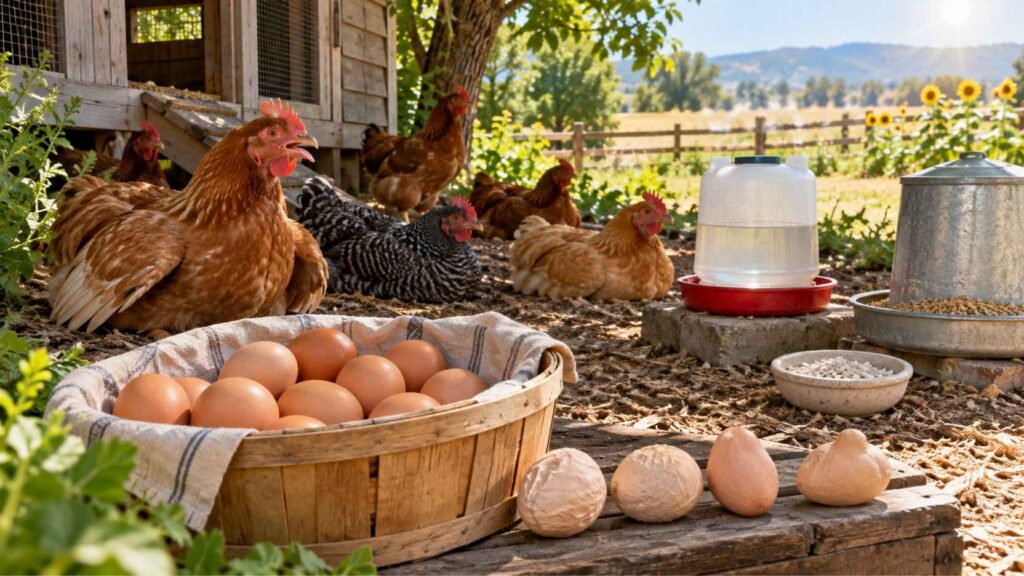
A thin or fragile shell should prompt a review of the complete ration, calcium availability, overall feed intake, and recent heat conditions. A shell-less or very soft egg deserves similar investigation, although occasional reproductive irregularities can also occur without representing a simple dietary shortage. 🥚 The appearance itself is useful information, but it cannot conclusively identify the cause.
A wrinkled, oddly shaped, elongated, rough, or heavily deposited shell provides a different clue and should make you pay attention to repetition. One isolated strange egg from an otherwise active hen may justify observation, while the same abnormality appearing repeatedly is more significant. Taking photographs and recording consecutive eggs makes it easier to see whether the problem is improving, worsening, or simply occurring occasionally.
Keep A Seven-Egg Summer Shell Log
Instead of changing three supplements at once, monitor the next several eggs from the affected hen when identification is possible. 📝 Record shell thickness as normal or thin, shape as normal, wrinkled, rough, or misshapen, appetite as normal or reduced, activity as normal or unusual, and weather as moderate or unusually hot. Also note whether other hens begin showing similar changes.
Seven eggs will not diagnose a medical condition, but the record can reveal a useful pattern and prevent guesswork. If abnormal shells appear mainly after extreme heat and improve when conditions moderate, the environment becomes an important clue; if one hen remains abnormal regardless of weather while the others remain normal, the investigation should shift toward that individual bird. This approach is far more informative than repeatedly adding another calcium source and hoping for a different result.
When It Is More Than A Summer Egg Problem
An unusual egg should never be evaluated separately from the hen that produced it. 🚩 Pay closer attention when persistent shell abnormalities occur together with reduced appetite, marked lethargy, breathing difficulty unrelated to temporary heat panting, abnormal posture, abdominal enlargement, unusual droppings, difficulty laying, significant weight change, or a clear decline in general condition. Those combinations move the situation beyond routine shell-quality troubleshooting.
Persistent abnormalities in one hen after weather conditions and basic management have normalized also deserve additional attention. A poultry-experienced veterinarian or other qualified professional can evaluate problems that cannot be distinguished reliably from egg appearance alone. Avoid repeatedly experimenting with increasingly large supplement doses when the pattern suggests something more complicated than ordinary summer management.
Your 95°F Egg-Production Checklist
When temperatures become extremely hot, run through the basics before blaming calcium: fresh water available everywhere, adequate shade, good airflow, accessible complete feed, sensible treat amounts, appropriate calcium access, and daily flock observation. 🌡️ Check eggs at the same time and compare today’s production with the flock’s normal pattern rather than demanding perfect consistency every day. Small changes across several measures often tell you more than one dramatically strange-looking egg.
Also remember that individual hens do not respond identically to heat. Breed, age, body condition, feathering, laying stage, and individual physiology can influence how noticeably a bird reacts to difficult summer conditions. The goal is therefore not to force every bird into identical production but to identify when a temporary seasonal change becomes a persistent welfare or health concern.
Don’t Blame Every Weird Egg On Summer
Heat is an important explanation to investigate, especially when shell changes appear at the same time as a heat wave, but correlation alone does not prove that temperature caused the egg abnormality. 🔍 If normal weather returns while one hen continues producing repeatedly abnormal shells, revisit her diet, calcium access, age, laying history, behavior, and overall condition rather than continuing to blame yesterday’s temperatures. Likewise, abnormalities across multiple birds outside hot weather may point toward a flock-wide management or nutritional issue worth reviewing.
The best summer egg strategy is therefore observe first, correct the fundamentals, and supplement thoughtfully rather than reactively. Keep chickens cool, keep water abundant, protect access to balanced feed, offer appropriate calcium, and watch patterns across both the birds and their eggs. 🐔 A strange shell is not automatically a calcium deficiency—it is information that helps you decide what to check next.