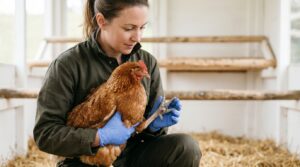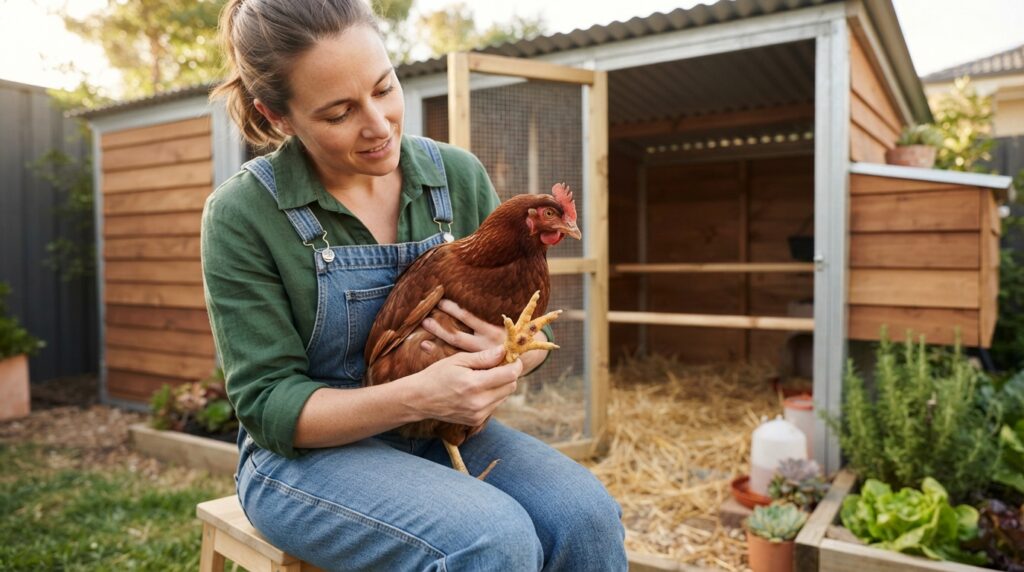
Bumblefoot is one of those chicken problems that can be easy to miss at first.
A chicken may continue eating, walking, scratching, and behaving normally while a small problem is developing underneath one foot. By the time the bird starts limping noticeably, the foot may already be painful or infected.
The good news is that regular foot checks can help you notice changes early.
For backyard chicken keepers, the goal isn’t to become your own veterinarian. It’s to recognize what looks abnormal, understand why it matters, and know when a chicken needs professional help. 🩺
🐾 What Is Bumblefoot?
“Bumblefoot” is the common name for pododermatitis, an inflammatory condition affecting the foot, especially the underside.
It can range from a small area of irritation to a more serious infection involving deeper tissues.
The classic sign beginners often hear about is a dark or black spot on the bottom of the foot. But bumblefoot does not always begin with an obvious black scab.
Early changes may be much less dramatic.
You might notice:
- Mild redness
- Swelling
- Thickened skin
- A small scrape or wound
- A warm-looking or irritated area
- Slight reluctance to put weight on one foot
- Limping
- Holding one foot up more often
That is why checking the whole foot is more useful than simply looking for a black spot.
🔎 What Should Healthy Chicken Feet Look Like?
Before you can recognize a problem, it helps to know what is normal for your individual chickens.
Healthy feet generally have:
- Intact skin
- No obvious open wounds
- No unexplained swelling
- No significant redness
- No drainage
- Normal use of both legs and feet
Scales and skin texture naturally vary between chickens and breeds, so don’t assume that every difference in appearance means disease.
Instead, look for new or changing abnormalities.
Taking occasional photos of your chickens’ feet can even give you a useful baseline.
⚠️ The First Things Beginners Should Look For
A quick foot check doesn’t need to become a complicated examination.
When you handle a chicken, look at the underside and sides of both feet.
1. A Dark Scab or Spot
A black or dark scab on the bottom of the foot is a classic sign associated with bumblefoot.
But don’t automatically diagnose bumblefoot from color alone.
A dark mark can have different causes, and the appearance needs to be considered together with swelling, pain, wounds, and the chicken’s behavior.
2. Swelling
Compare the affected foot with the other foot.
Is one foot noticeably:
- Larger?
- Puffier?
- Redder?
- Warmer?
- More tender?
A difference between the two feet can be an important clue.
3. Redness
Look for localized redness, especially around a wound, scab, or swollen area.
Mild irritation can have many causes, so redness alone doesn’t establish a diagnosis. However, redness combined with swelling, pain, or discharge deserves more attention.
4. A Wound or Broken Skin
Small injuries can provide an entry point for bacteria.
Check for:
- Scratches
- Cuts
- Punctures
- Cracked skin
- Damaged foot pads
Don’t ignore a seemingly minor injury simply because the chicken is still walking normally.
5. Limping
A chicken that suddenly walks differently deserves a closer look.
You may notice the bird:
- Avoiding one foot
- Taking shorter steps
- Standing unevenly
- Sitting more than usual
- Holding one foot off the ground
Lameness can have causes other than bumblefoot, including injuries affecting the leg, joints, toes, or other structures.
That’s why the foot should be examined rather than assuming the problem is bumblefoot.
🐔 Why Can Bumblefoot Happen?
Bumblefoot is not simply a “dirty coop disease.”
Multiple factors can contribute to foot injury and inflammation.
Potential contributors include:
- Trauma to the foot
- Abrasive or rough surfaces
- Sharp objects
- Hard or poorly designed perches
- Repeated pressure on the foot
- Obesity or excessive body weight
- Existing foot or leg problems
- Unsuitable flooring
- Poorly maintained housing
Once the skin barrier is damaged, bacteria can potentially enter the tissues.
This is one reason prevention is about more than cleaning.
🪵 Check the Perches
Your chickens spend a lot of time standing on their feet, so their perches deserve attention.
Look for:
- Sharp edges
- Splinters
- Rough damaged surfaces
- Nails or screws protruding
- Unstable perches
- Surfaces that repeatedly put pressure on the same area
Perches should be stable and appropriate for the chickens using them.
You don’t need to obsess over finding a perfectly shaped perch. The important thing is to avoid obvious hazards and regularly inspect wooden structures as they age.
🧹 Check the Coop Floor Too
Walk through the coop and run with the chicken’s feet in mind.
Look for anything that could cause repeated injury:
- Sharp wire
- Broken plastic
- Splintered wood
- Exposed fasteners
- Jagged edges
- Hard, damaged surfaces
Also keep bedding reasonably clean and dry.
Good husbandry does not guarantee that bumblefoot will never occur, but reducing environmental hazards can reduce opportunities for foot injuries.
🩺 When Should You Call a Veterinarian?
Not every foot abnormality requires an emergency visit.
However, certain signs should make you more cautious.
Contact a veterinarian if you notice:
- Significant swelling
- Severe or worsening lameness
- An open or deep wound
- Pus or other discharge
- Increasing redness or heat
- A chicken that appears very painful
- A problem that is getting worse
- Loss of appetite or marked lethargy
- Difficulty standing or walking
- Swelling extending beyond the immediate foot area
A veterinarian may need to determine whether the infection involves deeper tissues and whether treatment such as antibiotics, wound care, pain management, or a procedure is appropriate.
🚫 Don’t Automatically Cut Out the Scab
This is especially important for beginners.
A dark scab can make people want to immediately grab a sharp tool and remove it.
That’s not a good DIY default.
Bumblefoot can involve tissues beneath the surface, and treatment depends on the severity and extent of the problem. Attempting to cut into an infected foot without appropriate veterinary guidance can cause pain, bleeding, tissue damage, or worsen the situation.
If you’re unsure what you’re looking at, get veterinary advice rather than treating the foot like a simple splinter.
🧼 What Can Beginners Do Before Veterinary Advice?
If you find a minor foot injury, keep the chicken’s environment clean, dry, and free from obvious hazards.
You can also:
Separate the Bird if Necessary
If the chicken is being bullied or cannot comfortably reach food and water, temporary separation may be appropriate.
But avoid unnecessary isolation if the bird is comfortable and safe with the flock.
Inspect the Housing
Find the possible source of repeated foot trauma.
Ask:
Could a perch be causing this?
Is there something sharp in the run?
Is the flooring damaging the feet?
Is the bird repeatedly landing awkwardly?
Monitor the Chicken
Pay attention to:
- Appetite
- Activity
- Walking
- Standing
- Foot swelling
- Changes in the wound
If the condition is worsening, don’t keep waiting for it to resolve on its own.
📅 Make Foot Checks Part of Your Routine
You don’t need to inspect every chicken’s feet every single day.
Instead, combine quick checks with normal handling.
For example:
Weekly: observe how the flock walks and stands.
During handling: briefly inspect feet when practical.
After an injury: monitor that bird more closely.
During coop maintenance: inspect perches and flooring for hazards.
This makes foot health part of ordinary chicken care rather than a special event.
📸 A Simple “Chicken Foot Check” Routine
Here’s an easy routine beginners can remember:
👀 Look
Watch the chicken walk.
🐾 Lift
Gently examine each foot.
🔍 Compare
Compare the left and right sides.
📷 Record
Take a photo if you notice something unusual.
🩺 Monitor
Watch for changes over the next few days.
☎️ Escalate
Contact a veterinarian when there are signs of significant infection, pain, worsening disease, or uncertainty about treatment.
This simple system is more useful than trying to memorize every possible appearance of bumblefoot.
🌱 Prevention Starts With the Environment
You cannot guarantee that a chicken will never develop bumblefoot.
Chickens can injure their feet even in well-managed coops.
But you can reduce avoidable risks.
Keep perches safe
Inspect them for sharp edges, splinters, and protruding hardware.
Keep housing maintained
Repair damaged areas before they become hazards.
Provide appropriate footing
Avoid surfaces that repeatedly injure or excessively abrade the feet.
Keep bedding reasonably clean and dry
Good sanitation supports overall flock health.
Watch body condition
Excess body weight can increase pressure on the feet.
Pay attention to injuries
A small foot wound deserves observation, particularly if it becomes swollen or painful.
🐔 Final Thoughts
Bumblefoot is easier to manage when you learn to notice changes before they become dramatic.
Don’t wait for a chicken to become severely lame before looking at its feet.
A quick comparison of both feet can reveal swelling, wounds, redness, scabs, or other changes that deserve attention. 🐾
At the same time, don’t assume every dark spot is bumblefoot or attempt to cut into a chicken’s foot without knowing what you’re dealing with.
The beginner’s job is simple:
Observe. Compare. Prevent obvious hazards. Monitor changes. Get veterinary help when needed.
That approach keeps chicken care practical, calm, and much safer for your flock. 🐔❤️