
Introduction
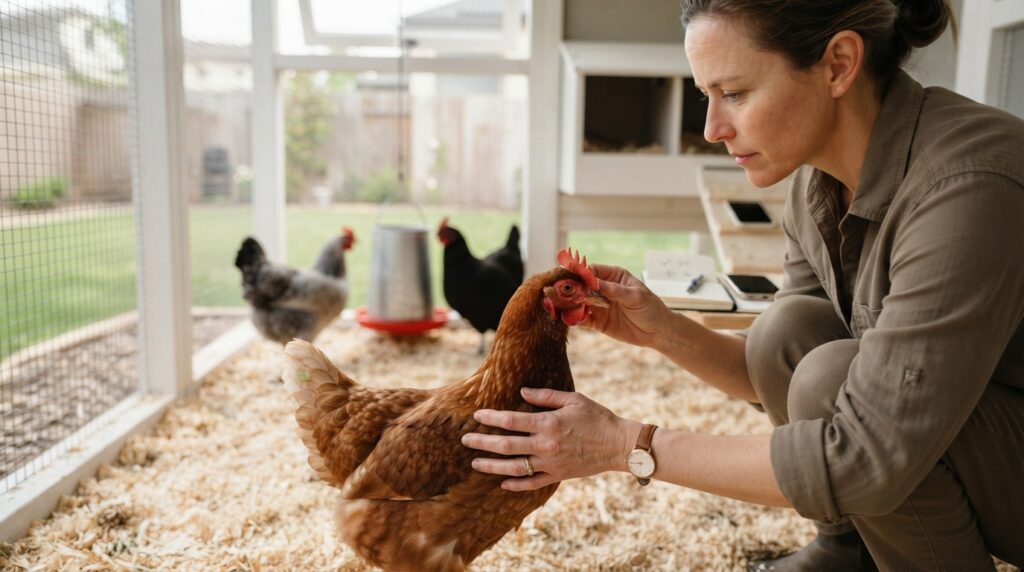
One of the easiest ways to become better at backyard chicken keeping is to learn what your birds normally look and feel like.
You don’t need to examine a chicken like a veterinarian every day.
But knowing how to check a few key areas, including the crop, comb, eyes, and vent, can help you notice changes early.
These areas can provide useful clues about a chicken’s general condition. A crop that changes unexpectedly, unusually pale or abnormal comb color, swollen or cloudy eyes, or a dirty or inflamed vent can all be reasons to take a closer look.
The important word is change.
A chicken’s appearance naturally varies with age, breed, reproductive status, temperature, activity, and time of day. One unusual observation does not automatically mean that a chicken is sick.
Instead, think of your routine check as a simple backyard health screen:
What does this chicken normally look like, and what is different today? 👀
1. Start by Watching the Chicken
Before touching the bird, watch her.
This takes less than a minute and can sometimes tell you more than a close examination.
Look for:
- Alertness
- Normal posture
- Interest in food
- Drinking
- Walking normally
- Interaction with the flock
- Normal breathing
- Normal activity
A healthy chicken should generally be alert and responsive, with a normal posture and appetite.
A bird that is suddenly sitting alone, reluctant to move, refusing food, or behaving very differently from usual deserves closer attention.
Don’t immediately grab the chicken.
Observe first.
This also gives you a useful baseline for comparison.
2. Check the Crop 🌾
The crop is a pouch at the base of the chicken’s neck that temporarily stores food before it moves farther through the digestive system.
Because chickens eat throughout the day, the crop changes depending on when you check it.
That makes timing extremely important.
After eating
The crop may feel:
- Full
- Soft
- Rounded
- Firm but pliable
That’s normal.
After a period without food
The crop should generally become much less full.
This is why checking the crop at exactly the same time every day is more useful than randomly checking it.
3. What Should a Normal Crop Feel Like?
There isn’t one exact “normal” crop texture.
Its contents depend on what the chicken has eaten and how recently she ate.
A recently fed chicken may have a crop containing feed, grass, grains, or other material.
The crop should generally feel like a food-filled pouch rather than a permanently hard, massively distended structure.
Use gentle pressure.
You are not trying to squeeze the contents out.
Think of the examination as:
touch → notice → compare
rather than:
press → manipulate → empty
4. What Crop Changes Should Get Your Attention? 🚨
Pay attention to a crop that seems unusual in context.
Examples include:
- The crop remains unusually full when it would normally be empty
- The crop feels unusually hard
- The crop feels unusually doughy or abnormal
- The crop is markedly enlarged
- The chicken has a persistent crop abnormality accompanied by poor appetite or lethargy
- The chicken repeatedly regurgitates
- There is an unusual odor from the mouth
- The chicken is losing weight despite apparently eating
Crop problems can have different causes, including problems with normal crop emptying and other digestive issues.
You cannot reliably identify the cause simply by feeling the crop.
If an abnormal crop finding persists or is accompanied by other signs of illness, contact a veterinarian experienced with poultry.
5. Don’t Diagnose “Sour Crop” From One Check
“Sour crop” is a commonly used backyard poultry term, but it can encourage people to jump to a diagnosis based on one observation.
An unusual crop can have several possible explanations.
A crop that feels full in the evening isn’t automatically abnormal.
A crop that feels different after a large meal isn’t automatically diseased.
A persistent abnormality, particularly when combined with other changes, is much more meaningful.
This is why timing, repeated observations, and the chicken’s overall condition matter.
6. Check the Comb ❤️
The comb is one of the easiest features to observe.
Depending on breed and individual variation, a healthy adult laying hen commonly has a developed, well-colored comb.
But comb appearance can naturally change.
For example, comb color can be influenced by:
- Age
- Reproductive status
- Temperature
- Individual variation
- Breed
- Circulation
So don’t use comb color as a stand-alone diagnostic test.
Instead, ask:
Does this look normal for this particular chicken?
7. Watch for Sudden Comb Changes
A comb that suddenly looks significantly different deserves attention.
Look for:
- Unusual paleness
- Dark or bluish discoloration
- Swelling
- Crusting
- Scabs
- Injury
- Abnormal spots
- Excessive dryness or damage
Some changes can be associated with environmental conditions or normal physiology, while others can accompany illness.
For example, very dark or bluish discoloration can be associated with inadequate oxygenation or circulation and may be particularly concerning when combined with breathing difficulty.
Don’t diagnose the cause from color alone.
Look at the entire chicken.
8. Don’t Confuse Normal Comb Changes With Disease
A hen’s comb isn’t a permanent color indicator.
It can look different depending on her physiological state.
This is particularly important around laying.
A comb that looks somewhat less vibrant than usual doesn’t automatically mean the chicken is sick.
Compare the bird with her own normal appearance, rather than another chicken.
Two healthy hens can naturally have different combs.
9. Examine the Eyes 👁️
Eyes are another useful area to check.
A healthy chicken’s eyes should generally look:
- Clear
- Bright
- Open
- Free from obvious discharge
- Symmetrical
Look at both eyes.
Don’t just inspect the chicken from one side.
10. Watch for Eye Warning Signs
Pay attention to:
- Swelling
- Cloudiness
- Excessive tearing
- Discharge
- Crusting
- Redness or irritation
- One eye remaining closed
- Bulging
- Changes in pupil appearance
- Difficulty seeing or navigating
An eye problem can be localized, but it can also occur alongside respiratory disease or other systemic illness.
For example, respiratory infections can sometimes cause watery or swollen eyes.
That is why an eye examination should always be combined with observation of:
- Breathing
- Nose
- Face
- Appetite
- Energy
- Other flock members
11. Look at the Area Around the Eyes
Don’t examine only the eyeball.
Look at the surrounding facial area.
Check for:
- Swelling
- Wet feathers
- Discharge
- Crust
- Asymmetry
- Swollen sinuses
Facial swelling can be particularly important when accompanied by nasal discharge or respiratory symptoms.
If several chickens develop similar facial or eye changes, the situation deserves prompt veterinary attention because contagious respiratory diseases are possible.
12. Don’t Put Random Products in the Eye
This is an important backyard poultry rule.
Avoid putting human eye drops, leftover medication, essential oils, or household products into a chicken’s eye unless a veterinarian specifically recommends the product and its use.
An irritated eye can have many possible causes.
Treatment depends on the cause.
When an eye looks significantly abnormal, professional assessment is safer than experimenting with multiple products.
13. Check the Vent 🪶
The vent is the external opening through which a chicken passes feces and, in hens, eggs.
A quick visual check can tell you whether something looks different from normal.
Look for:
- Clean surrounding feathers
- Excessive fecal material
- Wetness
- Swelling
- Redness
- Bleeding
- Tissue protruding from the vent
- Parasites or unusual material
A small amount of dried material isn’t automatically a serious illness.
But a persistently dirty, irritated, swollen, bleeding, or abnormal vent deserves attention.
14. A Dirty Vent Isn’t Always “Just Poop”
Droppings can stick to feathers for many reasons.
For example:
- Loose droppings
- Diarrhea
- Dietary changes
- Wet conditions
- Long feathers
- Difficulty grooming
- Illness
So don’t automatically assume that a dirty vent means parasites.
Look at the chicken’s overall condition.
Ask:
Is she eating?
Is she drinking?
Are her droppings consistently abnormal?
Is she losing weight?
Is she lethargic?
Are other chickens affected?
The pattern matters more than one dirty feather.
15. Watch for Vent Prolapse 🚨
A particularly important warning sign is tissue protruding from the vent.
This can occur in hens and may be associated with egg-laying or reproductive problems, among other causes.
A prolapsed vent should not be treated as a cosmetic issue.
The exposed tissue can become injured, contaminated, or pecked by other chickens.
What should you do?
Separate the affected chicken from flock mates to prevent pecking and contact a veterinarian promptly for appropriate guidance.
If there is heavy bleeding, severe injury, collapse, or obvious distress, seek urgent veterinary care.
Avoid repeatedly manipulating or pushing tissue back into place without professional guidance.
16. Check for External Parasites
While examining the vent area, look closely at the feathers and skin.
External parasites can sometimes be found around:
- The vent
- Under the wings
- Around the neck
- Other feathered areas
Look for:
- Tiny moving insects
- Clusters of eggs attached to feather shafts
- Irritated skin
- Feather damage
- Excessive scratching
- Restlessness
Not every feather abnormality means parasites, but repeated inspection can help you recognize changes.
If you suspect parasites, proper identification matters because treatment differs depending on the parasite.
17. Check the Chicken’s Weight ⚖️
The crop, comb, eyes, and vent are useful, but body condition adds another important piece of information.
A chicken can look relatively normal while gradually losing weight.
Regularly weighing birds can help you notice trends.
Use the same scale and, as much as practical, similar conditions when weighing.
Record:
Date → chicken → weight
You don’t need to weigh every bird constantly.
But keeping records can be especially helpful for a bird that has been sick, isn’t eating normally, or seems to be losing condition.
18. Combine the Four Checks
The biggest mistake is treating one body part as a diagnosis.
Instead, combine your observations.
Crop
Is it behaving normally for the time of day and feeding schedule?
Comb
Does it look normal for this particular chicken?
Eyes
Are they clear, open, and free from abnormal swelling or discharge?
Vent
Is the area reasonably clean and free from swelling, bleeding, or protruding tissue?
Then add:
Behavior
Is the chicken alert and active?
Appetite
Is she eating normally?
Droppings
Have they changed significantly?
Breathing
Is she breathing comfortably?
Flock
Are other birds showing similar signs?
Now you have a much more useful picture.
19. Create a 2-Minute Daily Chicken Check 🕑
You don’t need a complicated medical routine.
Try this:
Step 1 — Watch
Spend 30 seconds observing the flock.
Step 2 — Pick One Bird
Choose a chicken and observe her more closely.
Step 3 — Check the Face
Look at the eyes, nostrils, and facial area.
Step 4 — Check the Comb
Compare its appearance with the bird’s normal appearance.
Step 5 — Check the Crop
Consider when the chicken last ate.
Step 6 — Check the Vent
Look for persistent mess, swelling, bleeding, or abnormal tissue.
Step 7 — Check Behavior
Is she eating, drinking, moving, and interacting normally?
That’s enough for a useful routine check.
20. Know When Observation Isn’t Enough 🚨
Contact a veterinarian when a physical abnormality persists, worsens, or occurs together with other signs of illness.
Seek prompt professional attention for signs such as:
- Significant breathing difficulty
- Severe weakness
- Collapse
- Inability to stand
- Persistent refusal to eat or drink
- Significant facial swelling
- Severe eye abnormalities
- Bleeding
- Prolapsed tissue
- Rapid deterioration
- Multiple chickens becoming sick
- Sudden unexplained deaths
Don’t wait for every possible symptom to appear.
A chicken does not need to look dramatically ill before veterinary advice becomes appropriate.
21. Keep a Simple Health Record 📱
A phone note or small notebook can make routine monitoring much easier.
Record:
Chicken: Name or ID
Date:
Crop: Normal / unusual
Comb: Normal / changed
Eyes: Normal / changed
Vent: Normal / changed
Appetite: Normal / reduced
Droppings: Normal / changed
Breathing: Normal / abnormal
Behavior: Normal / unusual
Weight: If measured
Notes:
If something changes later, you have a baseline for comparison.
Photos can also be useful.
A picture of a chicken’s normal comb or facial appearance can help you recognize gradual changes that are difficult to remember.
22. The Most Important Rule: Look for Change 🐔❤️
There is no universal appearance that every healthy chicken must have.
Different breeds have different combs.
Different chickens have different feather patterns.
Some birds naturally have darker or lighter combs.
Some have different body shapes.
That’s why backyard chicken health checks work best when you learn your bird’s normal.
You are looking for:
Normal → Change → Pattern → Action
Not:
One unusual feature → Internet diagnosis
That distinction can prevent a lot of unnecessary worry and inappropriate treatment.
Quick Warning-Sign Guide
| Area | Normal Observation | Worth Checking Further |
|---|---|---|
| 🫀 Crop | Changes with eating | Persistent abnormal fullness or unusual texture |
| ❤️ Comb | Normal for that bird | Sudden major color change, swelling, injury |
| 👁️ Eyes | Clear and open | Swelling, discharge, cloudiness, persistent closure |
| 🪶 Vent | Reasonably clean | Bleeding, swelling, persistent severe soiling, prolapse |
| 🐔 Behavior | Alert and active | Isolation, weakness, reduced appetite |
| 🫁 Breathing | Quiet, comfortable | Open-mouth or labored breathing |
| 💩 Droppings | Usual pattern | Persistent major change or signs of illness |
Use this table as a screening checklist, not a diagnostic chart.
Final Thoughts 🌿
Checking a chicken’s crop, comb, eyes, and vent doesn’t require complicated equipment.
It requires something more useful: consistent observation.
Learn what each chicken normally looks like. Check the crop with the timing of feeding in mind. Compare the comb with its usual appearance. Look for clear, open eyes. Examine the vent for persistent soiling, swelling, bleeding, parasites, or protruding tissue.
Then step back and look at the whole bird.
Is she eating?
Is she drinking?
Is she active?
Is she breathing normally?
Are her droppings typical?
Are the other chickens healthy?
That bigger picture is what makes a backyard health check useful. 🐔🔎
You don’t need to diagnose every problem yourself.
You need to become good at noticing when something has changed and knowing when that change deserves closer observation or veterinary attention.
A two-minute check today can help you recognize a problem much earlier than waiting until your chicken is obviously sick.




