Introduction
When one chicken becomes sick, one of the hardest decisions is often not recognizing that something is wrong. It is figuring out how to separate that chicken without turning the entire flock upside down.
Isolation can help you observe a sick bird more closely, reduce the chance of spreading an infectious disease, and give the chicken a quieter place to rest. But moving a chicken away from its flock can also be stressful.
The goal is not simply to put a sick chicken somewhere else.
The goal is to create a calm, clean, practical recovery space while maintaining a stable routine for the rest of the flock. 🌿
1. Decide Whether Isolation Is Appropriate
Not every minor change requires immediately removing a chicken from the flock.
However, separation becomes especially important when a bird is:
- Being bullied or repeatedly pecked
- Too weak to reach food or water
- Unable to move normally
- Showing signs of a potentially contagious illness
- Producing unusual respiratory, digestive, or neurological signs
- Injured and vulnerable to further pecking
- Spending excessive time sitting apart from the flock
A sick chicken can also become a target because flock members naturally respond to weakness.
If the bird is seriously ill, deteriorating quickly, having difficulty breathing, unable to stand, or showing other severe symptoms, contact a veterinarian or appropriate poultry-health professional rather than relying on home isolation alone.
2. Set Up the Isolation Area Before Moving the Bird 🧺
Preparation makes the transfer calmer.
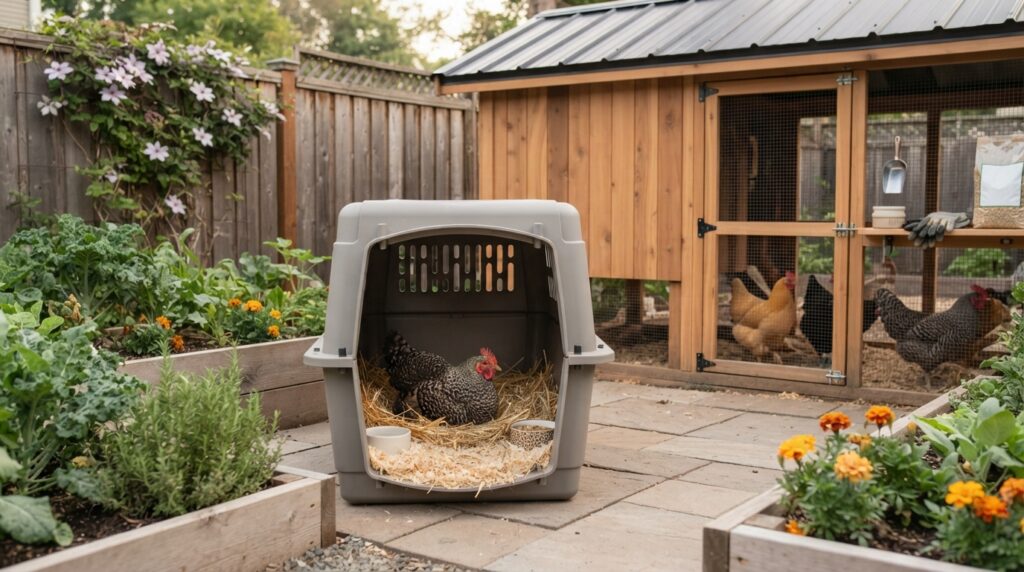
A temporary isolation space can be created using a:
- Small chicken hospital crate
- Dog crate
- Secure wire enclosure
- Clean indoor or sheltered outdoor pen
The space should provide enough room for the chicken to stand, turn around, sit comfortably, and reach food and water without difficulty.
It should also be easy to clean.
Avoid choosing a location simply because it is convenient.
The isolation area should protect the bird from:
- Rain
- Direct harsh sunlight
- Strong drafts
- Predators
- Excessive heat
- Excessive cold
- Constant activity from people or other animals
A quiet location is usually preferable to a busy area where the chicken is repeatedly disturbed.
3. Keep the Sick Chicken Close Enough to Feel Secure
Complete visual separation isn’t always necessary.
Some chickens become more distressed when suddenly removed from all flock contact.
If disease-control considerations allow it, placing the isolation pen within sight or hearing of the flock but physically separated can sometimes make the transition easier.
The birds can still hear familiar sounds and maintain some social contact without sharing the same food, water, bedding, or enclosure.
However, if there is a reasonable concern about a contagious disease, disease-control requirements take priority.
Don’t sacrifice biosecurity simply because the chicken seems lonely.
4. Make the Space Comfortable, Not Fancy 🐔
A chicken hospital area doesn’t need to look like a miniature coop.
It needs to be:
Clean + dry + secure + quiet + easy to monitor
Use clean bedding that provides good footing.
Avoid slippery surfaces that could make a weak chicken struggle to stand.
Keep food and water accessible.
If the chicken is very weak, make sure it doesn’t have to walk across the enclosure repeatedly just to drink.
The simpler the setup, the easier it is to notice changes.
5. Keep Food and Water Easy to Find
A sick chicken may not behave normally around food.
Place the feeder and waterer where the bird can easily see and reach them.
Avoid placing them so close together that bedding is constantly kicked into the water.
Clean water should be available unless a veterinarian has instructed otherwise.
Don’t automatically assume that a chicken that refuses food simply needs a different treat.
Loss of appetite can be an important sign of illness.
If the bird is eating very little or not drinking, seek veterinary guidance, especially if the problem persists or the chicken is weak.
6. Don’t Force Food or Water Into a Weak Chicken ⚠️
This is an important safety point.
It can be tempting to use a syringe to force liquids into a chicken that isn’t drinking.
But improperly administering fluids or food can result in aspiration, meaning material enters the respiratory tract.
Unless you have been specifically instructed by a veterinarian or experienced poultry professional and understand the technique, avoid improvising force-feeding or drenching.
Instead, make normal food and water as accessible as possible and seek appropriate veterinary advice when the bird isn’t maintaining intake.
7. Reduce Stress During the Transfer
The actual move can be more stressful than the isolation itself.
Before picking up the chicken, prepare everything.
Have the enclosure ready.
Have bedding in place.
Have food and water available.
Then handle the chicken calmly.
Avoid chasing it around the coop.
If possible, move slowly and use the environment to your advantage.
A towel or lightweight cloth can sometimes help gently control a bird during handling, but don’t cover the bird’s face or restrict breathing.
Support the chicken securely without squeezing its chest.
Chickens need normal chest movement for breathing, so avoid holding them tightly around the body.
8. Maintain the Flock’s Normal Routine 🌤️
The rest of the flock doesn’t need a dramatic lifestyle change because one bird has been isolated.
Keep normal routines whenever possible:
- Feed at the usual times
- Open and close the coop normally
- Maintain the regular lighting pattern
- Provide normal access to the run
- Continue ordinary cleaning
- Avoid unnecessary disturbance
Routine can help reduce excitement.
It also makes abnormal behavior easier to notice.
If everyone suddenly starts running around because you are repeatedly moving equipment and changing the coop, it becomes harder to determine whether a bird is actually behaving differently.
9. Don’t Let the Flock Crowd the Isolation Area
Chickens are naturally curious.
If the sick bird is placed in a small enclosure inside the main coop, flock members may gather around it, peck through the wire, or constantly investigate.
That can make the sick chicken more stressed.
It can also create a situation where birds share contaminated surfaces.
If the flock is becoming agitated around the enclosure, increase the physical separation.
A visual barrier can sometimes help if appropriate, but don’t block ventilation.
10. Treat Biosecurity as Part of the Isolation Plan 🧼
Isolation is not only about preventing the sick chicken from being bullied.
It may also be about preventing possible disease transmission.
Use separate equipment for the isolated bird whenever practical.
That can include:
- Feeder
- Waterer
- Cleaning tools
- Gloves
- Footwear
Wash your hands after handling the isolated chicken.
Ideally, care for healthy birds before caring for the isolated bird, rather than moving from the sick bird to the healthy flock.
Clean and disinfect equipment appropriately between uses.
Also avoid carrying contaminated bedding, droppings, or equipment back into the main flock area.
11. Keep a Simple Health Log 📝
Isolation gives you something valuable: the opportunity to observe one chicken closely.
Use a notebook or phone note to record:
- Date and time
- Appetite
- Water intake
- Droppings
- Activity level
- Breathing
- Ability to stand and walk
- Visible injuries
- Any treatment recommended by a veterinarian
You don’t need to write a long report.
A few consistent observations can make changes easier to recognize.
For example:
Morning: Ate a small amount, drinking normally, standing intermittently.
Evening: Eating less, sitting more, breathing appears abnormal.
That information can also be useful when speaking with a veterinarian.
12. Watch the Healthy Flock Too 👀
Isolating one bird doesn’t mean the problem is necessarily limited to that bird.
Monitor the remaining flock for changes such as:
- Reduced appetite
- Reduced drinking
- Coughing or sneezing
- Nasal or eye discharge
- Diarrhea or unusual droppings
- Sudden lethargy
- Reduced egg production
- Unusual deaths
- Changes in behavior
If multiple birds begin showing similar signs, treat that as a potentially significant flock-health problem and seek veterinary or poultry-health guidance promptly.
Some poultry diseases can spread quickly.
13. Don’t Reintroduce the Chicken Too Quickly
One of the most common mistakes is assuming that a chicken looks better, so it can immediately return to the flock.
Recovery and contagiousness are not necessarily the same thing.
The appropriate isolation period depends on the suspected condition and veterinary guidance.
Before reintroduction, consider:
Is the chicken eating normally?
Is it drinking normally?
Can it walk and behave normally?
Has the underlying problem been identified?
Could it still be contagious?
If the illness could be infectious, veterinary advice is especially important before returning the bird to the flock.
14. Expect Some Reintroduction Drama
Even after a healthy recovery, the flock may need to re-establish its social order.
A chicken that has been separated may no longer fit seamlessly back into the group’s hierarchy.
This doesn’t necessarily mean something has gone wrong.
Supervise the first period of reintroduction when practical.
Make sure there is enough space for the returning bird to move away from aggressive flock members.
Multiple feeding and watering points can also reduce competition in larger groups.
If severe bullying occurs, separate the bird again and reassess the setup.
A Simple Chicken Isolation Checklist 🐔✅
Before moving a sick chicken, prepare:
☐ Secure isolation enclosure
☐ Clean, dry bedding
☐ Easy-access food
☐ Clean water
☐ Separate equipment
☐ Safe temperature and shelter
☐ Good ventilation
☐ Quiet location
☐ Handwashing supplies
☐ Health observation notes
☐ Veterinary contact information if needed
This simple checklist can prevent a stressful situation from becoming chaotic.
Final Thoughts 🌱
Isolating a sick chicken doesn’t have to mean completely isolating it from everything familiar.
The best setup balances disease control, physical safety, observation, comfort, and flock stability.
Prepare the isolation area before moving the bird. Keep handling gentle. Make food and water easy to reach. Maintain the flock’s normal routine. Pay attention to hygiene, and monitor both the sick chicken and the birds that remain together.
Most importantly, don’t treat isolation as a substitute for finding out what is wrong.
A quiet hospital space can give a sick chicken a safer environment while you monitor its condition, but serious or rapidly worsening symptoms deserve professional veterinary attention. 🐔❤️