
Introduction
Finding something red in the chicken coop can be alarming.
Sometimes a reddish dropping has a harmless explanation. Other times, visible blood can be a sign of intestinal damage or disease that needs prompt attention.
The important thing is not to diagnose the chicken from one dropping alone.
Instead, look at the whole picture:
- Does the dropping actually contain blood?
- Is it happening repeatedly?
- Is the chicken eating and drinking?
- Is the bird active or unusually weak?
- Is it losing weight?
- Are other chickens showing similar signs?
- Is the chicken young or an adult?
- Are there changes in the coop environment?
One of the better-known causes of bloody diarrhea in chickens is coccidiosis, a disease caused by Eimeria species. However, bloody droppings can have other explanations, so a proper diagnosis matters.
Here’s how to approach the situation without panicking or ignoring it. 🔎
1. First, Ask: Is It Actually Blood?
Not every red or reddish-brown dropping contains blood.
Chicken droppings naturally vary in color and consistency depending on diet, digestion, hydration, and other factors.
Some cecal droppings can also look different from the more familiar daily droppings.
So don’t immediately conclude:
“Red dropping = bleeding.”
Instead, look for a pattern of genuinely bloody material, particularly if it is accompanied by diarrhea, weakness, reduced appetite, or other abnormal behavior.
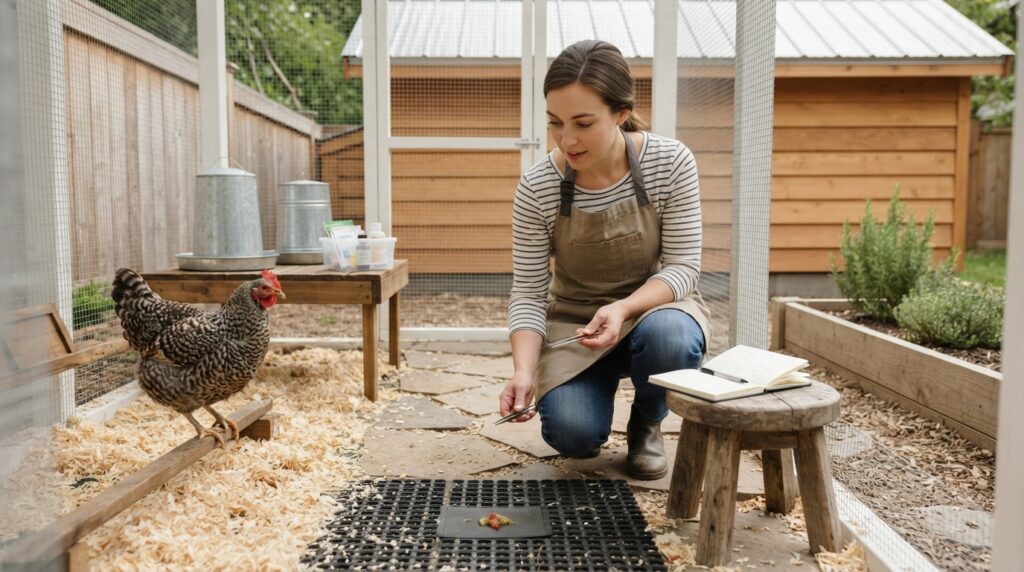
If you aren’t sure what you’re seeing, take a clear photograph for your records and consider showing it to a veterinarian.
2. Coccidiosis Is One Important Possibility 🦠
Coccidiosis is one of the most important diseases to consider when a chicken has bloody diarrhea.
It is caused by microscopic protozoan parasites called coccidia, with Eimeria species being the important causes in chickens.
These organisms damage portions of the intestinal tract.
Clinical coccidiosis can cause:
- Diarrhea
- Blood in droppings
- Reduced appetite
- Reduced water consumption
- Weight loss
- Poor growth
- Reduced production
- Weakness
- Death in severe cases
Merck Veterinary Manual notes that clinical disease can progress rapidly and that severe intestinal damage can cause hemorrhage.
Coccidiosis is particularly important in younger chickens, although age alone does not allow you to rule it in or out.
3. Look at the Chicken, Not Just the Dropping 🐔
A dropping gives you information, but the bird itself tells you much more.
Observe the chicken before picking it up.
Ask:
Is it alert?
A healthy chicken is generally bright and responsive.
Is it eating?
Reduced appetite can accompany illness.
Is it drinking?
Changes in water consumption can also be significant.
Is it moving normally?
Weakness, reluctance to move, stumbling, or remaining separated from the flock are concerning.
Does it look different?
Watch for:
- Ruffled feathers
- Drooping wings
- Unusual posture
- Pale appearance
- Swelling
- Breathing problems
- Soiling around the vent
Early illness in poultry can be subtle because chickens tend to hide signs of weakness.
4. Check Whether It Is a One-Time Event or a Pattern
One unusual dropping doesn’t provide enough information to determine the cause.
Start observing.
If possible, determine whether the same bird is repeatedly producing abnormal droppings.
For an isolated chicken, monitoring is much easier.
You can record:
Morning: Bloody material observed
Appetite: Reduced
Water: Drinking
Activity: Lower than normal
Weight: 1.7 kg
Then repeat the observations.
A pattern is more useful than a single snapshot.
5. Pay Attention to the Amount of Blood 🩸
There is an important difference between:
A small amount of suspicious red material
and
Repeated droppings containing obvious blood with a visibly sick chicken.
If there is significant or persistent blood, particularly when accompanied by weakness, diarrhea, poor appetite, weight loss, or dehydration, contact a veterinarian promptly.
Severe intestinal bleeding can become dangerous because the underlying disease may progress quickly.
Don’t wait for the bird to become extremely weak before taking the problem seriously.
6. Check for Diarrhea
Bloody material combined with diarrhea is more concerning than an isolated change in dropping appearance.
Look for:
- Repeated watery droppings
- Blood mixed into diarrhea
- Increased frequency
- Large amounts of liquid
- Droppings that soil the feathers around the vent
Coccidiosis commonly causes diarrhea and can produce bloody diarrhea in chickens.
But diarrhea plus blood does not automatically prove coccidiosis.
Other intestinal problems can produce similar signs.
That is why diagnostic testing may be necessary.
7. Check the Chicken’s Age
Age can help provide context.
Clinical coccidiosis is especially common in young chickens, with Merck noting that it most often occurs in birds approximately 1–4 months old.
That doesn’t mean an adult chicken with bloody droppings can be ignored.
It means age is one piece of the puzzle.
For example:
Young chicken + bloody diarrhea + weakness
is a combination that deserves particularly prompt attention.
8. Inspect the Coop Environment 🌧️
Coccidia are widespread in poultry environments.
The risk of clinical disease is influenced by factors including environmental contamination and management conditions.
Moist, heavily contaminated litter can encourage conditions in which coccidia become a significant problem.
Check the coop for:
- Wet bedding
- Heavily soiled areas
- Crowding
- Feed contaminated with droppings
- Dirty waterers
- Poor drainage
- Persistent dampness
Good sanitation doesn’t mean you can eliminate every coccidium from the environment.
Instead, the goal is to reduce excessive contamination and improve the overall conditions in which chickens live.
9. Watch the Water and Feed 💧
A sick chicken can become dehydrated quickly if diarrhea is severe.
Make sure clean drinking water is available and that the bird can reach it.
Also check the feed.
Look for:
- Mold
- Moisture
- Contamination
- Pest activity
- Unusual odor
- Recent changes in feed
If several chickens suddenly develop digestive problems, don’t focus only on one bird.
Investigate what the entire flock has been eating and drinking.
10. Check the Rest of the Flock 👀
This is one of the most important steps.
Ask:
Is this happening to one chicken or several?
If several birds have:
- Bloody or abnormal droppings
- Diarrhea
- Reduced appetite
- Weight loss
- Lethargy
- Reduced egg production
- Sudden deaths
the situation deserves prompt professional attention.
Some poultry diseases can spread through contaminated feces, litter, equipment, footwear, and other materials. Coccidia, for example, are shed in feces and can contaminate the environment.
Other serious poultry diseases can also cause digestive changes alongside respiratory, neurological, or general illness signs.
11. Don’t Assume Every Bloody Dropping Is Coccidiosis 🚫
This is an important beginner rule.
Coccidiosis is a well-known cause of bloody diarrhea, but a symptom is not the same thing as a diagnosis.
A veterinarian may need information such as:
- Age of the chicken
- Number of affected birds
- Duration of symptoms
- Appetite
- Weight changes
- Dropping characteristics
- Management conditions
- Fecal examination
- Other diagnostic findings
Merck notes that coccidiosis can be diagnosed through fecal examination and, when necessary, examination of intestinal lesions.
Don’t choose a medication simply because an internet search produced a matching symptom.
12. Be Careful With Medications 💊
It’s tempting to reach for a poultry medication immediately.
But the correct treatment depends on the cause.
Some medications also have important restrictions involving:
- Laying hens
- Eggs intended for human consumption
- Meat birds
- Withdrawal periods
- Dosage
- Drug interactions
- Local regulations
For example, Merck notes that some anticoccidial and sulfa-drug uses require particular attention to withdrawal periods and that certain products are inappropriate for laying hens.
Before treating a food-producing bird, consult a veterinarian and follow the product label and applicable local regulations.
13. When Should You Act Immediately? 🚨
Bloody droppings deserve urgent attention when they occur alongside serious signs.
Contact a veterinarian promptly if the chicken has:
- Severe weakness
- Inability to stand
- Significant or repeated bleeding
- Severe diarrhea
- Refusal to eat or drink
- Rapid weight loss
- Difficulty breathing
- Neurological abnormalities
- Collapse
- Rapid deterioration
The situation becomes even more urgent when multiple chickens are sick or dying.
USDA APHIS lists sudden deaths, lack of energy or appetite, respiratory problems, movement abnormalities, and digestive changes among signs that can indicate serious poultry disease.
14. Isolate the Sick Chicken When Appropriate 🧺
If a chicken is weak, being bullied, or potentially contagious, temporary separation may be appropriate.
Use a clean, secure area where the bird can:
- Rest
- Reach food and water
- Stay dry
- Avoid bullying
- Be observed easily
If infectious disease is a possibility, pay particular attention to biosecurity.
Use separate equipment where practical, wash your hands after handling the bird, and avoid carrying contaminated bedding or equipment back to healthy chickens.
However, isolation is not a substitute for veterinary diagnosis.
15. Take a Photo and Keep a Health Log 📱
If you see something unusual, document it.
Record:
Date:
Chicken:
Age:
Dropping:
Appetite:
Water intake:
Activity:
Weight:
Other symptoms:
Other birds affected:
A photograph of the dropping can also help you remember exactly what you observed.
If veterinary care is needed, this information can make the consultation much more useful.
A Simple Bloody-Dropping Decision Guide 🚦
| What you see | What to do |
|---|---|
| One questionable reddish dropping, chicken otherwise normal | Continue careful observation |
| Repeated abnormal droppings | Increase monitoring and contact a veterinarian if persistent |
| Blood + diarrhea | Prompt veterinary advice is appropriate |
| Blood + weight loss or poor appetite | Seek veterinary advice promptly |
| Blood + severe weakness | Urgent veterinary attention |
| Multiple chickens affected | Treat as a flock-health concern and seek professional guidance |
| Sudden deaths plus digestive or other illness signs | Contact a veterinarian or appropriate animal-health authority promptly |
This is a triage framework, not a diagnosis.
The chicken’s overall condition matters more than the color of one dropping.
Final Thoughts 🌱
Bloody chicken droppings are something to investigate, not automatically panic about and not automatically dismiss.
Start with the basics.
Look at the bird. Check its appetite, drinking, activity, weight, and behavior. Examine the pattern of the droppings and inspect the coop environment. Then determine whether other chickens are showing similar signs.
Coccidiosis is an important possibility, especially when bloody diarrhea occurs in susceptible young chickens, but other conditions can produce similar signs. Proper diagnosis matters because treatment depends on the underlying cause.
If the chicken is severely weak, bleeding significantly, rapidly deteriorating, or if several birds become sick or die, don’t wait for the next dropping to tell you what is happening.
Good backyard poultry care means noticing changes early, keeping useful records, protecting the rest of the flock, and getting professional help when the signs call for it. 🐔❤️




