The Chicken-Feed Aisle Is More Confusing Than It Needs to Be
Walk into a farm store as a first-time chicken keeper and you may see bags labeled starter, starter/grower, grower, developer, all-flock, and layer, making feeding seem far more complicated than it really is. 🐥 These names generally describe feeds formulated for different stages of growth rather than six mandatory steps every backyard chicken must complete. The basic backyard-pullet timeline is usually much simpler: starter → grower or developer → layer feed.
University Extension recommendations commonly place chicks on starter feed during roughly their first six to eight weeks, followed by a pullet grower or developer until they approach egg production. Once laying begins, hens move to a layer ration designed for the nutritional demands of producing eggs. Exact ages and specifications vary by feed manufacturer, breed, and management program, so read the bag label instead of treating one age chart as universal.
Stage 1: Chick Starter — What Chicks Need During Early Growth
Chick starter is formulated for the intense growth occurring during the earliest part of a chicken’s life, when chicks are rapidly developing feathers, muscles, bones, and organs. 🐣 Starter feeds for egg-type or dual-purpose chicks commonly contain roughly 18% to 21% crude protein, although individual formulas differ. A commercially formulated complete starter also supplies energy, vitamins, minerals, amino acids, and other nutrients in proportions designed for young birds.
Many Extension feeding schedules use starter through approximately six to eight weeks, but the directions on your specific feed should take priority. Starter is commonly sold as small crumbles or fine feed because young chicks can eat the smaller particles easily. Keep clean water continuously available, and remember that scratch grains, kitchen scraps, or pasture should not replace a balanced complete feed during this fast-growth period.
Stage 2: Grower or Developer — What Changes After the Chick Stage
Once the explosive early chick-growth period slows, pullets no longer need exactly the same nutrient concentration found in starter feed. 🌱 Grower or developer feed is designed to support continued body, skeletal, feather, and reproductive development without supplying the high calcium intended for actively laying hens. Depending on the feeding program, a grower may begin around six to eight weeks and continue until the birds approach laying age.
Some manufacturers divide this period into separate grower and developer feeds, while others combine the entire growing-pullet stage into one product. Protein levels can therefore vary considerably, with Extension examples ranging from roughly the mid-teens into the upper teens depending on age and formulation. The important question is not whether your pullets have completed every differently named bag but whether they are receiving a complete ration formulated for growing pullets.
What If Your Bag Says “Starter/Grower”?
A bag labeled starter/grower is not automatically missing an important feeding stage. 🐔 Some manufacturers formulate one complete feed that can cover chicks through a much larger portion of the growing period, eliminating the need to buy separate starter and grower products. In that situation, follow the manufacturer’s stated species, age range, nutrient specifications, and feeding directions.
This is why comparing only the large marketing words on two bags can be misleading. Look at the guaranteed analysis and feeding instructions, because two feeds carrying slightly different names may still be designed for similar birds and ages. A simple rule for beginners is to choose the complete poultry feed that matches the bird’s species, age, and production status, rather than trying to collect every feed name you have seen online.
Stage 3: Layer Feed — What Changes When Egg Production Begins
Layer feed is designed for hens that have reached the reproductive stage and are producing eggs, rather than simply being large enough to look like adults. 🥚 Extension recommendations commonly move pullets to a layer ration around the onset of egg production, although commercial flocks and backyard breeds may mature at somewhat different ages. Some chickens begin laying around 18 to 20 weeks, while slower-maturing breeds may take longer.
This distinction matters because a pullet that is seventeen weeks old is not automatically nutritionally identical to every other seventeen-week-old pullet. Watch the flock’s developmental stage while also following the directions printed on the feed you purchased. When egg production begins, a complete layer ration becomes the nutritional foundation because its mineral profile is designed for the recurring demands of shell formation and laying.
Why Layer Feed Contains Much More Calcium
The most important nutritional difference between grower and layer feed is often calcium. 🦴 A growing pullet needs calcium for skeletal development, but a laying hen requires substantially more because she repeatedly deposits calcium into eggshells. Typical layer diets may contain approximately 3.5% to 4.5% calcium, while pullet feeds are considerably lower.
That high-calcium formulation is also why layer ration should not simply become the default feed for young chicks or immature pullets. University poultry guidance specifically cautions against giving high-calcium layer diets to birds that are not yet in egg production because their nutritional requirements are different. If keeping laying hens together with younger birds, an appropriately formulated flock feed plus separately managed calcium may be useful, but always follow the product directions for your particular flock.
Starter vs Grower vs Layer Protein Percentages Explained
Protein percentages often attract the most attention on feed bags, but more protein does not automatically mean better feed. Starter diets are typically relatively protein-rich because young chicks are growing quickly, while grower or developer rations commonly decrease protein concentration as growth slows. Layer feeds often return to approximately the mid-to-upper teens, with many Extension examples around 16% to 18% protein for laying hens.
Protein percentage also cannot tell you everything about feed quality because poultry require appropriate amino acids, energy, minerals, and vitamins alongside crude protein. Two 18% feeds can be designed for completely different birds if their calcium, energy, amino-acid, and mineral profiles differ. Think of the percentage as one number in the nutritional formula, not a shortcut for deciding which bag every chicken should eat.
Crumbles, Pellets, and Mash: Feed Form vs Nutrition
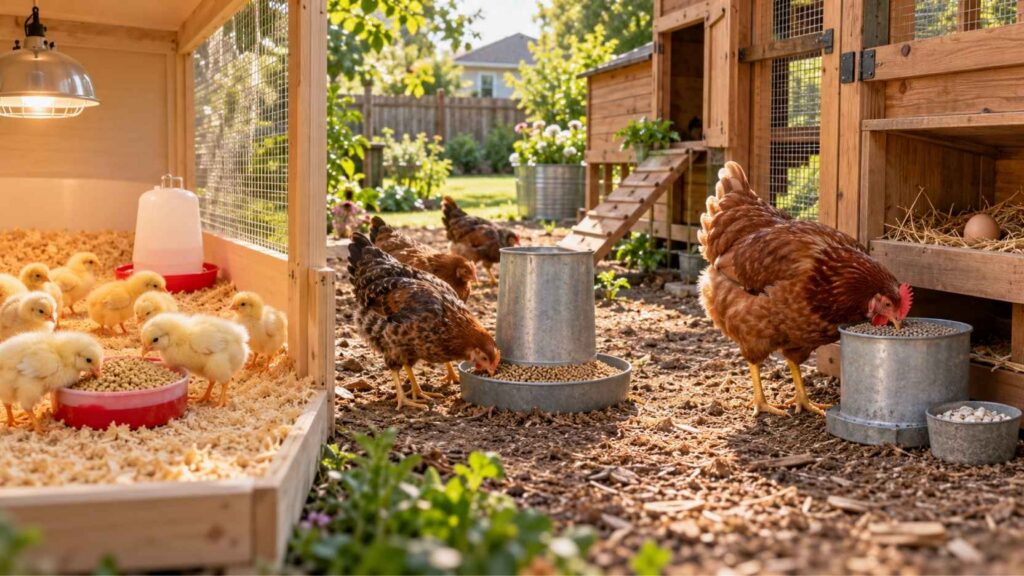
Mash, crumbles, and pellets describe physical form, not separate nutritional stages. 🌾 Mash is finely ground mixed feed, pellets are compressed pieces of formulated feed, and crumbles are essentially smaller broken pieces created from pellets. A starter can therefore be sold as crumble, while grower or layer diets may appear as pellets, crumbles, or mash depending on the manufacturer.
For small chicks, crumbles are particularly convenient because the pieces are easy for tiny birds to pick up. Older birds can generally manage larger feed forms, and pellets may reduce some selective feeding and scattered fine particles around feeders. Always judge the bag first by whether it is a complete feed appropriate for your chickens’ life stage, then consider which physical form works best for your flock and feeder.
How to Change Feeds Without Wasting the Previous Bag
Chicken keepers often reach a transition point with several pounds of the previous feed still sitting in the bin. Rather than making feeding decisions solely to empty a bag, check whether the old and new formulas are both still appropriate for the birds’ current stage. 🔄 When transitioning between suitable feeds, gradually mixing the remaining feed with the new ration for several days can reduce waste and help birds adjust to a different texture or flavor.
However, do not stretch an inappropriate feed for weeks merely because you paid for it. Layer feed should not be used as a convenient way to finish a bag with young pullets, and scratch grain should not be mixed heavily into complete feed simply to make it last longer. Purchasing smaller bags near expected transition periods can prevent the classic backyard-chicken problem of owning 40 pounds of yesterday’s feed when the flock has entered its next stage.
Chicken Feed Timeline at a Glance
The easiest beginner timeline is Day 1 → chick starter → around 6–8 weeks → grower/developer → growing pullet → onset of laying → layer feed. 📅 Those age markers are useful reference points rather than rigid deadlines, because feed manufacturers and poultry-management programs do not all use identical schedules. University of Minnesota Extension, for example, describes starter for approximately six to eight weeks followed by grower/developer and then laying feed when pullets begin producing eggs.
Think of the timeline as a road map rather than a stopwatch: Day 1 🐥 → 6/8 weeks 🌱 → growing pullet 🐔 → first egg 🥚. At each transition, check your feed label and confirm that the product is intended for your bird’s current life stage. This approach is far more reliable than switching simply because somebody online feeds layer pellets at exactly sixteen, eighteen, or twenty weeks.
What to Observe First If Your Pullets Are Approaching Laying Age
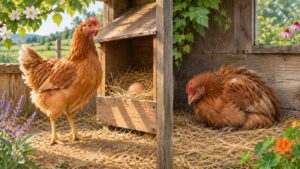
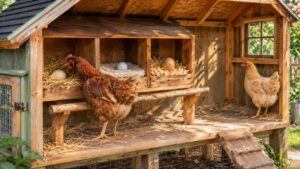
As pullets mature, physical and behavioral changes can help tell you that the flock is getting closer to egg production. Comb and wattles often become larger and redder, pullets may begin investigating nest boxes, and some birds show characteristic receptive squatting behavior when approached. 🪺 These signs can appear before the first egg, however, so none should be treated as an exact countdown.
Instead of constantly changing feed based on one behavior, prepare the nesting area, keep fresh water available, check the feed manufacturer’s transition instructions, and watch for actual production. Once laying starts, using an appropriate complete layer ration provides a straightforward nutritional foundation for the flock. Optional calcium sources such as crushed oyster shell are often offered separately to laying hens, particularly where individual hens may vary in calcium intake needs.
When a Feed Problem Deserves Closer Attention
Not every unusual dropping, small first egg, or temporary appetite change means you purchased the wrong feed. ⚠️ However, persistent poor growth, marked weight loss, prolonged loss of appetite, severe weakness, major feather problems, consistently abnormal eggshells, or multiple affected birds deserve closer investigation rather than endless feed swapping. First confirm that the birds have unrestricted access to clean water, appropriate fresh feed, functioning feeders, and feed that has not become wet, moldy, rancid, or contaminated.
Feed should also be only one part of your troubleshooting because parasites, disease, environmental stress, heat, flock competition, and other management problems can produce signs that resemble nutritional trouble. If abnormalities are significant, persistent, or involve several chickens, contact a poultry-knowledgeable veterinarian or your local agricultural Extension resource rather than trying to diagnose the flock from a feed label alone. The simplest prevention strategy remains surprisingly powerful: match a complete feed to the chicken’s life stage, keep it fresh and dry, provide clean water, and make transitions when the bird’s nutritional job changes. 🐔