Your young hen has finally started laying eggs, but instead of scratching around the yard with the rest of the flock, she is sitting quietly, looking sleepy, or moving unusually slowly. 🐔 You might assume she is simply exhausted from producing her first egg, especially if she still eats occasionally or passes droppings. However, a young hen becoming noticeably lethargic around the start of egg laying deserves attention, because reproductive problems and other illnesses can appear during this period.
A lethargic chicken not laying eggs is not automatically egg-bound, and an occasional day without an egg is not necessarily abnormal. The important distinction is whether your hen is behaving normally between laying attempts or showing persistent weakness, straining, unusual posture, or changes in appetite and droppings. 🔎 Knowing what to observe first can help you recognize when veterinary attention is necessary rather than waiting for an egg that may never appear.
1. Is It Normal for a Chicken to Become Tired After Laying?
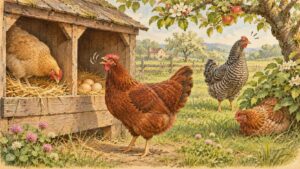
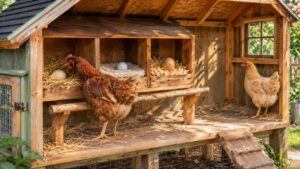
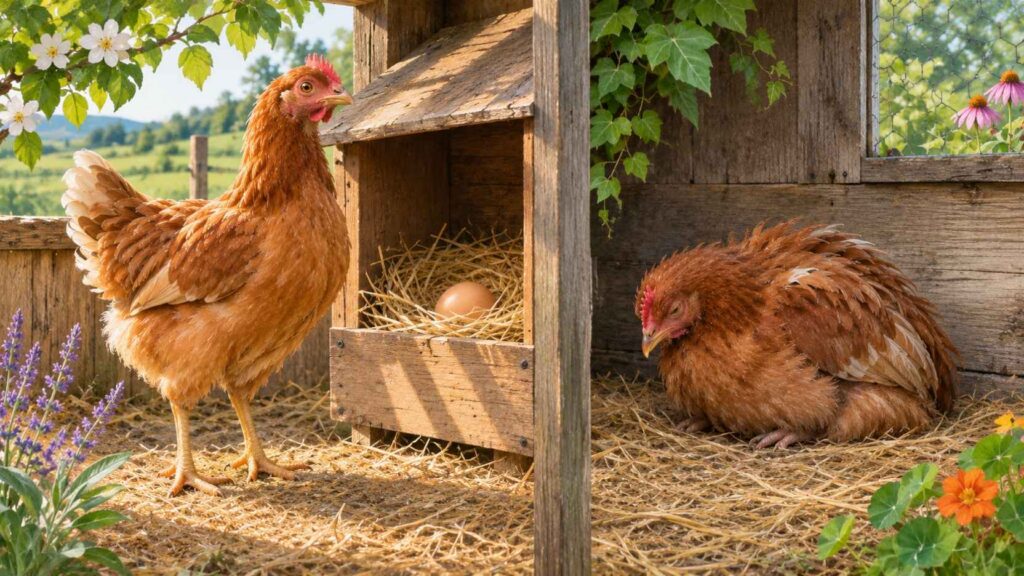
Egg laying requires physical effort, and some hens rest quietly in their nesting boxes before returning to normal activities. 🥚 A healthy pullet may spend extra time investigating nest boxes, practicing nesting behavior, or sitting calmly around the time she begins laying. Brief resting is different from genuine lethargy, particularly when the bird remains alert, walks normally, and resumes eating and drinking.
A hen that stays hunched, keeps her eyes closed for extended periods, isolates herself, or struggles to stand should not be dismissed as merely tired from laying. ⚠️ These behaviors may indicate pain, weakness, reproductive difficulty, infection, or another health problem that needs assessment. If the changes persist or appear with other concerning symptoms, contact a poultry-experienced veterinarian promptly rather than assuming the hen simply needs sleep.
2. What to Observe First: Movement, Posture, Appetite, and Droppings
Begin by watching your hen without immediately picking her up, because unnecessary handling can increase stress in a weak bird. 👀 Notice whether she walks normally, responds to her surroundings, holds her wings naturally, and can stand without wobbling. A bird that remains active and interested in the flock is less concerning than one that repeatedly strains, loses balance, or sits motionless with fluffed feathers.
Next, examine her food and water intake, breathing, vent area, and droppings, noting changes from her usual pattern. 💧 Chicken droppings naturally vary, including occasional softer cecal droppings, but persistent watery yellowish droppings combined with lethargy warrant veterinary evaluation. Record when symptoms began, whether she recently laid an egg, and whether other chickens are showing similar changes.
Normal vs. Concerning Behavior: Quick Triage Card
| What to Check | Generally Reassuring 🟢 | Concerning ⚠️ |
|---|---|---|
| Movement | Walks normally and explores | Weak, stumbling, or unable to stand |
| Posture | Stands comfortably | Persistent hunched or penguin-like stance |
| Alertness | Responds to surroundings | Very sleepy, withdrawn, or unresponsive |
| Appetite | Eats and drinks normally | Reduced intake or refusing food |
| Laying behavior | Briefly rests in nest | Repeated straining without laying |
| Droppings | Typical variation | Persistent watery, bloody, or unusual droppings |
| Breathing | Quiet and comfortable | Labored breathing or pronounced tail bobbing |
| Vent area | Clean, without swelling | Protruding tissue, discharge, or swelling |
This card helps you decide how urgently your hen needs attention, but it cannot establish a diagnosis. 🚨 Difficulty breathing, collapse, protruding vent tissue, or repeated straining with weakness requires emergency veterinary care, while persistent lethargy or abnormal droppings also warrants prompt assessment. Several signs can overlap between reproductive emergencies and unrelated illnesses, so avoid treating the chart as proof of egg binding.
3. Why a Chicken That Still Eats or Poops May Still Be Sick
One common misunderstanding is that a chicken cannot be seriously ill if she still eats a few bites or passes droppings. 🐓 Chickens may continue some normal activities during the early stages of illness, and symptoms can become more obvious as their condition worsens. Eating occasionally does not rule out egg binding, infection, dehydration, or other medical problems.
Likewise, passing droppings does not guarantee that an egg is moving normally through the reproductive tract. A hen may still pass some fecal material despite reproductive difficulty, although severe obstruction can interfere with normal elimination. 💩 Rather than relying on one reassuring sign, consider the entire picture: alertness, movement, breathing, appetite, posture, and changes over time.
4. Egg Binding: Symptoms That Need Urgent Veterinary Attention
Egg binding occurs when a hen cannot pass an egg normally, potentially creating a dangerous obstruction within her reproductive tract. 🥚 Veterinary references identify young pullets beginning production among birds that can experience this problem, particularly when reproductive development and egg size create difficulties. The condition can become life-threatening, so suspected egg binding requires veterinary assessment as soon as possible.
Possible warning signs include repeated unsuccessful laying attempts, abdominal straining, weakness, an unusually wide-legged or upright stance, and a visibly enlarged abdomen. 🚨 Some affected hens remain on the floor, have difficulty walking, or develop breathing problems, while others initially show less obvious symptoms. No single outward sign proves an egg is trapped because several reproductive and nonreproductive illnesses can cause similar behavior.
Do not squeeze your hen’s abdomen, attempt to break a suspected egg, or insert objects into her vent. These actions can cause serious injury, particularly when the egg’s position and the condition of surrounding tissues are unknown. A veterinarian may use examination, radiographs, or ultrasound to identify the problem and determine whether supportive treatment or a procedure is necessary.
5. Other Possible Causes of Lethargy in Young Hens
Not every lethargic pullet has a reproductive obstruction, even when her symptoms begin around the time of her first eggs. 🔍 Other possibilities include heat stress, dehydration, infections, parasites, injury, nutritional problems, or reproductive tract inflammation. Timing alone cannot distinguish these conditions, which is why observing the whole bird is more useful than focusing exclusively on whether she laid yesterday.
Watery or yellowish droppings are particularly important to interpret cautiously because their appearance is not specific to one disease. Changes in diet, intestinal illness, stress, and other conditions can alter droppings, while reduced food consumption may also change their appearance. 💩 If several flock members develop diarrhea, weakness, respiratory symptoms, or sudden changes in production, promptly contact a veterinarian and consider the possibility of a broader flock-health problem.
6. What to Do While Arranging Veterinary Care
If your hen appears genuinely ill, move her to a quiet, secure, well-ventilated recovery space where you can observe her and prevent other birds from pecking or crowding her. 🏡 Provide easily accessible fresh water and appropriate complete feed, and maintain a comfortable temperature without overheating her. A weak bird should not be forced to drink or eat because improper administration can cause choking or aspiration.
Keep observations simple and useful by documenting her posture, breathing, droppings, food intake, and any recent egg production. 📋 Photograph unusual droppings or record a short video of straining or walking difficulties if you can do so without delaying care. Share these details with the veterinarian, especially if your hen recently began laying, produced an unusually large or abnormal egg, or suddenly stopped behaving normally.
For a bird showing severe weakness, repeated straining, respiratory distress, collapse, or vent prolapse, seek emergency veterinary attention immediately. 🚑 Do not delay an urgent examination while trying warm baths, abdominal massage, household remedies, or online suggestions, particularly when the bird is weak or breathing abnormally. Supportive care should make your hen safer and more comfortable while professional evaluation is arranged, not substitute for medical treatment.
7. Why Supplements and Treats Cannot Replace a Diagnosis
Calcium is important for eggshell formation and normal muscular function, but that does not mean every lethargic hen needs an immediate calcium supplement. 🥚 Appropriate layer feed and suitable calcium access form part of long-term nutrition, while suspected deficiencies or reproductive emergencies require a more individualized assessment. Giving supplements without identifying the problem can delay proper treatment and may introduce additional risks.
The same caution applies to mealworms, electrolytes, vitamins, oils, and other commonly suggested remedies. 💊 Some products have legitimate uses under appropriate circumstances, but none can reliably diagnose or resolve an unknown cause of lethargy. Focus first on obtaining veterinary guidance, maintaining appropriate feed and water access, and watching for changes that affect the urgency of care.
Final Thoughts: When Should You Worry?
A young hen briefly resting around egg laying may be behaving normally, but prolonged inactivity, weakness, abnormal droppings, and repeated unsuccessful laying attempts should never be ignored. 🐔 The most useful first step is comparing her behavior with what is normal for that individual bird, then looking for additional warning signs rather than assuming all symptoms are connected to her first egg. If she remains lethargic, contact a veterinarian promptly, and treat breathing difficulty, collapse, severe straining, or vent prolapse as emergencies.
A missing egg is not automatically an emergency, but a visibly sick hen can be. 💚 Healthy flock management means recognizing when ordinary nesting behavior ends and genuine illness may begin. The goal is not to diagnose every problem yourself, but to notice concerning changes early enough to get your chicken appropriate care.