Introduction
Finding a chicken sitting alone, looking unusually tired, or passing bloody droppings can be frightening, especially when you keep a small backyard flock and don’t have a veterinarian immediately available.
One condition backyard chicken keepers should understand is coccidiosis, an intestinal disease caused by microscopic parasites called Eimeria.
One commonly used medication for treating coccidiosis is Corid, whose active ingredient is amprolium.
Corid is frequently discussed in backyard poultry communities because it can help control coccidiosis when used appropriately. However, knowing when to use it, how it works, and what precautions to take is just as important as knowing its name.
This guide explains what Corid does, how to recognize possible coccidiosis, what to consider before treatment, and how to reduce the chances of another outbreak.
The goal is simple: help backyard chicken keepers make informed decisions without guessing, overmedicating, or overlooking a sick bird. 🐔
1. What Is Corid?
Corid is a brand of medication containing amprolium, an anticoccidial drug used to control coccidiosis.
Coccidiosis occurs when chickens ingest infective Eimeria organisms from contaminated environments.
These parasites multiply inside the intestinal tract and damage intestinal cells.
Amprolium works by interfering with thiamine (vitamin B1) utilization in coccidia. Because the parasites need thiamine for normal development, this interference helps suppress their multiplication.
Amprolium is not an antibiotic. It targets coccidia rather than ordinary bacterial infections.
It is also important to understand that different Corid products may have different concentrations and formulations.
Always identify the exact product before following any treatment instructions.
2. How to Recognize Possible Coccidiosis in Chickens
Coccidiosis is particularly concerning in young chickens, especially chicks that have recently been exposed to contaminated litter or soil.
However, chickens of different ages can become infected.
Watch for these possible warning signs:
- Reduced appetite.
- Decreased water consumption.
- Lethargy or unusual inactivity.
- Ruffled or fluffed-up feathers.
- Weight loss or poor growth.
- Diarrhea.
- Droppings containing blood.
- Pale appearance.
- Reduced egg production in affected laying birds.
Not every infected chicken will show every symptom.
Bloody droppings can occur with certain forms of coccidiosis, but their absence does not rule out infection.
Other conditions can also cause diarrhea, weakness, or blood in droppings.
A veterinarian can help confirm the diagnosis through examination and appropriate fecal testing.
Important: A chicken that is severely weak, unable to stand, not drinking, or passing substantial amounts of blood needs prompt veterinary attention.
3. When Is Corid Used?
Corid may be used when coccidiosis has been diagnosed or is strongly suspected under veterinary guidance.
It is particularly relevant when chickens show compatible clinical signs and there is evidence of coccidial infection.
A veterinarian may recommend amprolium based on:
- The age of the chickens.
- Clinical symptoms.
- Fecal examination findings.
- The severity of the outbreak.
- The specific Eimeria species involved.
- The medication formulation available.
Not every case of diarrhea requires Corid.
Using medication without understanding the underlying problem can delay appropriate treatment.
4. Corid Dosage: Why You Must Check the Product Label
This is one of the most important things backyard chicken keepers should understand.
Corid products are not all identical.
For example, commonly available formulations include:
- 9.6% amprolium oral solution.
- 20% amprolium soluble powder.
The concentration of active ingredient differs, so the amount of product required also differs.
In the United States, FDA-approved amprolium labeling includes specific drinking-water treatment instructions for growing chickens, turkeys, and laying hens. The labeled treatment schedule includes a treatment phase followed by a lower-concentration phase. The exact directions must be checked against the applicable product label.
Do not automatically copy a dosage from a backyard chicken forum, social media post, or another brand’s instructions.
Before administering Corid:
- Identify the exact product and concentration.
- Read the complete package directions.
- Confirm that the product is appropriate for your type of chicken.
- Check the recommended treatment duration.
- Consult a poultry veterinarian if the bird is severely ill or the diagnosis is uncertain.
Never assume that a dosage for liquid Corid is interchangeable with powdered Corid.
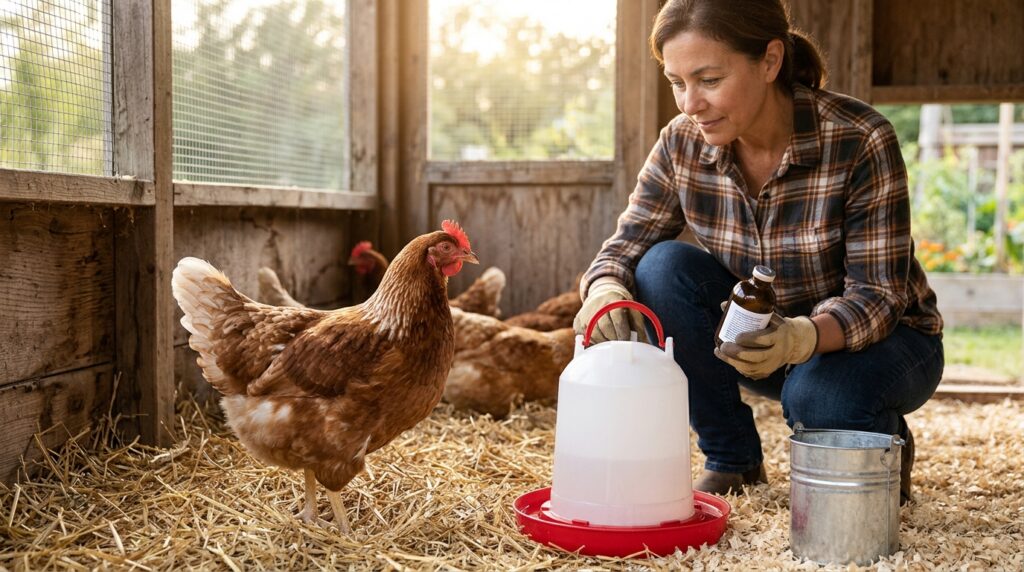
5. How to Administer Amprolium Through Drinking Water
Many amprolium products intended for poultry are administered through drinking water.
When this is the prescribed route, accurate preparation is important.
Consider these precautions:
- Measure the medication using an appropriate measuring tool.
- Prepare the medicated water according to the product label.
- Make sure the birds can access the drinking water.
- Monitor whether sick chickens are actually drinking.
- Prepare fresh medicated water according to the label instructions.
- Avoid providing competing drinking-water sources if the product directions require medicated water to be the sole source.
A particularly important concern is that severely ill chickens may stop drinking.
A bird that is not drinking enough may not receive an adequate amount of medication through its water supply.
Do not force water into a weak chicken’s mouth without proper instruction, as aspiration can occur.
Seek veterinary help if a bird cannot drink independently.
6. Should You Give Vitamin B1 During Corid Treatment?
This is a frequently discussed topic among backyard chicken keepers.
Amprolium works by interfering with thiamine utilization in coccidia.
Because thiamine is vitamin B1, adding vitamin B1 supplements during treatment may interfere with the intended action of amprolium.
For this reason, avoid independently adding thiamine or vitamin B1 supplements to medicated drinking water during treatment unless your veterinarian specifically recommends it.
Do not confuse this with providing ordinary balanced poultry nutrition.
Once treatment is completed, discuss any additional supplementation with your veterinarian, particularly if the chickens remain weak or have experienced prolonged illness.
7. Can You Eat Eggs From Chickens Treated With Corid?
This is especially important for backyard keepers who collect eggs for household consumption.
Do not assume that every amprolium product has identical egg or meat withdrawal instructions.
Approved uses and withdrawal requirements can differ by country, formulation, and product registration.
Some official product labels permit use in laying birds, while other amprolium products have different restrictions.
Before consuming or selling eggs from treated chickens:
- Check the exact product label.
- Confirm that the product is approved for laying hens in your location.
- Follow the stated egg and meat withdrawal instructions.
- Ask a veterinarian if the label does not clearly address your situation.
Never assume that a withdrawal period from another country or another brand applies to your product.
8. What to Do Alongside Medication
Medication alone will not correct the environmental conditions that allowed coccidiosis to spread.
Coccidia can multiply in contaminated litter and infect other chickens when they ingest infective organisms.
Good management practices are therefore essential.
Keep the Coop Dry
Moisture encourages conditions that allow coccidia to develop in the environment.
- Remove wet bedding.
- Fix leaking drinkers.
- Improve ventilation.
- Replace heavily contaminated litter.
- Keep feeding and drinking areas clean.
Clean Feeders and Waterers
Clean drinking equipment regularly.
Prevent droppings from accumulating around water sources, and avoid allowing chickens to contaminate their drinking water.
Reduce Overcrowding
Too many chickens in a small space increase exposure to contaminated litter.
Provide adequate floor space and maintain a manageable flock size.
Monitor the Entire Flock
Do not focus only on the visibly sick chicken.
Watch the other birds for changes in appetite, activity, droppings, and body condition.
Several chickens may have been exposed before the first bird shows obvious symptoms.
9. How to Reduce Future Coccidiosis Outbreaks
Prevention is easier than managing a serious outbreak.
Here are practical habits that can help backyard keepers reduce exposure.
Maintain clean, dry bedding.
Remove wet and heavily soiled material regularly.
Avoid sudden overcrowding.
Introduce new chicks carefully and provide adequate space.
Use appropriate chick-rearing practices.
Young chickens need clean housing, appropriate feeders, and reliable access to fresh water.
Ask about vaccination.
Coccidiosis vaccines are available for certain poultry production systems. Their use requires appropriate management because vaccinated birds need the correct conditions for the vaccine to work as intended.
Monitor young birds closely.
Pay particular attention during the early weeks when chicks are developing and encountering environmental coccidia.
Remember that chickens can encounter coccidia even in relatively clean environments. Good sanitation reduces exposure but cannot guarantee complete elimination.
10. Common Mistakes Backyard Chicken Keepers Should Avoid
Even experienced chicken keepers can make mistakes when treating coccidiosis.
Avoid these common problems:
- Using the wrong Corid concentration.
- Guessing the dosage from online discussions.
- Treating every type of diarrhea as coccidiosis.
- Stopping treatment earlier than the prescribed schedule.
- Ignoring chickens that are too weak to drink.
- Adding vitamin B1 during treatment without veterinary advice.
- Ignoring wet or contaminated bedding.
- Assuming all chickens require the same treatment.
- Overlooking egg and meat withdrawal requirements.
If chickens continue getting sick or deaths occur despite treatment, seek veterinary investigation rather than repeatedly administering medication.
Final Thoughts
Corid can be a useful medication in managing chicken coccidiosis, but successful treatment requires more than adding something to the drinking water.
Backyard chicken keepers need to understand the signs of infection, identify the correct medication formulation, follow the appropriate label instructions, and address environmental conditions that contribute to parasite transmission.
Most importantly, remember that bloody droppings, lethargy, and reduced appetite are warning signs, not a confirmed diagnosis.
Observe your flock carefully, seek veterinary guidance when necessary, and maintain clean, dry housing.
Healthy chickens depend on more than medication. They need good nutrition, proper housing, clean water, and attentive daily care.
A healthy flock starts with early observation, informed treatment, and consistent prevention. 🐣