
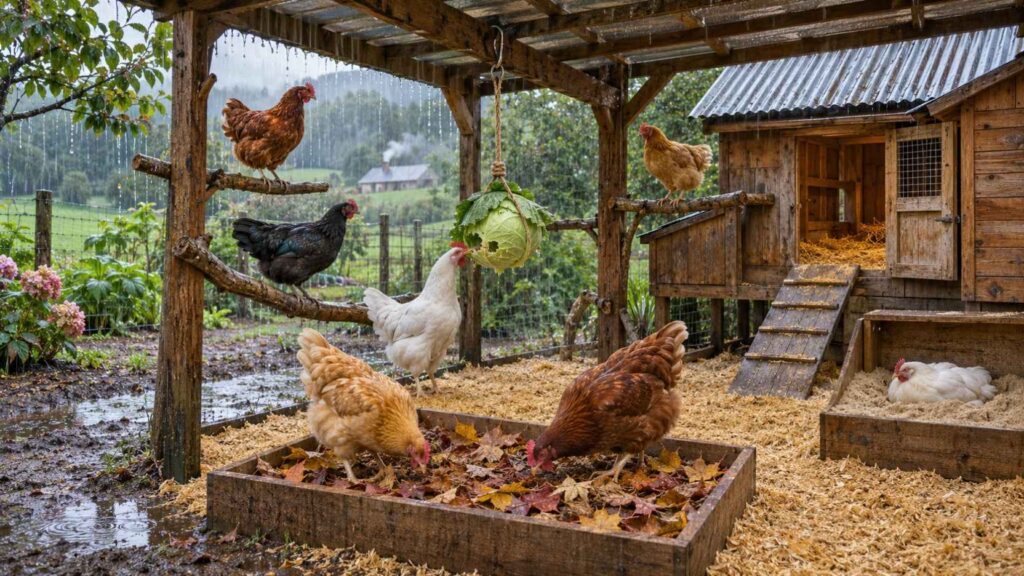
Rainy weather can turn a normally active chicken run into a muddy, slippery space where scratching, dust bathing, and exploring become difficult. 🌧️ When rain continues for several days, backyard chickens may spend more time under shelter, leaving owners wondering how to keep their flock entertained without making the coop dirtier. The solution is rainy day chicken enrichment that encourages natural behavior while protecting dry bedding and preventing unnecessary moisture.
Fortunately, keeping chickens busy during wet weather does not require expensive toys or complicated equipment. Simple additions such as sturdy perches, hanging vegetables, dry leaves, and protected foraging areas can provide opportunities for movement and exploration. 🐔 The goal is to create safe, dry activities that maintain comfort without turning the sheltered area into another muddy mess.
Why Prolonged Rain Changes Chickens’ Daily Activities 🌧️
Chickens naturally spend much of their day scratching, searching for food, pecking, perching, and exploring their surroundings. Extended rain can limit these opportunities when outdoor soil becomes saturated and birds gather beneath the few available dry shelters. Restricted activity may increase boredom and competition, particularly when chickens cannot comfortably use their normal foraging areas.
Rain also introduces a management challenge because wet bedding and accumulated manure can contribute to unpleasant odors and poor air quality. According to poultry housing guidance from university extension programs, excessive moisture can encourage ammonia buildup and create unhealthy conditions inside poultry housing. Keeping chickens entertained should never come at the expense of keeping their living space dry.
Establish A Dry Activity Zone Before Adding Enrichment 🏡
Before introducing new toys or foraging materials, identify the driest section of the covered run. Choose an area protected from direct rainfall and wind-driven water, with firm flooring that does not collect puddles. A roofed section with suitable drainage, clean bedding, and good airflow provides a better foundation than placing enrichment directly over muddy ground.
Inspect the roof, surrounding drainage, and waterers for leaks before adding fresh materials. Remove saturated bedding rather than covering persistent wetness with another layer of straw or leaves, which may trap moisture underneath. 💧 Keep the dry activity zone separate from sleeping and nesting areas whenever practical, so enrichment does not interfere with essential flock routines.
9 Rainy-Day Chicken Enrichment Ideas For A Muddy Run
1. Install Low, Stable Perches For Extra Movement 🪵
Chickens enjoy occupying elevated positions, and sturdy perches create opportunities for balancing, movement, and exploration. Install low wooden perches at different suitable heights inside a sheltered section, allowing birds to step or hop between them. Choose smooth, stable surfaces without sharp edges or loose hardware.
Position perches where droppings can be removed easily and will not contaminate feeders or waterers. Leave enough open floor space for chickens that prefer walking rather than perching. A simple arrangement of securely mounted branches can make a small covered run more interesting.
2. Create A Dry Leaf Foraging Corner 🍂
Chickens enjoy scratching through loose materials because the activity resembles their natural food-searching behavior. Place a modest pile of completely dry, untreated, clean leaves in a sheltered corner where rain cannot reach them. Birds can investigate the leaves by scratching, pecking, and moving them around.
Avoid leaves collected from pesticide-treated areas, roadsides, or piles containing mold or animal droppings. Remove the material whenever it becomes damp, contaminated, or compacted. This activity works best when the leaves remain loose and dry.
3. Hang A Cabbage Or Leafy Vegetable Holder 🥬
A securely mounted vegetable holder can encourage chickens to peck and investigate without scattering food across the ground. Place a cabbage or suitable leafy greens at an accessible height inside the covered run. The birds can interact with the vegetables while remaining sheltered from rainfall.
Use a secure holder rather than long, dangling strings that could become entangled around a bird. Remove leftovers before they spoil or attract pests. Remember that vegetables are treats, not replacements for complete poultry feed.
4. Build A Covered Dust Bathing Station 🛁
Dust bathing is an important natural chicken behavior that helps birds maintain their feathers. Unfortunately, exposed dust bathing areas quickly become muddy during persistent rainfall. Create a sheltered station containing appropriate dry, loose soil or sand, with drainage and protection from incoming water.
Choose a stable container or designated ground-level area large enough for comfortable movement. Avoid adding dusty powders or chemical treatments that could irritate the birds. If the material becomes soaked, replace or dry it before allowing regular use.
5. Introduce A Removable Scratching Tray 🐾
A shallow, sturdy tray provides a controlled location for scratching without spreading materials throughout the run. Fill it with clean, dry, chicken-safe loose material and position it on a stable surface beneath shelter. Chickens can investigate the contents while the surrounding floor remains easier to maintain.
Choose a tray without sharp edges and provide sufficient space to prevent crowding. Remove contaminated contents regularly instead of allowing droppings and moisture to accumulate. Removable trays are especially practical when the covered run has limited dry flooring.
6. Create A Small, Controlled Foraging Challenge 🌾
Chickens enjoy searching for food, but scattering treats directly into muddy ground can create unnecessary contamination. Instead, place a small portion of their usual complete feed within a clean, dry scratching tray. This encourages natural searching behavior without adding large quantities of nutritionally unbalanced treats.
Keep portions modest and remove uneaten feed before it becomes damp. Avoid leaving food scattered overnight because it may attract rodents and other pests. Foraging enrichment works best when it supports normal feeding rather than replacing it.
7. Rearrange Safe Branches And Natural Obstacles 🌳
Changing the arrangement of familiar objects can make a small environment more interesting. Add sturdy branches, short logs, or stable wooden platforms that encourage chickens to walk around or investigate different spaces. Position these objects away from muddy drainage channels and frequently used entrances.
Avoid unstable structures, treated lumber, sharp splinters, or obstacles that restrict movement. Keep pathways open so birds can reach food, water, and shelter without difficulty. Rotate only a few objects at a time to avoid unnecessary disruption.
8. Use Multiple Hanging Pecking Stations 🥕
One enrichment station may attract most of the flock and create competition. Installing several secure vegetable holders in different sheltered locations allows chickens to spread out. Use appropriate vegetables in small portions, keeping the stations within easy reach.
Observe whether timid hens can approach without being chased away. Move or duplicate stations when dominant birds prevent others from participating. Several simple activities distributed across the run are often more useful than one crowded attraction.
9. Rotate Activities Instead Of Adding Everything At Once 🔄
Chickens do not need nine different enrichment activities operating simultaneously. Rotating a few activities helps maintain interest while keeping cleaning responsibilities manageable. For example, offer a leaf tray one day, rearrange perches another day, and introduce hanging vegetables later.
Record which activities your flock actually uses rather than assuming every enrichment idea will be popular. Remove abandoned or dirty materials promptly, especially during extended rainfall. A simple rotation encourages variety without filling the run with unnecessary objects.
Which Enrichment Materials Become Problematic When Wet? ⚠️
Dry straw, hay, leaves, wood shavings, and other organic materials can become difficult to manage when exposed to continuous moisture. Saturated materials may compact, retain manure, develop mold, or contribute to unpleasant odors. Materials that work well in dry conditions are not necessarily suitable for an uncovered muddy run.
Cardboard, untreated paper, and fabric-based toys can also deteriorate when repeatedly soaked. Avoid using materials with exposed staples, loose fibers, toxic coatings, or components chickens might swallow. Remove wet enrichment materials promptly rather than allowing them to become part of the litter problem.
Prevent Overcrowding Around Sheltered Activities 🐔
A covered run may feel spacious during normal weather but become crowded when chickens avoid its wettest sections. Concentrating every activity beneath one small shelter can increase jostling and make it difficult for quieter birds to participate. Spread enrichment across available dry locations while preserving access to essential equipment.
Watch for repeated chasing, feather pecking, or birds being blocked from food and water. These observations may indicate competition, insufficient usable space, or other flock-management problems requiring attention. Adding more toys alone will not compensate for overcrowding or inadequate shelter.
When Dampness And Odors Signal A Maintenance Problem 💧
Persistent wet patches, compacted bedding, visible mold, condensation, and strong ammonia-like odors should not be treated as normal consequences of rainy weather. University of Minnesota Extension recommends removing wet or caked litter and maintaining ventilation to help manage moisture. These conditions call for cleaning and investigating the moisture source rather than adding more enrichment materials.
Check roof joints, drainage paths, waterer connections, and locations where rain enters through the sides. Remove contaminated bedding, correct leaks, and maintain airflow without exposing birds to harsh drafts. If moisture continues accumulating despite these measures, the run may need drainage or shelter improvements.
Rainy-Week Enrichment Schedule: Morning, Afternoon, And Evening 📅
A rotating schedule helps keep chickens active without adding unnecessary cleaning tasks. The following plan uses one main activity each day while keeping complete feed, fresh water, and suitable shelter continuously available. Adjust the schedule according to flock behavior, available space, and changing weather conditions.
| Day | Morning | Afternoon | Evening |
|---|---|---|---|
| Monday | Inspect moisture and bedding | Dry leaf foraging tray | Remove soiled leaves |
| Tuesday | Check perch stability | Perch exploration | Remove droppings |
| Wednesday | Inspect sheltered floor | Hanging cabbage | Remove leftovers |
| Thursday | Check dust bath dryness | Sheltered dust bathing | Inspect material |
| Friday | Clean scratching tray | Controlled feed foraging | Remove leftover feed |
| Saturday | Inspect natural obstacles | Rearrange stable branches | Clear pathways |
| Sunday | Inspect all activity stations | Rotate favorite enrichment | Clean and reset |
Daily Moisture Inspection Checklist
- Check bedding for wet patches and compacted material.
- Look for standing water beneath feeders and waterers.
- Inspect the roof and sides for leaks.
- Remove spoiled food and damp enrichment materials.
- Check for ammonia-like odors and condensation.
- Confirm birds can access clean water, feed, and dry shelter.
These checks should become part of normal flock care rather than an additional complicated chore. Spending a few minutes identifying problems early can prevent the covered run from becoming increasingly difficult to maintain. The schedule is flexible, but dryness, ventilation, and cleanliness should always take priority over entertainment.
Final Thoughts: Keep Chickens Busy Without Making The Run Wetter 🐓
Rainy-day enrichment is most effective when it gives chickens opportunities to scratch, peck, perch, investigate, and forage without increasing mud or moisture. Simple activities such as covered dust baths, stable perches, dry scratching trays, and vegetable holders can provide useful variety during extended wet weather. The important distinction is that enrichment should improve the environment, not create additional sanitation problems.
Begin with a dependable dry zone, introduce only a few activities, and observe how your flock responds. Remove anything that becomes wet, dirty, unsafe, or excessively crowded, and address persistent moisture at its source. 🌧️ With consistent maintenance and thoughtful activity rotation, a rainy week can remain manageable for both chickens and their keepers.




