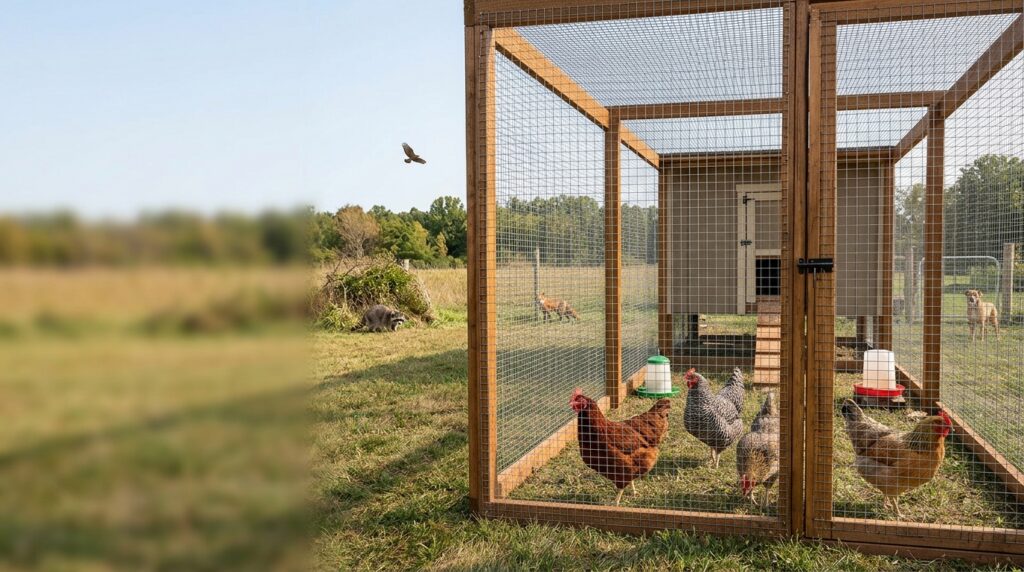
Introduction
Finding a missing chicken, scattered feathers, or a damaged coop can be upsetting, especially when you have invested time and money in raising your flock. The first question is often the same: What attacked my chickens?
Identifying the likely predator can help you improve your coop and run before another bird is injured or lost. However, predator clues are not always conclusive. A pile of feathers, a damaged fence, or a missing chicken can have several explanations, and more than one predator may visit the same property.
The most useful approach is to examine the whole scene: the condition of the birds, the location of the remains, tracks, entry points, and the time the incident may have occurred.
This guide explains common signs associated with raccoons, foxes, hawks, and domestic dogs, along with practical steps to protect your flock.
🔎 1. Raccoons: Clues Around Latches, Openings, and the Coop
Raccoons are adaptable, dexterous mammals that can exploit weaknesses in poultry housing. Where raccoons are present, they may climb, reach through openings, manipulate simple latches, or enter through damaged wire and unsecured doors.
Clues that may point to a raccoon include:
- Signs of tampering: A door or simple latch may be disturbed, especially if it can be lifted or manipulated easily.
- Reach-through injuries: Chickens may be injured when a predator reaches through a gap in the wire.
- Damage near openings: Bent mesh, loose fasteners, or a gap near a door may indicate a possible entry point.
- Evidence around the coop: Tracks, droppings, or disturbed soil may provide additional clues, although these are not unique to raccoons.
Raccoons may kill or injure poultry inside a coop, and the remains do not always reveal the attacker. A bird found dead with injuries around its head or neck is not enough to confirm raccoon predation on its own.
What to do: Inspect doors, windows, vents, and wire panels. Use secure, predator-resistant latches and strong welded-wire mesh with openings small enough to prevent a raccoon from reaching poultry. Repair gaps around rooflines and the base of the structure.
🦊 2. Foxes: Missing Birds and Signs of Digging
Will Foxes Dig Under a Chicken Coop? Understanding the Risks and Solutions – Know Animals
Foxes are capable hunters and may take poultry from an unsecured run or coop. They can dig, squeeze through openings, and exploit weak areas along the ground.
Possible signs of fox activity include:
- A missing bird: A fox may carry off a chicken, leaving few remains at the scene.
- Disturbed soil: Fresh digging near the fence or beneath a vulnerable section may suggest an attempted entry.
- Tracks or a travel route: Prints and repeated movement along a fence line may help establish where an animal approached.
- A damaged boundary: A gap beneath a fence or an unsecured section of the run may provide access.
These clues are not definitive. Dogs can dig, other mammals may use existing gaps, and a missing chicken may have escaped or been taken by another predator.
What to do: Secure the run at ground level. A buried wire barrier or an outward-facing wire apron can discourage digging, provided it is installed correctly and secured to the existing fence. Close gaps and check the perimeter regularly. Do not rely on a simple fence that can be dug under or pushed aside.
🦅 3. Hawks: Daytime Attacks From Above
Chickenhawk perching on garden fence in summer
Hawks are daytime birds of prey. Depending on the species and the size of your chickens, a hawk may attempt to capture a bird or injure it during an unsuccessful strike.
Clues that may suggest a hawk attack include:
- A sudden incident during daylight: The flock may scatter, alarm-call, or rush for cover.
- Feathers in an open area: A cluster of feathers may be consistent with an attempted capture, but it is not proof of a hawk attack.
- Injuries consistent with talons: Puncture wounds or scratches may occur, although other animals can cause similar injuries.
- An exposed run: A run with no overhead cover leaves poultry more vulnerable to aerial predators.
Not every missing bird or pile of feathers points to a hawk. Some hawks hunt small animals, and their ability to take chickens depends on the species, the bird’s size, and the circumstances.
What to do: Add secure overhead protection where appropriate, such as strong netting supported to prevent sagging or entanglement. Provide covered shelters and vegetation or other safe hiding places. Check local wildlife laws before trapping, harming, or attempting to relocate a bird of prey; many raptors are legally protected.
🐕 4. Domestic Dogs: Signs of Chasing, Biting, and Disturbed Fencing
Flower Mound Updates Dangerous Dog Ordinance for Animal Protection
A roaming dog can injure or kill poultry even without intending to eat them. Chasing, grabbing, shaking, and repeated attacks can happen during an excited or predatory response.
Clues that may suggest a dog include:
- Multiple injured or dead birds: A dog may chase several chickens in a short period, sometimes leaving their bodies where they fell.
- Widespread disturbance: Feathers, overturned objects, trampled vegetation, or a damaged section of fencing may indicate a chase.
- Bite or crushing injuries: The pattern and severity can vary with the dog’s size and behavior.
- A known access point: A loose gate, pushed-in panel, or gap in the fence may show where a dog entered.
These signs overlap with other predators. The number of injured birds alone cannot reliably identify a dog, and tracks must be interpreted carefully.
What to do: Secure gates and weak fence panels, repair holes, and speak calmly with the dog’s owner if it is safe and appropriate. Document the damage and any observed incidents. Avoid confronting an unfamiliar or aggressive dog yourself. If there is an immediate threat, prioritize personal safety and contact local animal-control or appropriate authorities.
📋 Quick Comparison: Which Predator Might Be Responsible?
| Sign observed | Possible explanation | Important limitation |
|---|---|---|
| Disturbed latch or damaged coop opening | Raccoon or another animal | A weak latch does not identify the intruder |
| Fresh digging beneath a fence | Fox, dog, or another digging animal | Tracks and other evidence are needed |
| Incident in an exposed run during daylight | Hawk or another daytime predator | Time alone is not conclusive |
| Several birds injured with a disturbed run | Dog or another predator | Injury patterns can overlap |
| Missing chicken with few remains | Fox, raccoon, or another predator | Escape or other causes must also be considered |
| Feathers scattered across the ground | Several possible predators | Feathers alone rarely establish the cause |
The key lesson: Look for a combination of clues instead of relying on one dramatic sign. A secure coop protects chickens more effectively when repairs target the actual weak points, regardless of which animal caused the incident.
🛠️ What to Do After a Suspected Predator Attack
Whether you identify the animal or not, the first priority is to protect surviving birds and prevent another incident.
- Move surviving chickens to a secure area. Use a fully enclosed coop or another safe temporary enclosure while you inspect the run.
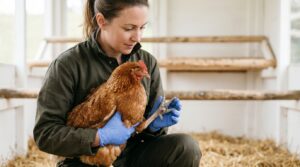
- Check every bird for injuries. Puncture wounds, bleeding, limping, breathing difficulty, or unusual weakness require prompt attention from a poultry-experienced veterinarian. Predator wounds can be more serious than they initially appear.
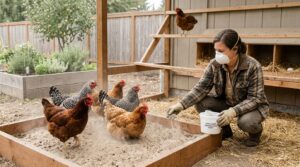
- Inspect the entire enclosure. Check the roof, mesh, doors, latches, corners, ground perimeter, and spaces around vents and pipes.
- Record the evidence. Take photographs of damage, tracks, feathers, and the surrounding area. Note when the flock was last seen safe and when the incident was discovered.
- Repair the weakness before returning the flock. A temporary patch may help, but make sure it is strong and secure enough to prevent another entry.
- Review the timing. If attacks repeatedly occur at night, improve nighttime security. If birds are exposed during the day, review overhead cover and supervision.
Avoid handling wild predators or attempting to trap or poison them. These actions can endanger people, pets, poultry, and other wildlife, and may violate local laws.
🏡 Preventing Future Attacks
A good predator-proofing plan uses several layers of protection rather than relying on one product.
- Use strong welded-wire mesh. Ordinary chicken wire is designed primarily to contain poultry, not to stop determined predators.
- Secure every entrance. Use sturdy latches that cannot easily be lifted or manipulated, and close the coop before nightfall.
- Protect the roof and perimeter. Cover vulnerable openings and reinforce areas where animals might climb, squeeze through, or dig.
- Keep the run maintained. Repair damaged mesh, loose boards, and gaps as soon as you find them.
- Use automatic coop doors thoughtfully. They can help busy keepers maintain a consistent routine, but they should be tested regularly and must not replace a secure enclosure.
- Reduce avoidable attractants. Store feed in secure containers, clean up spilled feed, and manage food waste to reduce visits from wildlife.
No enclosure can guarantee protection against every predator. Regular inspections and prompt repairs are essential, particularly after storms or any incident that damages the structure.
Final Thoughts 🐔
Raccoons, foxes, hawks, and dogs can all pose risks to backyard poultry, but their signs often overlap. A missing chicken, scattered feathers, or a damaged fence is a starting point for an investigation, not definitive proof of what happened.
Look at the full scene, document what you find, and prioritize the safety of your remaining flock. Then strengthen the specific weaknesses that could allow another animal to enter.
The best defense is not guessing the predator correctly on the first try. It is building a secure, well-maintained enclosure that makes access difficult for a range of potential threats.