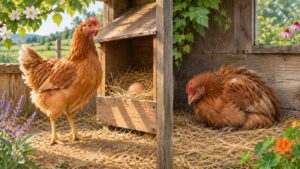
You set a shallow pan of water in the chicken run, expecting your flock to step in and cool off, but the hens pass it. 🐔 Meanwhile, one chicken scratches out a hollow beneath a tree and settles into the dirt as though she found the best seat in the yard. If your chickens won’t use a foot bath, shaded ground may suit them better.
The idea behind cooling chickens with wet dirt is simple: offer a shady, well-drained place where the soil can stay slightly cooler without turning into mud. 🌿 This is an optional comfort feature, not a replacement for clean drinking water, moving air, or enough shade during hot weather. Give your birds a choice without creating extra maintenance.
Why Won’t Some Chickens Use a Cooling Foot Bath?
Chickens have individual preferences, and many are cautious around unfamiliar objects, including a new tray placed in their usual walking route. Some birds may use a low-sided bath, but others avoid it or prefer familiar ground. 💦 Refusing a foot bath does not mean a chicken is failing to cool herself properly or needs to be pushed into the pan.
A foot bath is only one possible addition to a summer setup, and it should never become a project you force on the flock. Keep any pan shallow, stable, and clean, with easy entry and exit. If your birds ignore it, spend your effort improving shade, ventilation, and drinking-water access before buying another cooling gadget.
Why Do Chickens Dig Holes and Rest in Shaded Dirt?
Digging and dust bathing are normal chicken behaviors, and a hen may scratch away the warm top layer to reach soil that feels different underneath. ☀️ Tree-shaded soil receives less direct sunlight than exposed ground. A shallow hollow can also make a sheltered resting spot, which explains why some hens repeatedly return to the same patch.
There is an important distinction between dry dust bathing and resting on cool, slightly damp soil. Chickens need loose, relatively dry material for normal dust-bathing behavior, which involves tossing particles through their feathers, while a mildly damp patch may offer a different resting surface. 🪶 Provide both options rather than soaking the flock’s only dust bath.
How to Create a Shaded Cooling Patch for Chickens
Start by watching where your birds already rest during the hottest part of the day, then choose a spot that remains shaded when the afternoon sun is strongest. 🌳 A tree canopy, well-secured shade cloth, or open-sided shelter can work, provided air can still move at chicken level. Avoid tight corners behind solid walls, where warm, humid air can become trapped.
Next, check the ground before reaching for the hose: suitable soil should allow small amounts of water to soak in without leaving puddles. Loosen compacted surface dirt gently with a rake, remove sharp objects and manure buildup, and leave room for several hens. 🛠️ If the site stays waterlogged after rain, choose a different location rather than trying to disguise a drainage problem with more loose material.
Lightly moisten only part of the shaded soil and stop while it feels damp rather than squishy or saturated. 💧 In hot, dry conditions, evaporation may help cool the immediate surface, but the benefit varies with humidity, airflow, soil, and weather, so do not expect a fixed temperature reduction. Let chickens discover the patch voluntarily, inspect it daily, and let it dry between wettings.
A Simple Drainage Cross-Section to Copy
Picture the patch in side view: a shade canopy above, a shallow hen-sized resting hollow at the surface, and native soil underneath that lets modest moisture move downward. On the side, draw a gentle surface grade carrying excess water away from the coop, feeders, and sleeping areas, rather than forming a puddle. 📐 The illustration should show damp surface soil, not a lined basin or permanently wet pit.
Beside the damp patch, show a separate dry dust-bathing space, a nearby drinking station, and open sides for air movement. This layout is more useful than a promise that a homemade installation will lower ground temperature by a particular number of degrees. For a simple test, moisten the spot lightly, look for pooling after several minutes, and stop adding water if drainage is poor.
How Wet Is Too Wet for a Chicken Run?
If your shoes sink, footprints fill with water, the dirt forms sticky clumps, or the area smells sour, you have moved beyond a lightly damp cooling patch. 🚫 Persistent mud collects manure, makes surfaces harder to clean, attracts some pests, and can contribute to unsanitary conditions around the flock. Wetting should be occasional and controlled, never a reason to keep the whole chicken run constantly damp.
Avoid deliberately wetting bedding inside a coop, around feed storage, beneath roosts, or anywhere moisture cannot escape. High humidity also reduces the effectiveness of chickens’ evaporative heat loss through panting, so adding water indiscriminately can be counterproductive during muggy weather. If your yard is clay-heavy, poorly drained, crowded, or already saturated by rain, prioritize shade and airflow instead of making a wet dirt patch.
What If the Chickens Ignore the Cooling Patch?
Give the birds time to explore without lifting or placing them on the damp soil, because a new feature may take time to become familiar. 👀 Observe where they naturally gather, particularly in the afternoon, and ask whether your proposed patch is too exposed, too busy, too muddy, or too far from water. Sometimes moving a shade canopy over an existing favorite resting hollow works better than building a new area elsewhere.
Do not judge the project solely by whether you catch a hen lying in it during your first inspection. The flock may prefer a different shaded corner, dry soil, or brief visits. 🐓 If nobody uses it, let the spot dry and redirect your effort toward the basics rather than repeatedly adding water to attract them.
A Cool Dirt Patch Is Not an Emergency Heat Treatment
A chicken cooling area can make hot days more comfortable, but it cannot reliably prevent or reverse serious heat stress. Heavy panting, wings held out widely, weakness, staggering, marked lethargy, or pale combs and wattles are warning signs that need prompt attention, not more time beside a damp patch. ⚠️ Move an affected bird into a cooler, ventilated environment, begin safe cooling with cool rather than icy water, and seek urgent veterinary advice.
During a heat wave, check waterers frequently and provide several accessible sources of clean, cool water if needed. Keep shade available throughout the day, maximize safe airflow, and watch birds that are older, heavier, ill, or otherwise struggling in the heat. 🌡️ A dirt patch should sit at the bottom of this priority list as a supportive option, not at the top as the main protection.
The Practical Summer Rule: Offer Choices, Keep Them Dry Enough
You do not need to convince every chicken to stand in a foot bath to provide thoughtful summertime care. A shaded, slightly damp resting patch is a reasonable experiment when the soil drains, the air can circulate, and a separate dry dust bath remains available. 🌱 The most successful setup is the one your flock voluntarily uses without creating puddles, dirty litter, or extra sanitation problems.
Begin with shade, airflow, and fresh drinking water, then try a small patch rather than wetting the whole run. Watch how the chickens behave, check whether the dirt dries, and adjust your layout according to what you actually see. 🐔 When cooling chickens with wet dirt, a little well-placed moisture is an option; permanent mud is not the goal.