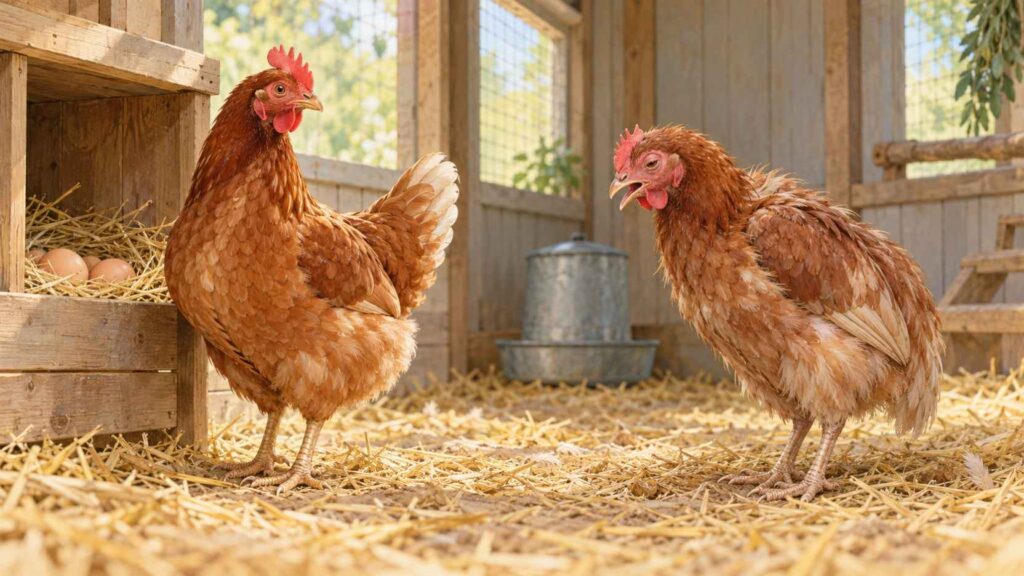
A hen is breathing with her beak open, standing strangely, and spending longer than usual near the nest box. 🐔 It is natural to wonder whether she is overheated or struggling to pass an egg, especially when searches for egg bound chicken panting seem to describe both situations. Yes, an egg-bound chicken may pant or struggle to breathe, but panting by itself cannot tell you what is wrong.
Egg binding means an egg cannot pass normally through the hen’s reproductive tract, and severe obstruction can become life-threatening. Heat stress, respiratory disease, pain, and other illnesses can produce overlapping behaviors, making an at-home diagnosis unreliable. The safest approach is to observe the whole bird, recognize urgent warning signs, and contact a veterinarian promptly whenever egg binding is suspected.
Can an Egg-Bound Chicken Pant or Breathe Heavily?
How Reproductive Problems May Affect Breathing
A retained egg can be associated with discomfort, straining, abdominal enlargement, and breathing difficulty. Birds rely on movement of their body wall and air sacs for ventilation, so pressure inside the body can make breathing more difficult in some cases. 🫁 Tail bobbing with each breath, pronounced effort, or open-beak breathing while resting deserves immediate attention regardless of the cause.
Why Panting Alone Doesn’t Establish Egg Binding
Chickens also pant to release heat because they cannot cool themselves by sweating as people do. During hot weather, a bird may hold her wings away from her body, seek shade, drink more, and breathe rapidly without having a reproductive obstruction. ☀️ However, severe heat stress is dangerous too, and panting that persists at rest or comes with weakness should never be dismissed as ordinary cooling.
What Are the Common Signs of an Egg-Bound Chicken?
Egg bound chicken symptoms are most concerning when several changes occur together, particularly straining, abnormal posture, weakness, and altered laying behavior. Not every affected hen shows every sign, and some other illnesses can mimic the same pattern. Rather than attempting to confirm an egg by squeezing the abdomen, watch what the hen does naturally and share those observations with a veterinarian.
Straining and Repeated Nesting Attempts
A hen straining to lay an egg may repeatedly enter the nest, squat, push, or appear to make unsuccessful laying attempts. You might also notice unusual effort around the vent or changes in droppings, although these signs are not exclusive to egg binding. 🪺 Brief nesting visits are normal; repeated unproductive straining, especially with distress, warrants urgent veterinary advice.
Abnormal Posture and Reduced Movement
Some affected hens adopt an unusually upright, wide-legged, or penguin-like stance, while others remain hunched and move reluctantly. A bird that stays isolated, closes her eyes, stops eating, or struggles to stand is showing illness, not simply taking extra time to lay. ⚠️ Weakness, collapse, or inability to walk normally should prompt immediate emergency care.
Abdominal Enlargement and Other Warning Signs
A noticeably enlarged lower abdomen, blood around the vent, or tissue protruding from the vent can indicate a serious reproductive or other medical problem. A swollen abdomen does not prove that an egg is stuck, because fluid accumulation, inflammation, and other conditions can also cause enlargement. Avoid pressing, probing, or inserting anything into the vent to investigate.
Can a Chicken Be Egg-Bound if She Laid Yesterday?
Why a Recent Egg Does Not Rule Out a New Problem
Yes, laying an egg yesterday does not rule out egg binding today. A laying hen can begin forming another egg soon after the previous one passes, and the process often takes a little more than 24 hours. 🥚 A recent successful egg is helpful background information, but it cannot override current signs of straining, weakness, or breathing difficulty.
What a Normal Laying History Can Reveal
Record when the hen last laid, whether her recent eggs were unusually large or soft-shelled, and whether her behavior changed suddenly. Remember that hens do not all lay every day, and missed eggs can also reflect molt, age, seasonal light changes, or broodiness. The timing helps a veterinarian interpret the situation, but one missed egg alone is not an egg-binding diagnosis.
Egg Binding Versus Heat Stress: What Can Owners Observe Safely?
The surroundings provide clues: high temperatures and several flockmates panting suggest heat exposure, while repeated straining and unusual nesting behavior raise concern about reproductive trouble. 🌡️ These are patterns, not a reliable test, because a hen can be hot and sick at the same time. Check from a short distance rather than chasing or repeatedly handling a distressed bird.
Egg-Binding Symptom Observation Chart
| What You Notice | Possible Explanation | Safer Response |
|---|---|---|
| Panting with wings held out during heat | Heat stress; other illness also possible | Provide shade, ventilation, cool drinking water, and assess severity |
| Repeated straining without laying | Possible reproductive obstruction | Contact a veterinarian promptly |
| Wide stance or swollen abdomen | Possible reproductive or abdominal problem | Seek veterinary assessment |
| Weakness, collapse, severe breathing effort | Medical emergency from several possible causes | Seek emergency veterinary care immediately |
| Laid an egg yesterday | Does not rule out a new reproductive problem | Evaluate current symptoms |
Important: This chart guides decisions about seeking care; it cannot diagnose egg binding at home. Even when heat seems likely, heavy panting, weakness, discolored comb or wattles, or collapse requires immediate action. A veterinarian may need an examination and imaging to determine whether a retained egg or another condition is responsible.
What Should You Do if You Suspect Egg Binding?
Keep Handling Minimal and Contact a Veterinarian
Call an avian or poultry-experienced veterinarian as soon as you suspect an egg is trapped, and explain whether the hen is having trouble breathing. Place her somewhere quiet, secure, and well ventilated with easy access to drinking water, without crowding or chasing her. Keep her at a comfortable temperature; do not add a heat lamp or hot bath to a hen that is already panting or overheated.
Why Attempting to Break or Extract an Egg Yourself Is Dangerous
Online suggestions sometimes involve squeezing the abdomen, inserting fingers into the vent, or intentionally breaking an egg. ❌ These actions can injure delicate tissue, create sharp shell fragments, and delay veterinary treatment while the hen deteriorates. Extraction, lubrication inside the reproductive tract, medications, and other interventions should be directed or performed by a veterinarian rather than improvised at home.
When Is Egg Binding an Emergency?
Suspected egg binding needs prompt veterinary assessment even when a hen still stands and looks alert. Severe breathing difficulty, persistent straining with obvious distress, collapse, inability to stand, a prolapsed vent, or significant bleeding requires emergency care immediately. 🚨 Do not wait until the following morning or use an arbitrary number of hours to decide whether worsening symptoms are serious.
If heat exposure is also possible, immediately move the hen to shade or a cooler ventilated location and make cool drinking water available without forcing her to drink. Contact a veterinarian while taking these steps, especially if she is weak or breathing hard. Improvement after cooling is encouraging but does not rule out another illness when reproductive signs remain.
How Feeding and Flock Management Support Laying Health
Use a nutritionally complete ration appropriate for actively laying hens, with fresh water consistently available and supplemental calcium offered according to feeding guidance. Poor nutrition, calcium imbalance, obesity, excessively large eggs, and reproductive tract problems can contribute to laying difficulties, although good husbandry cannot prevent every case. 🥬 Keep treats moderate so they do not displace the balanced feed intended to support egg formation.
Provide accessible nest boxes, enough room for normal movement, and a stable, comfortable environment that avoids unnecessary stress and extreme heat. A simple egg log can highlight changes in shell quality, laying frequency, posture, and appetite before a serious problem goes unnoticed. Above all, treat chicken panting and not laying eggs as a reason to assess the whole bird, not as proof of a single condition.
Final Takeaway
An egg-bound hen can pant, but so can a hen with heat stress or another urgent illness. The warning signs that matter most are breathing effort, repeated straining, weakness, abnormal posture, abdominal changes, and whether the bird is deteriorating. 🐔 Observe without invasive handling and seek prompt veterinary help whenever egg binding is suspected, because recognizing trouble early is more important than guessing the diagnosis.