A flock can seem perfectly peaceful for months and then, almost overnight, several hens begin chasing, pecking, or excluding one bird. 🐔 When chickens suddenly start bullying one hen, it is tempting to dismiss the problem as “just the pecking order,” but a sudden change deserves closer attention because something in the bird, flock, or environment may have changed. The goal is not simply to stop the pecking—it is to figure out why the flock dynamic changed in the first place.
Chicken social hierarchies are normal, and occasional pecks, short chases, or arguments over preferred spaces happen even in stable groups. However, repeated attacks on the same bird can escalate into injuries, reduced access to feed or water, stress, and a cycle in which visible wounds attract even more pecking. 🔎 A cause-first approach helps you decide whether you are seeing a temporary social adjustment or a problem that needs intervention.
Why Would Chickens Suddenly Start Bullying One Hen?
A flock’s hierarchy is not permanently fixed because age, health, hormones, molt, broodiness, environmental changes, and individual behavior can alter relationships. One hen that was previously confident may become slower or weaker, while another bird may become more assertive and begin testing her position. This is why hens suddenly fighting does not always mean the flock has simply “gone bad.”
Sometimes the targeted hen has changed in a way that people do not notice immediately. She may be moving differently, spending more time alone, losing feathers, guarding a sore area, or failing to compete normally at the feeder, and flockmates can respond to that weakness. 👀 Before treating the problem solely as aggression, inspect both the victim and the environment for changes.
Is It Normal Pecking-Order Behavior Or Dangerous Aggression?
Normal hierarchy behavior is usually brief and purposeful: one hen pecks, the subordinate bird moves away, and the encounter ends. Small disputes over a favorite perch or feeder position may look dramatic, but both birds normally return to eating, drinking, foraging, and resting afterward. Occasional pecks without injury are very different from relentless pursuit.
Aggression becomes more concerning when one bird is repeatedly chased, cornered, mounted, feather-plucked, prevented from eating, or attacked after she retreats. 🚨 Blood, open wounds, exhaustion, hiding for long periods, or refusing to approach resources are signs that the targeted bird may need immediate protection. The question is not simply “Are they pecking?” but “Can this hen still live normally inside the flock?”
Eight Things To Check Before Blaming The Pecking Order
1. Check For A Recent Health Change
Start by watching the targeted hen before handling her because her movement may reveal more than a quick physical examination. Look for limping, drooping posture, reluctance to move, reduced appetite, abnormal breathing, unusual droppings, weight loss, or spending excessive time away from the flock. 🩺 A bird that suddenly appears vulnerable may become a target even if the original problem has nothing to do with aggression.
After observing her, inspect her carefully for abnormalities that may explain the change. Check her feet, legs, vent area, feathers, skin, comb, and general body condition while avoiding rough restraint. If she appears clearly ill or weak, focus on identifying that underlying problem rather than assuming social conflict is the primary cause.
2. Look For Injuries And Blood
Even a small wound can change flock behavior because chickens are visually attracted to unusual red areas and may repeatedly investigate them by pecking. A minor injury caused by fencing, a sharp coop edge, mating, or an earlier dispute can therefore become much worse once other hens notice it. 🩸 Examine the bird beneath the feathers because damage may be hidden from casual observation.
If there is active bleeding or an open wound, protect the injured bird from further attacks while the injury is assessed and treated appropriately. Returning a visibly injured bird immediately to relentless flockmates can restart the cycle before healing occurs. Also inspect the coop for whatever may have caused the original injury.
3. Check For Parasites Or Feather Problems
External parasites, irritated skin, heavy feather loss, or damaged plumage can make a hen look and behave differently from the rest of the flock. She may spend more time preening, avoid normal activity, or expose irritated areas that other birds investigate. 🔍 Examine the feather bases and skin carefully, particularly around areas where abnormalities are visible.
Remember that feather loss can also result from molt, mating, friction, or previous pecking, so do not diagnose parasites from missing feathers alone. The useful question is whether there is an underlying skin or feather problem that appeared before the aggression. Correcting that problem may be necessary before the social situation settles.
4. Check Space And Escape Routes
Even a coop that meets a basic space guideline can develop bottlenecks where subordinate hens repeatedly become trapped. Narrow doorways, dead-end corners, a single preferred perch, or one crowded feeding area can allow aggressive birds to control movement much more effectively. 🏠 Observe where attacks happen instead of looking only at the flock’s total square footage.
Add visual barriers, additional perches, or alternative routes where practical so the targeted hen can break line of sight and move away. More usable space is often more valuable than empty floor area that offers nowhere to escape. A bullied bird needs somewhere to go that does not end in another corner.
5. Check Feed And Water Access
Resource competition can reveal social problems that were previously easy to miss. A dominant hen may tolerate a subordinate bird until both want the same feeder position, water station, or high-value treat, creating repeated conflicts that look random. 🌾 Watch whether the victim is actually eating and drinking rather than merely standing near the equipment.
Provide multiple feeding and watering points far enough apart that one aggressive bird cannot easily guard all of them. This is especially useful when chicken pecking-order problems revolve around resources instead of constant attacks throughout the run. Treats can also intensify competition, so temporarily simplifying the feeding routine may make behavior easier to evaluate.
6. Check For Environmental Changes
Think about what changed shortly before the bullying began. New birds, removed birds, a coop rearrangement, confinement after free-ranging, extreme weather, predator scares, construction noise, or changes in daily routine can disrupt flock behavior. 🌦️ Chickens respond strongly to changes in their environment, even when the change seems minor to the owner.
Do not assume that the most recent change is automatically the cause, but include it in your investigation. A flock that suddenly has less usable outdoor space, for example, may experience more encounters simply because birds cannot avoid one another. Restoring predictable routines and reducing unnecessary stressors can help while you observe the flock.
7. Check Nesting And Broody Conflicts
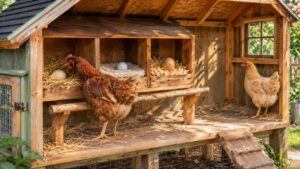
Nest boxes can become surprisingly competitive, especially when several hens prefer the same location. A broody hen may also become defensive around a nest, while other hens may push, peck, or crowd one another while trying to lay. 🥚 Pay attention to whether aggression concentrates around nesting areas or particular times of day.
Make sure hens have reasonable access to suitable nesting areas and that one bird is not continuously trapping another inside or outside a preferred box. If aggression appears only around laying time, that pattern is useful evidence because it narrows the cause considerably. Not every flock conflict requires a whole-coop solution.
8. Check Whether One Bird Starts Most Attacks
Sometimes several hens appear to be bullying one chicken, but careful observation reveals that one persistent aggressor starts most incidents. Other birds may join after the first attack, making the problem look like the entire flock has rejected the victim. 🎯 Identifying the initiator can dramatically change the intervention strategy.
Watch from a distance for several sessions without immediately entering the run every time birds move toward one another. Record who approaches first, whether the victim was doing anything beforehand, and whether the same bird repeatedly blocks resources or gives chase. Patterns are much more useful than judging the flock from one dramatic encounter.
Eight-Question Chicken Bullying Diagnostic Tree
Use these questions in order: Did the targeted hen recently become ill or weak? Is there an injury or blood? Are there signs of skin, feather, or parasite problems? Can she escape attackers? Can she reach feed and water? Did the environment recently change? Are attacks concentrated around nesting areas? Does one hen initiate most incidents? 📝 Every “yes” gives you a specific problem to investigate before labeling the situation ordinary pecking-order behavior.
If several answers are “yes,” there may be more than one cause operating at the same time. For example, a mildly injured hen may move slowly, lose access to the feeder, retreat into a corner, and then become an easier target for an assertive flockmate. The diagnostic tree helps you follow that chain rather than treating every peck as a separate mystery.
How To Identify Which Hen Starts The Attacks
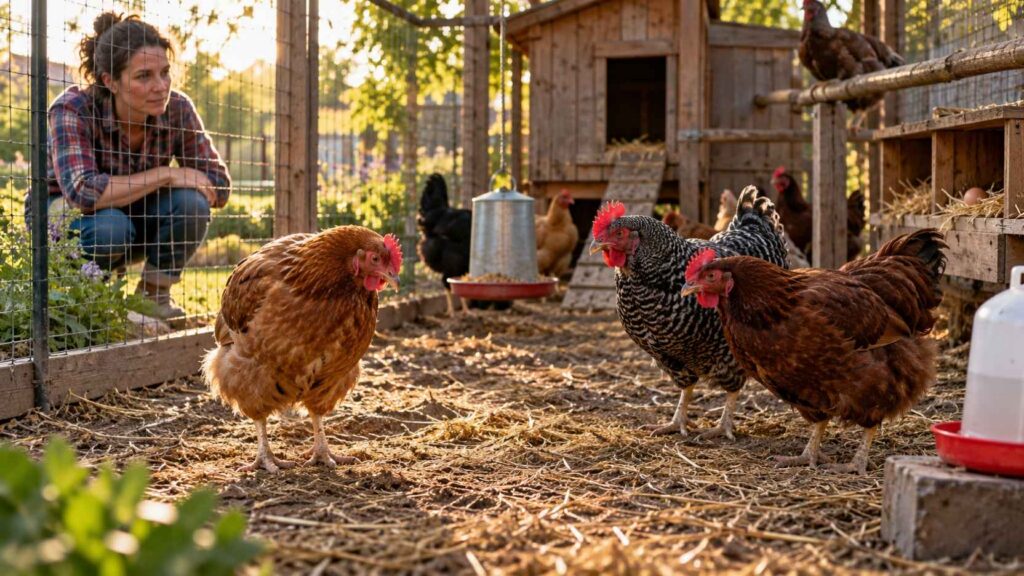
Observation works best when the flock behaves as though you are not managing the situation. Stand outside the run or watch quietly from a distance for several periods, especially around feeding, release from the coop, nesting, and evening roosting. 👁️ Note who approaches whom, what resource is nearby, and whether the targeted hen attempts to escape.
Avoid immediately throwing treats into the run while observing because that changes flock behavior and creates artificial competition. Instead, watch ordinary interactions and look for repetition across several encounters. A true pattern—same aggressor, same location, same trigger—is more informative than one isolated chase.
What To Do In The First 24 Hours
First, protect any hen that is bleeding, badly injured, exhausted, or unable to escape attacks. Separate her safely when necessary, make sure she can eat and drink, and examine her for underlying health or injury problems. 🚑 Serious wounds, marked weakness, breathing difficulty, inability to stand, or other significant illness signs warrant veterinary attention.
At the same time, reduce competition in the remaining flock by adding temporary feed or water stations and improving escape opportunities. Do not make multiple dramatic management changes at once unless safety requires it because changing everything makes the original trigger harder to identify. Stabilize the situation first, then troubleshoot methodically.
When To Worry And When To Seek Help
Brief pecks followed by normal flock behavior usually require observation rather than panic. Persistent attacks, blood, deep wounds, severe feather removal, weakness, inability to reach food or water, rapid weight loss, or a hen spending nearly all day hiding are much more serious. ⚠️ These situations have moved beyond ordinary social correction because the bird’s welfare is being compromised.
When chickens suddenly bully one hen, the safest assumption is not that the pecking order explains everything. Check the bird, resources, environment, nesting areas, and aggressors systematically, because sudden aggression is often a clue that something changed. 🐔 The faster you identify that change, the better chance you have of stopping a manageable flock problem before it becomes a serious injury.