
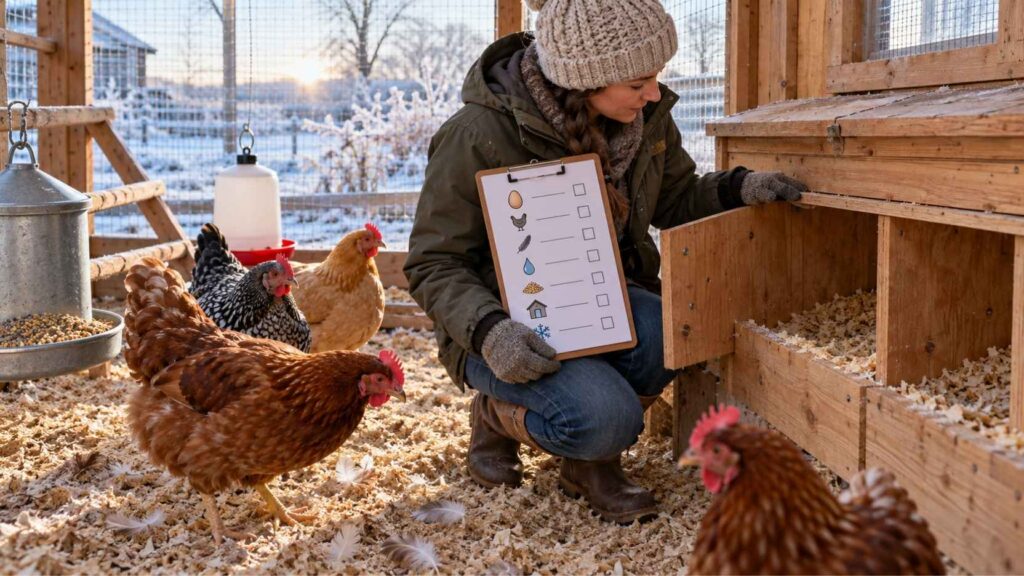
Opening the nest box every morning and finding nothing can feel alarming when the same flock was producing several eggs a day only weeks earlier. 🥚 Fortunately, chickens not laying eggs in winter can be completely consistent with normal seasonal biology, especially when shortening daylight and molt occur together. Several hens experience those same environmental signals simultaneously, so a flock can appear to go from productive to nearly zero surprisingly quickly.
The best response is not to immediately search through a frightening list of poultry diseases. Instead, treat the situation like a simple flock inspection: first decide whether the chickens appear healthy, then work through daylight, molt, feed, water, stress, and the possibility that eggs are somewhere other than the nest box. 🔎 This seven-step process helps separate a normal winter slowdown from situations that deserve closer attention.
Why Can Egg Production Go From Several Eggs A Day To Zero?
Egg production is controlled by more than temperature, which is why saying chickens “stop because it is cold” misses an important part of the picture. As autumn and winter shorten the photoperiod—the number of light hours within each day—the reproductive system receives a different seasonal signal, and laying may decrease dramatically. 🌤️ University poultry guidance commonly identifies decreasing daylight and annual molt as major reasons backyard hens reduce production in fall and winter.
Because the entire flock experiences nearly the same day length, multiple hens may slow down within the same general period. Add several birds molting, an older flock, or another small management change, and the egg basket can suddenly look empty even though nobody appears obviously sick. That dramatic change is why hens stopped laying suddenly is such a worrying search for beginners, but “sudden” at the nest box does not automatically mean something suddenly went wrong medically.
Step 1: Look At The Chickens Before You Look At The Nest Box
Start with the birds themselves rather than counting eggs. 👀 Watch whether they are walking normally, scratching, dust bathing, interacting with flockmates, eating, drinking, and approaching you in their usual manner, then look at feathers, posture, eyes, combs, wattles, breathing, droppings, feet, and obvious injuries. A flock behaving normally during short winter days gives you a very different starting point from a hen that is isolated, weak, reluctant to eat, or noticeably abnormal.
Do not expect every healthy winter hen to look exactly as she did during peak summer production. Comb color and size can change with reproductive activity, feather condition changes during molt, and activity can vary with weather, so look for meaningful departures from each bird’s normal behavior instead of one cosmetic detail. 🐔 If several birds have abnormal breathing, major appetite changes, persistent diarrhea, pronounced lethargy, unusual posture, or other concerning signs, move beyond seasonal troubleshooting and contact an appropriate poultry veterinarian or qualified animal-health professional.
Step 2: How Many Hours Of Daylight Are They Actually Getting?
For many backyard flocks, daylight is the biggest clue. Laying hens generally need roughly 12 to 14 hours of daily light to support continued production, while naturally lit winter days in many locations fall below that range. 💡 This explains why a healthy hen can have the same coop, food, water, and owner yet produce fewer eggs simply because the seasonal photoperiod has changed.
Supplemental lighting is a management choice rather than something every backyard keeper must use. Some owners accept a natural winter break, while others use carefully timed morning lighting to maintain a longer photoperiod; either approach should prioritize bird welfare and electrical fire safety. The important troubleshooting point is simpler: before assuming zero eggs means illness, determine whether your flock has recently experienced a major reduction in daily light.
Step 3: Are They Molting—Even If They Do Not Look Bald?
A molt does not always create the dramatic half-bald chicken photographs beginners see online. 🪶 Some hens lose and replace feathers gradually, so clues may include extra feathers around the coop, slightly ragged plumage, emerging pin feathers, or subtle changes around the neck, wings, back, and tail. Feather replacement demands biological resources, and egg production commonly falls or pauses during this period.
Molt and shorter daylight frequently overlap, which makes the autumn-to-winter production decline look particularly dramatic. Two hens may also molt differently, meaning one looks obviously scruffy while another appears almost normal even though both temporarily reduce laying. Instead of using baldness as the test, inspect the coop for shed feathers and gently observe whether new feather growth is visible.
Step 4: Check Feed And Water
Once daylight and molt are considered, inspect the everyday feeding system. 🌾 Laying hens should have reliable access to an appropriate complete, balanced ration, because replacing too much formulated feed with scratch grains, mealworms, kitchen scraps, or other treats makes the overall nutrient intake less predictable. Treats can remain useful for enrichment and training, but the complete ration should continue doing the nutritional heavy lifting.
Water deserves equal attention because hens need dependable access even when winter makes drinking equipment inconvenient. 💧 Check whether water has frozen overnight, whether nipples or cups still function, whether containers are leaking, and whether every hen can reach the drinking points without being bullied away. A feeder that looks full and a waterer that looks full do not necessarily mean the birds are successfully consuming either one.
Step 5: Has Anything Changed Recently?
Chickens thrive on predictable routines, so mentally rewind the weeks before egg production dropped. A new coop, recently added flock members, predator activity, neighborhood dogs, construction noise, changes in confinement, altered feeding times, relocation, or repeated disturbances can all change flock behavior. 🏠 One stressful afternoon does not automatically stop the entire flock from laying, but significant or continuing disruption belongs on the troubleshooting checklist.
Pay particular attention to changes that affect several hens simultaneously because those better explain a flock-wide decline. If daylight became shorter, several hens started molting, and the flock was also moved into a new run, you may be seeing several ordinary influences stacked together rather than one mysterious cause. Write down major changes instead of relying on memory, because a simple timeline often makes the pattern much clearer.
Step 6: Make Sure “No Eggs” Really Means No Eggs
Free-ranging hens occasionally solve the mystery themselves by choosing a nest location you never approved. 🌿 Check behind equipment, inside sheds, beneath shrubs, in hay, under porches, beside stored materials, and anywhere quiet, sheltered, and accessible to a chicken. If the flock behaves normally and some hens disappear to the same secluded area each morning, a hidden nest deserves serious consideration.
Eggs can also disappear after being laid. Look for broken shells, wet nesting material, egg residue, signs of egg eating, or access by animals that could remove eggs, and ask whether another household member has been collecting them without mentioning it. 😄 Confirming that no eggs are being produced is very different from simply finding no eggs in the official nest boxes.
Step 7: When Should You Stop Waiting And Investigate Further?
A healthy-looking flock experiencing short days or molt can often be monitored while you continue normal care. ✅ However, reduced laying combined with persistent appetite loss, substantial weight or body-condition changes, lethargy, abnormal breathing, repeated unusual droppings, swelling, obvious pain, straining, injuries, or rapidly worsening behavior deserves more prompt investigation. Egg production should be treated as one clue among many rather than the sole measure of chicken health.
Age also matters because production naturally changes over a hen’s lifetime, with peak laying generally occurring earlier in adulthood and output decreasing as birds get older. If environmental explanations do not fit, management is unchanged, hidden nests have been ruled out, and the flock shows unexplained abnormalities, consult a qualified poultry veterinarian rather than repeatedly changing feeds or supplements. 🩺 The goal is not to panic over every empty nest box but also not to ignore a hen whose overall condition is telling you something is wrong.
Quick Winter Egg Diagnostic Table
| What You See | What To Check Next |
|---|---|
| Healthy + shorter days + molt 🪶 | Usually continue monitoring normal care and seasonal changes |
| Normal behavior + free-ranging 🌿 | Search carefully for hidden nests |
| Feeder full + treats given frequently 🌾 | Confirm hens are actually eating adequate complete feed |
| Cold weather + full waterer ❄️ | Confirm the water is unfrozen and drinker hardware works |
| Recent coop or flock change 🏠 | Watch for ongoing stress and disrupted routines |
| Broken shells or residue 🥚 | Investigate egg breakage, eating, or removal |
| Poor appetite + lethargy + abnormal posture ⚠️ | Investigate promptly and seek qualified help when appropriate |
This table works best as a prioritization tool rather than a diagnosis. Seasonal clues near the top suggest what to observe, while health abnormalities move the situation into a different category. Keeping those categories separate helps beginners avoid both extremes: panicking over a normal winter pause or assuming every loss of production is seasonal.
“No Eggs Today?” Seven-Step Diagnostic Card Idea
1. CHECK THE BIRDS → 2. COUNT THE LIGHT HOURS → 3. LOOK FOR MOLT → 4. CHECK COMPLETE FEED AND WATER → 5. REVIEW RECENT CHANGES → 6. SEARCH FOR MISSING EGGS → 7. LOOK FOR HEALTH RED FLAGS. 📋 Follow those steps in that order whenever winter production suddenly falls, because they move from broad observation toward increasingly specific explanations. Record what you find for several days so you can distinguish a genuine pattern from one unusually quiet morning.
The key reassurance is that healthy-looking chickens can stop laying during winter without something automatically being wrong. Shortening daylight and molt are powerful seasonal influences, and when several hens react at approximately the same time, the empty nest boxes can make the change look more frightening than it is. 🐔 Check the chicken before the egg basket, work systematically through the seven steps, and let the flock’s overall health—not egg count alone—tell you when it is time to worry.




