
Introduction
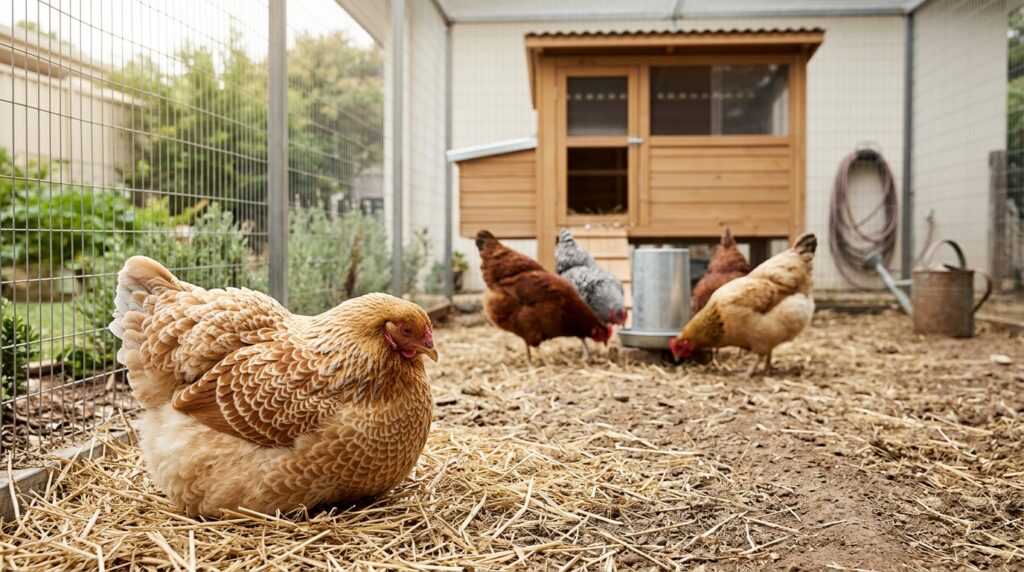
You walk into the coop and notice one of your chickens sitting by herself, feathers puffed out, looking quieter than usual. She is not scratching the ground, following the flock, or rushing over when you bring out feed.
Should you be worried?
Sometimes, a chicken fluffs up her feathers to conserve warmth or settle down to rest. A hen may also sit quietly when she is broody and wants to hatch eggs. However, fluffed-up feathers combined with unusual isolation, weakness, or reduced appetite can be an early warning sign of illness.
Chickens naturally hide signs of weakness, so subtle changes in behavior deserve attention. Here is how to assess your hen, recognize warning signs, and decide what to do next. Merck Veterinary Manual
1. Why Is Your Chicken Fluffed Up and Sitting Alone?
Several things can cause this behavior. The surrounding circumstances and your chicken’s other symptoms help determine how concerning it is.
🥶 She may be cold
Chickens fluff their feathers to trap insulating air close to their bodies. On a cold day, a bird may sit quietly or huddle with other chickens to conserve warmth.
What to check: Is the coop drafty, damp, or unusually cold? Are several chickens huddling together, or is just one bird acting differently?
If the flock is otherwise active and eating normally, environmental conditions may explain the behavior. However, a single chicken that remains puffed up and withdrawn should not automatically be assumed to be cold.
🥚 She may be broody
A broody hen wants to incubate eggs. She may spend long periods sitting in a nest box, become protective of the nesting area, and leave only briefly to eat, drink, and relieve herself.
What to check: Is she sitting in a nest, returning to it repeatedly, and showing nesting or protective behavior?
Broodiness is different from general lethargy. A broody hen may still be alert and responsive when approached. If she looks weak, stops drinking, or has other abnormal symptoms, do not assume broodiness is the explanation.
😟 She may be stressed or uncomfortable
Changes in the flock, bullying, predator disturbances, moving to a new coop, or environmental changes can affect a chicken’s behavior.
What to check: Has another bird been pecking her? Is she being pushed away from food or water? Does she have an injury or difficulty walking?
A quieter environment and protection from flock aggression may help, but persistent withdrawal still needs investigation.
🦠 She may be ill
Illness can cause a chicken to sit apart from the flock, keep her feathers fluffed, lower her head, close her eyes frequently, or become less interested in food and water.
Possible causes include infectious disease, intestinal problems, parasites, reproductive problems, and other conditions. These signs are not specific enough to identify a disease from appearance alone.
If the behavior is unusual for your hen, take it seriously, especially when several warning signs occur together. Merck Veterinary Manual
2. Warning Signs That Mean You Should Worry
Look beyond her feathers. Observe her behavior, breathing, appetite, droppings, posture, and ability to move.
| What you notice | Why it matters |
|---|---|
| Refusing food or water | Can indicate illness or significant weakness |
| Eyes frequently closed or head held low | May indicate lethargy |
| Labored breathing, gasping, or open-mouth breathing at rest | Requires urgent veterinary attention |
| Diarrhea, bloody droppings, or a major change in droppings | May indicate a digestive or systemic problem |
| Difficulty standing, loss of balance, or an abnormal neck position | May indicate a serious condition |
| Swollen abdomen, repeated straining, or an unusual upright posture | Can occur with reproductive problems, including egg binding |
| Sudden drop in egg production alongside illness | May signal a flock health problem |
| Several sick birds or unexplained deaths | Raises concern about a contagious or serious flock disease |
These signs are not a diagnosis. If your hen has difficulty breathing, cannot stand, is severely weak, or is rapidly deteriorating, seek urgent veterinary help rather than waiting to see whether she improves. Penn State Extension
3. What to Do When You Find a Sick-Looking Chicken
A calm, systematic response is more useful than immediately trying several treatments.
Step 1: Observe before handling
Watch her from a short distance. Is she alert when you approach? Can she stand and walk? Is she breathing comfortably? Does she react normally to the flock?
Notice whether other chickens are showing similar signs. Record when you first noticed the change.
Step 2: Check food and water intake
Offer her normal feed and clean water in an accessible location. Observe whether she voluntarily eats and drinks.
Do not force water or food into her beak because liquid or food can enter the airway if given improperly. A bird that cannot swallow normally or is too weak to eat needs veterinary assessment.
Step 3: Provide a quiet, safe space
If she appears ill, separate her from the flock in a clean, dry, well-ventilated area with suitable temperature conditions. This helps protect her from bullying, makes it easier to monitor her, and reduces potential disease spread.
Provide easy access to feed and water. Avoid excessive heat, chilling, and unnecessary handling.
Use separate footwear or equipment where practical, and wash your hands after handling the bird or cleaning her space.
Step 4: Check for other visible problems
Without causing unnecessary stress, look for obvious injuries, discharge around the eyes or nostrils, soiled feathers around the vent, swelling, or signs of external parasites.
Do not attempt invasive examinations or insert anything into the vent. If you suspect egg binding, internal illness, or another painful condition, contact a veterinarian.
Step 5: Contact a poultry veterinarian when needed
If your hen is persistently withdrawn, has reduced appetite, develops additional symptoms, or does not return to normal behavior promptly, seek veterinary advice. Do not wait several days when the bird is clearly unwell.
Avoid giving antibiotics, dewormers, or other medication without appropriate guidance. Different conditions require different treatments, and unnecessary medication can delay correct care.
4. Could It Be Egg Binding?
Egg binding is a potentially serious reproductive problem in which an egg becomes stuck in the reproductive tract. Affected hens may show weakness, straining, repeated trips to the nest, an unusual upright stance, abdominal discomfort, or difficulty passing droppings.
A fluffed-up hen sitting alone does not automatically have egg binding. These signs can overlap with other illnesses.
If egg binding is suspected, seek prompt veterinary help. Do not squeeze her abdomen, pull on a visible egg, or insert tools or fingers into the vent. These actions can cause injury.
5. What If Several Chickens Are Acting This Way?
One sick bird needs attention, but several affected birds raise a different level of concern.
If multiple chickens suddenly become lethargic, stop eating, develop breathing problems, show unusual swelling or discoloration, or die unexpectedly, consider the possibility of a flock-wide health problem.
- Limit unnecessary visitors and movement of birds.
- Avoid sharing equipment with other poultry keepers.
- Use dedicated footwear and clean equipment appropriately.
- Contact a veterinarian or the relevant local animal-health authority promptly.
Some serious poultry diseases require official investigation or reporting, depending on the disease and local regulations. Do not move or sell sick birds while the cause is being investigated.
6. How to Help Prevent Problems in Your Backyard Flock
You cannot prevent every illness, but daily care and early observation can make problems easier to identify.
Keep the coop dry and comfortable. Provide appropriate ventilation, protection from harsh weather, and enough space for birds to rest without persistent bullying.
Provide suitable feed and clean water. Make sure all birds can reach them. A hen that is being pushed away from the feeder may become undernourished even when food is available.
Watch each chicken’s normal routine. Learn who eats eagerly, who lays regularly, and how each bird usually behaves. Changes are easier to spot when you know what is normal.
Maintain flock biosecurity. Clean equipment, reduce contact with wild birds, and keep new or returning birds separate for an appropriate quarantine period based on veterinary guidance.
Arrange veterinary help early. Identify a veterinarian who treats poultry before an emergency happens. Prompt advice can be particularly valuable when a bird’s symptoms are vague.
Final Thoughts 💚
A chicken that is fluffed up and sitting alone may be cold, broody, stressed, or unwell. Her behavior alone cannot tell you which explanation is correct.
Pay attention to the combination of signs. A hen who remains alert, eats normally, and behaves like her usual self is less concerning than one who is withdrawn, weak, refusing food, or breathing abnormally.
Provide a safe environment, monitor her closely, and seek veterinary help when symptoms persist or become serious. If several birds become sick or deaths occur unexpectedly, contact a veterinarian or local animal-health authority promptly.
When it comes to backyard chickens, knowing what is normal for your flock is one of the most useful tools you have. A small change in behavior may be the first clue that a bird needs help.




