Introduction
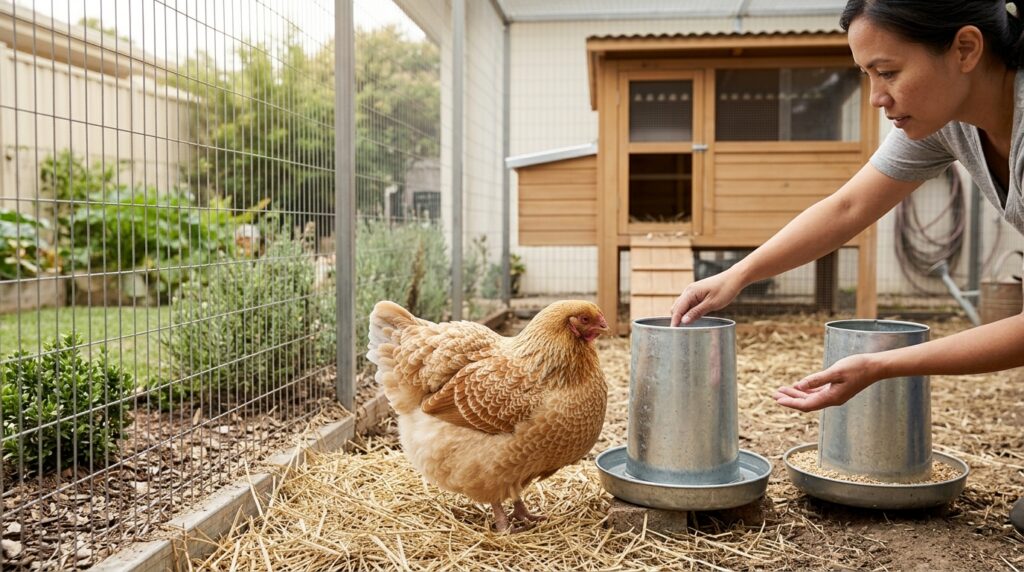
You fill the feeder, refresh the waterer, and notice that one of your chickens barely touches either. Maybe she is sitting in a corner, keeping her feathers puffed up, or simply standing still while the rest of the flock eats.
When a chicken stops eating or drinking, it is important to act early. Chickens can hide signs of illness, and changes in appetite, water intake, and activity may appear before more obvious symptoms develop.
The cause could be something simple, such as an empty waterer or bullying at the feeder. It could also be a sign of infection, digestive trouble, heat stress, or another medical problem.
Here is what to check first, what you can safely do at home, and when to contact a veterinarian.
1. 🚨 Check for Emergency Warning Signs First
Before troubleshooting the feeder or changing the food, observe your chicken’s overall condition.
Seek urgent veterinary help if your chicken:
- Is gasping, struggling to breathe, or showing pronounced breathing effort.
- Cannot stand, collapses, or becomes extremely weak.
- Has severe bleeding, seizures, or serious loss of coordination.
- Has a markedly swollen abdomen or appears to be straining repeatedly without passing an egg.
- Is rapidly deteriorating or cannot swallow normally.
If several chickens suddenly become sick, or you notice unexplained deaths, breathing problems, or unusual swelling or discoloration of the comb and wattles, contact a veterinarian or local animal-health authority promptly. Serious contagious poultry diseases may require official investigation.
Do not wait to complete every check below if your chicken has an emergency sign.
2. Check the Waterer and Feeder
Sometimes, the first problem is the equipment rather than the chicken.
Is clean water actually available?
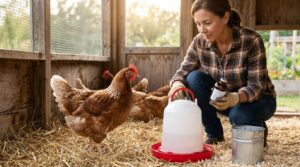
Check whether the waterer is empty, clogged, leaking, dirty, or difficult to reach. In hot weather, water availability is especially important because chickens need adequate water to regulate body temperature.
Clean the waterer and offer fresh, clean water in a container the bird can access comfortably. If you suspect contamination, replace the water and investigate the source.
Is the feed fresh and suitable?
Inspect the feed for dampness, mold, unusual odors, contamination, or pests. Check whether the feeder is blocked or positioned where a dominant bird can prevent others from eating.
Offer the chicken her usual complete feed in an accessible location. Avoid replacing a balanced ration with large quantities of treats, bread, or scratch grains.
Important: If your chicken still refuses food and water after access problems are corrected, do not assume the feeder was the cause.
3. Check Whether Bullying Is Preventing Her From Eating
A chicken may appear to have no appetite when another bird is keeping her away from food and water.
Watch the flock during feeding time. Look for pecking, chasing, blocking, or a bird that repeatedly approaches the feeder but retreats when another chicken comes near.
If necessary, provide a separate, safe feeding and drinking area where she can access resources without competition. If she is visibly ill, separate her from the flock in a clean, quiet, well-ventilated space.
Observe whether she voluntarily eats and drinks when she has easy access. This can help identify a management issue, but it does not rule out illness.
4. Look for Other Signs of Illness
A chicken that is not eating or drinking may show other changes. Check her behavior without causing unnecessary stress.
| What to check | What you may notice |
|---|---|
| Activity | Sitting alone, unusual sleepiness, reluctance to move |
| Feathers and posture | Fluffed feathers, drooping wings, lowered head |
| Eyes and nostrils | Discharge, swelling, cloudiness, or crusting |
| Breathing | Coughing, sneezing, abnormal sounds, or gasping |
| Droppings | Major changes in consistency, blood, or unusually watery output |
| Movement | Limping, weakness, poor balance, or difficulty standing |
| Egg-laying behavior | Reduced laying, repeated straining, or unusual nesting behavior |
| Body condition | Noticeable weight loss or a prominent breastbone |
No single sign confirms a particular disease. Similar symptoms can occur with different illnesses, so avoid diagnosing your chicken from one observation alone.
5. Consider Heat Stress, Especially in Hot Weather ☀️
High temperatures can reduce feed intake and put chickens at risk of heat stress.
Look for heavy panting, wings held away from the body, lethargy, and a bird that seems unable to settle comfortably. A chicken with severe heat stress may become weak or collapse.
If heat is a concern:
- Move the chicken to a cooler, shaded, well-ventilated area.
- Make clean, cool drinking water readily available.
- Reduce handling and other sources of stress.
- Seek urgent veterinary help if she is severely weak, collapsing, or struggling to recover.
Do not use ice-cold immersion or force water into her beak. A bird that is weak or unable to swallow properly can aspirate liquid. Severe heat stress is an emergency, not simply a reason to wait for cooler weather.
6. Could It Be a Crop or Digestive Problem?
The crop is a food-storage pouch at the base of a chicken’s neck. It temporarily holds swallowed feed before the food moves through the digestive tract.
Crop problems can sometimes affect appetite, but they cannot be diagnosed reliably from appetite loss alone.
If you are comfortable observing your chicken, note whether the crop looks unusually enlarged or whether it remains full and firm when it would normally be empty, such as first thing in the morning before feeding.
A persistently enlarged or abnormal-feeling crop, regurgitation, foul odor, or ongoing refusal to eat warrants veterinary advice. Do not squeeze, aggressively massage, or attempt to empty the crop yourself, and never turn a chicken upside down to make her regurgitate. These actions can cause injury or aspiration.
Other digestive conditions can produce similar signs, so a veterinary examination may be needed to determine the cause.
7. What Can You Safely Do at Home?
While arranging appropriate care, focus on simple supportive measures.
Provide a comfortable environment. Keep the bird in a clean, dry, quiet space with suitable ventilation and temperature.
Offer familiar feed and clean water. Make both easy to reach, and observe whether she voluntarily consumes them.
Keep track of changes. Note when she last ate or drank normally, when the symptoms began, and whether her droppings or breathing have changed.
Avoid unprescribed medication. Antibiotics, dewormers, and other treatments are not interchangeable. Giving the wrong treatment can delay appropriate care and create additional risks.
Do not force-feed or syringe water without veterinary instruction. A weak bird may be unable to swallow safely.
If she is refusing both food and water, contact a poultry veterinarian promptly rather than waiting until the next day to see what happens. Seek urgent help sooner if any severe symptoms develop.
8. When Should You Call a Poultry Veterinarian?
There is no single safe waiting period for every chicken. Age, severity, hydration, underlying illness, and other symptoms all matter.
Contact a veterinarian promptly if:
- Your chicken continues to refuse food or water after access problems are corrected.
- She is lethargic, fluffed up, losing weight, or behaving unusually.
- You notice abnormal droppings, respiratory signs, or suspected reproductive problems.
- She is a chick or otherwise vulnerable and has stopped eating or drinking.
- Other birds begin showing similar symptoms.
When you call, explain how long the problem has been happening, whether she is drinking at all, what her droppings look like, and whether other chickens are affected. Photos or a short video of unusual behavior may also help the veterinarian assess the situation.
9. How to Reduce the Risk of Future Problems
A few consistent habits make it easier to spot issues before they become serious.
- Check water daily: Make sure the supply is clean, available, and functioning.
- Store feed properly: Keep it dry, protected from pests, and within its recommended storage period.
- Observe each bird: Learn what normal eating, drinking, movement, and egg-laying look like for your flock.
- Maintain suitable housing: Provide shade, ventilation, dry bedding, and enough space to reduce competition.
- Practice biosecurity: Clean equipment, limit contact with wild birds, and follow appropriate quarantine guidance for new birds.
- Keep a simple health log: Record changes in appetite, water use, egg production, and symptoms.
Early observation cannot prevent every disease, but it can help you notice a problem and seek help sooner.
Final Thoughts 💚
When your chicken stops eating or drinking, start by checking her condition, water supply, feed quality, and access to resources. Look for additional symptoms rather than assuming that a single problem explains everything.
If she is weak, struggling to breathe, unable to stand, or rapidly deteriorating, seek urgent veterinary care. If she continues refusing food or water, contact a poultry veterinarian promptly even if the symptoms initially seem mild.
Your first goal is not to guess the disease. It is to recognize how serious the situation may be, provide safe support, and get the right help when needed.