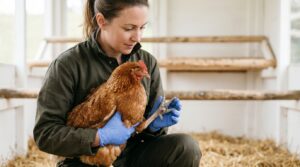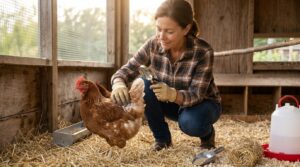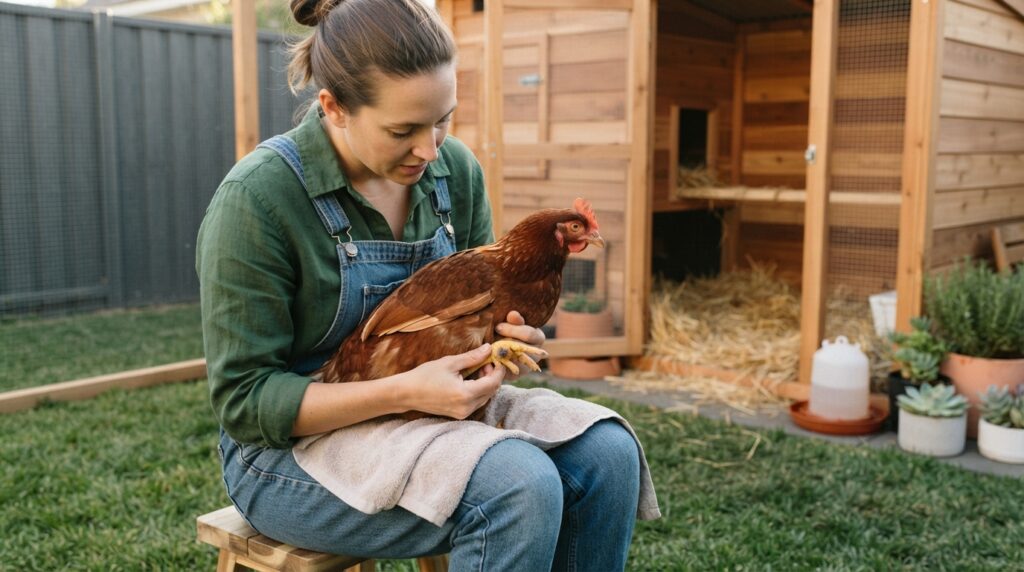
A chicken doesn’t always announce that something is wrong with its feet.
It may continue eating, scratching, dust bathing, and interacting with the flock even when one foot is becoming painful. Sometimes the first clue is simply a chicken standing with one foot lifted for longer than usual.
Bumblefoot, commonly called pododermatitis, is a condition involving inflammation and infection of the foot. It can begin with a small injury and become more serious when infection extends into deeper tissues.
For beginners, the most important skill isn’t learning how to perform complicated treatment.
It’s learning how to recognize the warning signs early and know when veterinary care is needed. 🩺
🐾 What Does Bumblefoot Look Like?
Bumblefoot can look different depending on how advanced the problem is.
A commonly recognized sign is a dark, black, or brown scab on the underside of the foot.
But don’t rely on the scab alone.
Other signs can include:
- Redness
- Swelling
- Thickened foot-pad skin
- A visible wound
- Crusting
- Heat
- Discharge
- Pain when the foot is handled
- Limping or reluctance to walk
The appearance of the foot should always be considered together with the chicken’s behavior and the progression of the problem.
🔎 The First Sign May Be Behavioral
Sometimes the foot itself doesn’t immediately look dramatic.
Instead, watch how your chicken moves.
Possible warning signs include:
🐔 Holding One Foot Up
A chicken may repeatedly lift one foot while standing.
Occasionally chickens naturally stand on one leg, especially when resting, so this behavior alone doesn’t prove a problem.
The concern increases when the bird repeatedly favors the same foot or appears uncomfortable.
🚶 Limping
A noticeable change in walking is more concerning.
Look for:
- Uneven steps
- Reduced movement
- Avoiding pressure on one foot
- Sitting more frequently
- Difficulty climbing onto a perch
🪶 Reduced Activity
A painful foot can make normal activities less appealing.
A chicken that suddenly spends much more time sitting should be observed closely, especially if there are other signs of illness.
🐾 Compare Both Feet
One of the easiest beginner techniques is simply comparison.
Look at both feet.
Ask:
Is one foot larger?
Is one foot redder?
Is one foot warmer?
Is there a wound on one side?
Does one foot have a scab that the other does not?
Individual chickens naturally vary in skin and scale appearance, so comparison with the bird’s other foot can be more useful than comparing it with photographs online.
⚫ What Does the Classic Bumblefoot Scab Mean?
A dark scab on the bottom of the foot is strongly associated with bumblefoot.
It can represent an area where the foot has been injured and infection has developed underneath.
However, a black spot is not enough by itself to determine the severity of the condition.
The surrounding tissue matters.
A small, localized lesion in a chicken that is walking normally is different from a swollen foot with significant lameness and discharge.
This distinction is important because treatment decisions should be based on the actual condition of the bird.
🚨 Signs That the Problem May Be More Serious
Some findings deserve faster veterinary attention.
Watch especially for:
🔴 Significant Swelling
A visibly swollen foot or toe is more concerning than a simple superficial mark.
💧 Discharge
Pus, fluid, or foul-smelling discharge can indicate infection.
🌡️ Heat and Redness
Marked warmth and redness around the affected area can accompany inflammation or infection.
🩸 Open or Deep Wounds
A deep puncture or open wound can provide bacteria with access to deeper tissues.
🐔 Severe Lameness
If a chicken has difficulty putting weight on the foot, the problem deserves prompt assessment.
😔 Changes in General Health
A chicken that stops eating, becomes unusually quiet, isolates itself, or appears weak needs attention beyond simply watching the foot.
A bird showing both a foot problem and signs of general illness should not be managed as a minor cosmetic issue.
🩺 When Should a Veterinarian See the Chicken?
A useful rule for beginners is:
If the problem is worsening, painful, infected-looking, or interfering with normal movement, involve a veterinarian.
Veterinary assessment is particularly important when you see:
- Severe or increasing swelling
- Significant lameness
- Pus or discharge
- An open or deep wound
- Increasing redness or heat
- Tissue damage extending beyond the foot pad
- Persistent or worsening symptoms
- Loss of appetite
- Marked lethargy
- Difficulty standing
- A chicken that appears significantly painful
A veterinarian can determine whether infection is superficial or whether deeper structures may be involved.
That distinction matters because more advanced infections can require treatment beyond basic environmental care.
🧑⚕️ Why Deep Infection Matters
The foot is not simply a layer of skin.
Deeper structures include tendons, joints, bones, and other tissues.
When infection extends deeper, treatment can become more complicated.
This is why a chicken with severe swelling or significant lameness shouldn’t simply be watched indefinitely because it is still eating.
Eating is reassuring, but it does not rule out a significant foot infection.
🚫 Don’t Treat Every Black Spot by Cutting It
One of the most important warnings for new chicken keepers is to avoid assuming that every bumblefoot lesion should be cut open at home.
Trying to surgically remove a lesion without proper training can cause:
- Pain
- Bleeding
- Additional tissue injury
- Delayed healing
- Further contamination
- Incomplete treatment
A lesion that appears small from the outside may involve deeper tissue.
If you’re uncertain about what you’re seeing, veterinary advice is safer than attempting a procedure based solely on an online tutorial.
🧼 What Can You Do While Arranging Veterinary Care?
If veterinary care is needed, focus on supportive management rather than aggressive treatment.
Keep the Environment Clean and Dry
Provide clean, dry bedding and remove obvious sources of contamination.
Reduce Further Foot Trauma
Inspect the coop and run for:
- Sharp objects
- Splintered wood
- Protruding nails or screws
- Damaged flooring
- Jagged wire
- Rough surfaces
Make Food and Water Easy to Reach
A painful chicken shouldn’t have to compete aggressively or travel unnecessarily far for basic resources.
If flock mates are bothering the affected bird, temporary separation may be necessary.
However, avoid unnecessary isolation if the chicken is comfortable and safe with the flock.
Monitor Changes
Record what you see.
A simple note can include:
Day 1: small dark lesion, walking normally
Day 2: mild swelling, still eating
Day 3: increased swelling and limping, veterinarian contacted
This can help you explain the progression to a veterinarian.
📸 Take Photos
A photograph can be surprisingly useful.
Take a clear photo of the affected foot from the same angle each day if you’re monitoring the problem.
This allows you to compare:
- Size of swelling
- Color
- Scab appearance
- Wound progression
It also gives you something concrete to show a veterinarian if an appointment isn’t immediate.
Avoid repeatedly manipulating a painful foot just to take photographs.
🪵 Look for the Original Cause
Once you identify a possible foot problem, inspect the environment.
Ask:
Are the perches damaged?
Look for splinters, sharp edges, exposed hardware, or unstable surfaces.
Is the flooring abrasive?
Repeated pressure or trauma can contribute to foot injuries.
Are there sharp objects in the run?
Wire, broken plastic, metal fragments, and damaged equipment should be removed.
Is the chicken carrying excessive body weight?
Body condition can affect pressure placed on the feet.
Finding and correcting an environmental hazard is important because treating the foot without addressing repeated trauma may allow the problem to continue.
🛡️ Can Bumblefoot Be Prevented?
There is no way to guarantee that a flock will never develop bumblefoot.
However, sensible management can reduce avoidable risks.
Check perches regularly
Replace or repair damaged surfaces.
Maintain clean, dry bedding
Good sanitation supports overall flock health.
Inspect the run
Remove sharp or broken objects.
Watch your chickens walk
Changes in gait can be an early clue that something is wrong.
Check feet during routine handling
You don’t need a complicated examination.
A quick look at both feet can help you notice changes early.
Keep an eye on body condition
Avoid allowing birds to become excessively overweight.
🐔 A Simple Bumblefoot Decision Guide
When you notice something unusual, work through these questions:
1. Is there a visible wound or dark scab?
⬇️
2. Is there swelling, redness, heat, or discharge?
⬇️
3. Is the chicken limping or avoiding the foot?
⬇️
4. Is the problem getting worse?
⬇️
5. Is the chicken showing general illness such as poor appetite or unusual weakness?
If the answer is yes to the more serious questions, veterinary assessment becomes increasingly important.
When in doubt, especially with a painful or worsening foot problem, contacting an avian or poultry-experienced veterinarian is the safer choice.
🌿 Final Thoughts
Recognizing bumblefoot isn’t about becoming an expert overnight.
It’s about noticing small changes before they become big problems. 🐔
Look at the whole picture:
How does the foot look?
How does the chicken walk?
Is there swelling or discharge?
Is the problem improving or getting worse?
Is the bird otherwise acting normally?
A small lesion without obvious pain may require monitoring and professional advice, while significant swelling, severe lameness, discharge, deep wounds, or signs of illness should raise the urgency for veterinary care.
And remember, a black scab is a warning sign, not an invitation to perform surgery at home.
Good chicken keeping means knowing what you can safely observe yourself and recognizing when a professional needs to take over. 🩺🐔