Introduction
One of the hardest parts of keeping backyard chickens is knowing when a sick bird needs immediate help and when you can safely monitor it for a while.
Chickens can hide illness, so subtle changes in appetite, activity, posture, breathing, or behavior can be important. Veterinary guidance recommends observing a bird’s behavior and appearance carefully, because early signs can be easy to miss.
A simple way for beginners to organize what they see is a red-yellow-green system:
🔴 RED: Emergency. Get veterinary help promptly.
🟡 YELLOW: Concerning. Isolate or monitor closely and contact a veterinarian if the problem persists, worsens, or other symptoms appear.
🟢 GREEN: Mild or stable. Continue observation and basic supportive care while watching for changes.
This system doesn’t diagnose the illness. It simply helps you decide how urgently you should respond.
🔴 RED: Treat It as an Emergency
Red means don’t wait to see whether the chicken magically improves tomorrow.
Some problems can deteriorate quickly, and certain signs require immediate veterinary attention.
1. Severe Difficulty Breathing
Breathing problems are one of the biggest red flags.
Watch for:
- Obvious difficulty breathing
- Severe open-mouth breathing
- Extreme respiratory effort
- Abnormal breathing posture
- Very shallow breathing
- Severe respiratory distress
Merck Veterinary Manual lists extreme respiratory difficulty among conditions requiring immediate emergency care in backyard poultry.
USDA APHIS also identifies gasping or difficulty breathing as an important sign of poultry illness.
Don’t repeatedly pick up a chicken that is struggling to breathe just to inspect it.
Keep handling to a minimum and seek veterinary assistance.
2. Severe Weakness or Collapse
A chicken that suddenly collapses, cannot stand, or cannot move normally needs urgent attention.
A very weak bird may:
- Lie on the ground
- Be unable to stand
- Fall repeatedly
- Be unable to reach food or water
- Remain nearly unresponsive
- Show severe difficulty moving
Weakness is specifically listed among emergency signs in backyard poultry veterinary guidance.
Don’t force the bird to walk to “test” it.
Keep it somewhere safe, quiet, and protected while arranging professional help.
3. Heavy Bleeding or Serious Trauma 🩸
Major injuries should not be treated as ordinary flock problems.
Emergency concerns include:
- Heavy bleeding
- Head trauma
- Open fractures
- Serious wounds
- Significant injuries from predators
- Severe pecking injuries
Merck identifies acute hemorrhage, head trauma, and open fractures as situations requiring immediate emergency care.
A small superficial wound and uncontrolled bleeding are very different situations.
When bleeding is substantial or the bird is severely injured, veterinary care should take priority.
4. Seizures or Major Neurological Signs
Sudden neurological abnormalities are another red flag.
Examples include:
- Seizures
- Severe loss of coordination
- Falling repeatedly
- Inability to control movement
- Severe tremors
- Abnormal head or neck position
- Paralysis
USDA APHIS lists stumbling, falling, twisting of the head or neck, tremors, circling, and paralysis among signs requiring rapid attention in poultry.
These signs can have multiple causes, so don’t attempt to identify the disease from the symptom alone.
5. Sudden Death or Several Birds Becoming Sick
One unexplained death is upsetting.
Several sudden deaths are a flock-health warning.
Pay particular attention if you see a combination of:
- Sudden deaths
- Respiratory problems
- Neurological signs
- Reduced appetite
- Reduced drinking
- Diarrhea
- Drop in egg production
- Multiple sick birds
USDA APHIS specifically identifies sudden deaths and increased death loss, respiratory problems, neurological abnormalities, and appetite changes as signs of serious poultry disease.
If multiple birds become sick or die unexpectedly, contact a veterinarian or your local animal-health authority for guidance rather than treating the flock as though it were an ordinary individual illness.
🟡 YELLOW: Concerning, But Not Automatically an Emergency
Yellow means pay attention and investigate.
The chicken may not require an emergency visit at that exact moment, but you shouldn’t ignore the change.
6. The Chicken Is Eating Less
A small appetite change can happen for many reasons.
But a chicken that is consistently eating less deserves observation.
Ask:
- Is it drinking?
- Is it still active?
- Can it reach the feeder?
- Is another chicken bullying it?
- Is the feed fresh?
- Is the weather unusually hot?
- Are there other symptoms?
A chicken with reduced appetite and otherwise normal behavior is different from a chicken that refuses food while becoming weak.
Keep track of the change rather than relying on memory.
7. Drinking More or Less Than Normal 💧
Changes in water consumption can be meaningful.
Check first that the water source itself is working.
Make sure the bird has access to clean water and isn’t being prevented from drinking by other chickens.
If the change continues or occurs together with lethargy, weight loss, abnormal droppings, or other symptoms, contact a veterinarian.
8. Lethargy or Unusual Behavior
Chickens naturally have periods of resting.
The concern is a change from that individual bird’s normal behavior.
For example:
A chicken that normally scratches, forages, dust-bathes, and interacts with the flock but suddenly spends most of the day sitting alone deserves closer observation.
Lethargy and behavior changes are recognized signs of illness in backyard poultry.
9. Changes in Droppings
Droppings vary naturally, so one unusual dropping doesn’t automatically mean an emergency.
However, persistent or significant changes deserve attention.
Watch for:
- Repeated watery diarrhea
- Greenish watery droppings
- Blood
- Very abnormal consistency
- Major changes accompanied by weakness or appetite loss
USDA APHIS includes greenish, watery diarrhea among signs of poultry illness that should prompt rapid action.
Don’t try to diagnose a disease based solely on dropping color.
Use the finding as one part of the overall picture.
10. Weight Loss
A gradual decline in body weight can be easy to miss when looking at the bird every day.
Regular weighing can help identify a trend.
For a sick chicken, record:
Date → weight → appetite → drinking → activity → other symptoms
A single lower reading isn’t necessarily proof of deterioration, but repeated weight loss is worth discussing with a veterinarian.
🟢 GREEN: Stable, Mild, or Monitorable
Green does not mean “nothing is wrong.”
It means there are currently no obvious emergency signs and the bird appears stable enough for careful observation.
For example, a chicken may have:
- A minor superficial problem
- A temporary reduction in activity
- A small change in appetite
- A mild behavioral change
- A minor injury that is not bleeding heavily
Even then, continue monitoring.
If the chicken becomes weaker, stops eating or drinking, develops breathing problems, or develops neurological signs, the situation can move from green to yellow or red.
What to Monitor
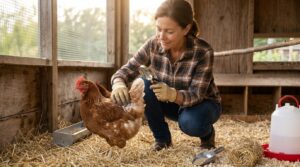
Keep a simple daily record.
🥣 Eating
Normal, reduced, or not eating?
💧 Drinking
Normal, reduced, or increased?
🐔 Activity
Foraging and interacting, or sitting alone?
🫁 Breathing
Normal, or showing effort/noise?
⚖️ Weight
Stable, increasing, or decreasing?
💩 Droppings
Any persistent or major change?
🥚 Eggs
For laying hens, is production changing?
👀 Appearance
Any swelling, discoloration, wounds, discharge, or unusual posture?
A simple record can reveal a trend that is difficult to notice from one day to the next.
🚦 How to Move From Green to Yellow to Red
Think of the colors as a changing traffic signal rather than permanent categories.
🟢 Green → 🟡 Yellow
This might happen when:
- Appetite continues to decline
- Weight begins falling
- The bird becomes increasingly inactive
- Abnormal droppings continue
- New symptoms appear
- The bird stops behaving normally
At this point, increase monitoring and contact your veterinarian if the problem is persistent or worsening.
🟡 Yellow → 🔴 Red
Escalate when severe signs develop, such as:
- Difficulty breathing
- Collapse
- Inability to stand
- Seizures
- Severe neurological abnormalities
- Major bleeding
- Severe trauma
- Rapid deterioration
Don’t wait for every possible symptom to appear.
One serious red-flag sign can be enough to seek urgent veterinary help.
🧺 What to Do While You Arrange Help
If a chicken is seriously ill, your immediate goal is safety and minimizing stress, not attempting a complicated home treatment.
If appropriate:
- Move the chicken away from bullying.
- Place it in a clean, secure, quiet enclosure.
- Provide appropriate access to water and food.
- Keep it protected from extreme temperatures.
- Minimize unnecessary handling.
- Record what you observed.
- Contact a veterinarian or appropriate poultry-health professional.
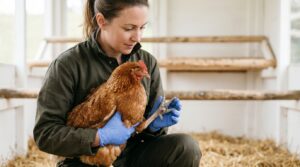
When handling a chicken, don’t squeeze its chest or restrain it upside down. These techniques can interfere with breathing and increase stress or injury risk.
🧼 Don’t Forget the Rest of the Flock
A sick chicken isn’t always an isolated problem.
If the bird could have an infectious disease, separation and biosecurity become especially important.
Use separate equipment when practical, wash your hands after handling the sick bird, and avoid carrying contaminated bedding or equipment back to healthy birds.
Most importantly, watch the rest of the flock.
If several chickens develop similar symptoms, contact a veterinarian or local animal-health authority.
Some serious poultry diseases can cause combinations of respiratory, digestive, neurological, and sudden-death signs.
📝 A Beginner’s Red-Yellow-Green Checklist
| Color | What you’re seeing | What to do |
|---|---|---|
| 🟢 Green | Mild or stable change, bird remains alert and functional | Monitor closely |
| 🟡 Yellow | Persistent appetite loss, weight loss, lethargy, abnormal droppings, or other concerning changes | Increase monitoring and contact a veterinarian if persistent or worsening |
| 🔴 Red | Severe breathing difficulty, collapse, major trauma, heavy bleeding, seizures, severe neurological signs | Seek urgent veterinary help |
This table is a triage guide, not a diagnosis.
The same symptom can have very different causes, and the urgency can depend on the chicken’s overall condition.
📱 Make Your Own Chicken Health Dashboard
If you like keeping your flock organized, create a simple phone note or spreadsheet for each bird.
Track:
Name:
Age:
Weight:
Eating:
Drinking:
Activity:
Breathing:
Droppings:
Egg production:
Visible injuries:
Date symptoms started:
Veterinary advice:
This turns “Something seems wrong with my chicken” into useful information you can communicate to a professional.
It also helps you notice changes before they become difficult to remember.
Final Thoughts ❤️
A sick chicken doesn’t always announce an emergency with dramatic symptoms.
Sometimes the first clue is simply less food, less activity, or behavior that doesn’t look like that bird’s normal self. Chickens can hide illness, which makes observation particularly important.
The red-yellow-green approach gives beginners a simple framework:
🟢 Green: Observe and monitor.
🟡 Yellow: Investigate and increase monitoring.
🔴 Red: Get urgent professional help.
Don’t try to diagnose a serious illness from a checklist alone. If your chicken is struggling to breathe, collapsing, bleeding heavily, having seizures, showing severe neurological problems, or if several birds suddenly become sick or die, treat the situation as urgent.
Good flock care isn’t about knowing every disease.
It’s about recognizing meaningful changes, acting early when something looks serious, protecting the rest of the flock, and knowing when professional help is needed. 🐔🌱