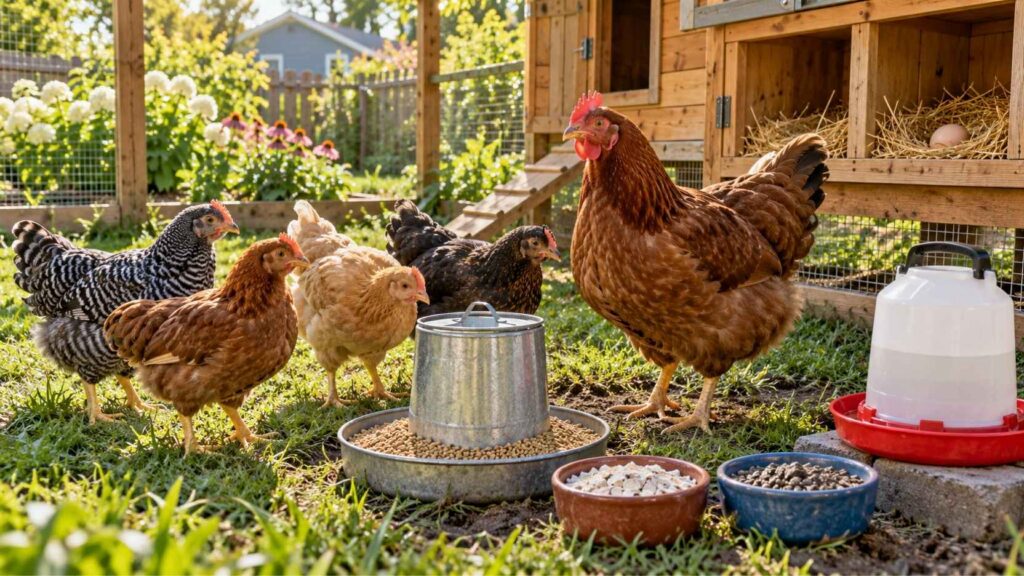
Calcium advice becomes confusing fast when your first pullets approach laying age. One keeper says to offer oyster shell early, while another says to wait for the first egg. 🥚 The useful rule is that oyster shell is a calcium supplement for laying needs, not a general chicken food.
A growing pullet and a laying hen are doing different nutritional jobs. Pullets are still developing bones, muscles, feathers, and organs, while layers must repeatedly build calcium-rich shells. The goal is therefore right calcium at the right life stage, not simply more calcium.
What Oyster Shell Actually Does
Oyster shell is mainly a concentrated source of calcium for laying chickens. Hens use substantial calcium during shell formation, and inadequate intake can contribute to weak shells and skeletal calcium loss. It does not replace a balanced poultry ration.
Complete feed still supplies protein, energy, amino acids, phosphorus, vitamins, and other minerals. Adding oyster shell cannot correct a diet that is already poorly balanced. 🐔 Think of it as one specialized part of the feeding system.
Why Growing Pullets And Laying Hens Have Different Calcium Needs
Growing pullets normally need much less dietary calcium than hens in active production. Their ration is formulated for controlled growth and skeletal development rather than daily eggshell production. That is why grower, developer, and layer feeds are nutritionally different.
Feeding high-calcium layer feed far too early is not a helpful way to prepare juvenile birds. Excessive calcium during immature growth can contribute to kidney and mineral-balance problems. 🌱 Keep young birds on an appropriate grower or developer ration until they approach point of lay.
Does Layer Feed Already Contain Calcium?
Yes, commercial layer feed already includes substantially more calcium than grower feed. Oregon State Extension gives about 3–4% calcium as a typical layer-feed range and recommends starting around 18–20 weeks or the first egg. That means properly fed layers already receive calcium in their main ration.
Separate oyster shell can still be useful because individual hens may consume and use calcium differently. It becomes especially important when layers eat an all-purpose or all-flock feed that contains less calcium than layer feed. 📌 Always read the bag label before deciding how much supplementation your flock needs.
When Should Oyster Shell Go Into The Coop?
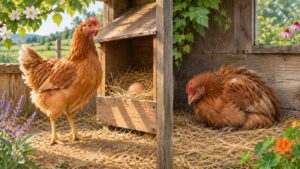
Young pullets usually do not need oyster shell sitting beside them for months before laying. A practical time to make it available is around point of lay, when birds are nearing maturity or eggs begin appearing. Breed, daylight, season, and individual development can shift the exact timing.
For many backyard flocks, this means preparing calcium access around the same period you review the transition from grower to layer nutrition. If your pullets are still clearly immature, continue their balanced grower ration rather than treating oyster shell as preventive insurance. 🥚 The first egg is useful evidence, but maturity matters more than a rigid calendar date.
Why Oyster Shell Should Usually Be Offered Separately
Oyster shell is best placed in a small separate feeder rather than mixed heavily into the main feed. Free-choice access lets laying hens consume supplemental calcium without forcing every bird to eat the same extra amount. Oregon State specifically recommends a separate feeder when oyster shell is provided.
Separate feeding is also easier to manage and monitor. You can see how quickly hens use it, refill it independently, and keep the complete ration nutritionally consistent. 🥣 Keep the shell clean, dry, and easy for laying hens to reach.
Oyster Shell Vs Grit: They Are Not Interchangeable
Beginners often confuse these products because both look like small hard particles. Oyster shell supplies calcium, while insoluble grit helps the gizzard grind coarse food such as whole grains. Oyster shell is too soft and soluble to serve as proper grinding grit.
Birds eating only finely ground or pelleted complete feed may not need grit for that feed itself. Chickens eating scratch, whole grains, or substantial forage may need appropriately sized insoluble grit if suitable stones are unavailable. 🌾 Remember it this way: shell supports eggs; grit supports grinding.
What If Only One Hen In The Flock Is Laying?
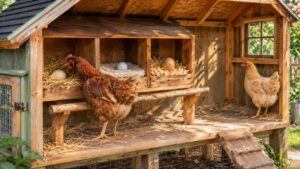
Mixed-age flocks require more thought because younger pullets and active layers have different calcium needs. One practical approach is a suitable all-flock or general-purpose ration with separate oyster shell available to the laying hens. This avoids making concentrated calcium part of every younger bird’s main meal.
The same approach can help when a flock includes roosters, mature hens, and growing pullets. 🐓 Check the feed label carefully because “all flock” formulas can vary in nutrient levels. When uncertain, ask the feed manufacturer, poultry extension service, or an avian veterinarian about the specific ration.
What To Observe In The First Few Eggs
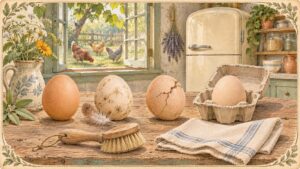
First eggs from pullets can be smaller or less consistent while the reproductive system settles into production. Shell texture, size, shape, and frequency may vary, so one odd egg does not automatically prove a calcium deficiency. 👀 Look for repeated patterns instead of reacting to a single imperfect egg.
Check whether shells are generally firm and whether several eggs crack unusually easily. Also confirm that hens are eating their complete feed, drinking freely, and able to reach their calcium source. Nutrition problems are easier to judge from trends than from one unusual first egg.
When Soft Shells Are Worth Investigating
Repeated thin, soft, shell-less, or fragile eggs deserve more attention than an occasional early-lay oddity. Calcium intake is one possible factor, but overall diet, vitamin D, phosphorus balance, heat, age, feed intake, and illness can also affect shells. Adding more oyster shell without checking the rest of the system may miss the cause.
Start with basic husbandry: correct life-stage feed, fresh complete ration, constant clean water, and accessible calcium for layers. 🔎 If poor shell quality persists, multiple hens are affected, or a bird appears weak or ill, seek qualified poultry or veterinary advice. Oyster shell is useful, but it is not a diagnosis for every shell problem.
Oyster Shell Vs Grit One-Page Guide
Use oyster shell when laying hens need a separate calcium source for eggshell production. Offer it free-choice in its own feeder, especially when the base ration is not a high-calcium layer formula. Do not treat it as the digestive grinding material chickens need for coarse foods.
Use insoluble grit when birds eat whole grains, scratch, or other foods that require grinding. Grit belongs in the gizzard and performs a mechanical job rather than supplying the calcium needed for eggshells. ✅ The simplest memory rule is oyster shell = calcium; grit = grinding.