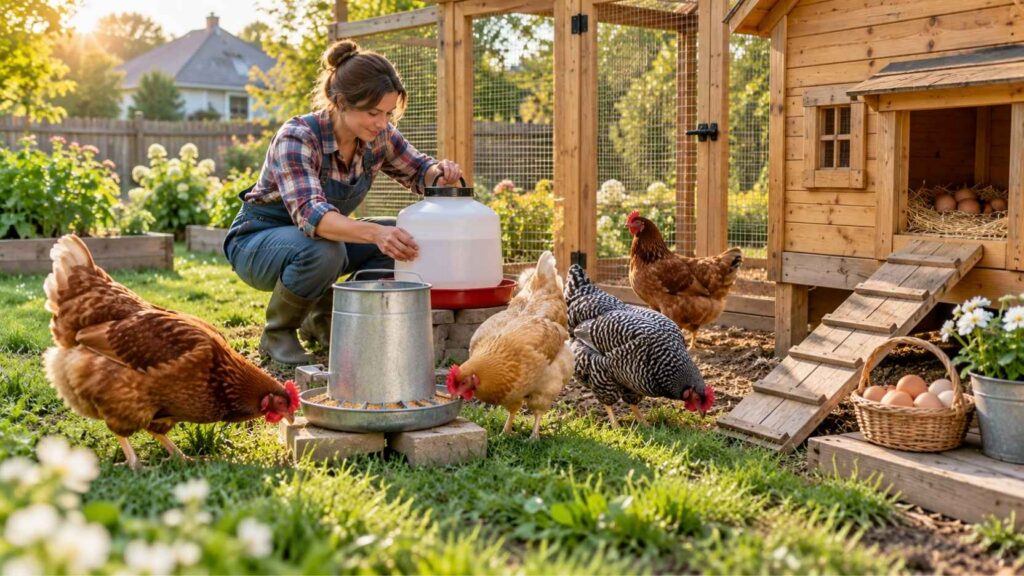
One of the biggest questions new chicken keepers ask is surprisingly practical: how much time do chickens take every day? 🐔 Chickens can fit into a busy household more easily than many people expect, but describing them as completely low-maintenance can create unrealistic expectations. Most ordinary days involve short routines, while cleaning, weather problems, health concerns, repairs, and other occasional jobs are what create the larger blocks of work.
The amount of time you spend also depends heavily on how your chicken setup is designed, not simply on how many hens are walking around the yard. Large feeders, dependable waterers, easy-access nesting boxes, secure fencing, removable droppings boards, and an efficiently designed coop can reduce repetitive chores dramatically. Think of chicken keeping like running a tiny household operation: good systems make normal days simple, while poor systems turn small tasks into repeated work.
How Much Time Do Chickens Really Take Each Day?
For a small established flock of healthy adult hens, the hands-on chicken daily care routine can often be divided into several short checks rather than one long chore session. ⏱️ You might spend roughly 5–15 minutes checking birds, feed, water, eggs, and security in the morning, followed by another brief check later in the day. That does not mean every chicken keeper will spend exactly this amount, because coop layout, flock size, climate, automation, and management style can change the workload substantially.
Flock size matters, but system design may matter even more until the flock becomes quite large. Caring for eight hens with a conveniently located hose, large feeder, easy-clean coop, and secure run may feel simpler than caring for four hens where water must be carried manually and bedding constantly becomes wet. Chicks also require closer monitoring than established adult hens because their temperature, water, feed, bedding, and general condition need more frequent attention.
The 5–15 Minute Morning Chicken Routine
Your morning routine begins with confirming that the flock is awake, secure, and behaving normally. 🌅 Open the coop when appropriate or verify that an automatic chicken door has opened correctly, then spend a moment watching the birds walk, eat, drink, and interact. That short visual observation can help you notice a hen remaining unusually still, separating from the flock, limping, or otherwise behaving differently from her normal pattern.
Next, check the drinking water and feed supply rather than assuming yesterday’s setup is still working. Waterers can become dirty, leak, tip over, freeze in cold climates, or become unexpectedly empty, while feeders may clog or attract moisture and pests. A well-designed setup makes this check extremely fast because you are confirming that essential resources are available instead of rebuilding the feeding system every morning.
The Evening Chicken Routine
Later in the day, collect the eggs and quickly inspect nesting boxes for cracked eggs, excessive manure, damp material, or other obvious problems. 🥚 Egg collection itself normally takes very little time, although the frequency that works best for your household can depend on flock size, weather, nesting behavior, and whether hens are laying in predictable locations. While you are near the flock, checking feed and water again can prevent a minor morning problem from turning into an overnight issue.
Before darkness or once the chickens have gone to roost, make sure everyone is accounted for and the coop is secure against predators. Doors, latches, fencing, wire, vents, and other vulnerable areas deserve attention because security depends on the entire enclosure rather than simply closing one door. This evening habit may take only minutes, but consistency matters because one forgotten opening can be far more consequential than skipping a cosmetic cleaning job.
What You Usually Do Once or Twice a Week
Weekly chicken care is where small cleaning jobs prevent the coop from becoming a much larger project. 🧹 Remove especially dirty or wet bedding, scrape heavily soiled surfaces when necessary, refresh nesting material, and clean waterers or feeders thoroughly enough to keep them functioning properly. How frequently bedding needs attention varies considerably according to stocking density, ventilation, weather, bedding type, coop design, and whether you use a particular litter-management system.
Weekly checks are also a good opportunity to look at the chickens more closely instead of relying only on quick morning observations. Examine general feather condition, feet, legs, comb appearance, body condition, movement, and behavior while remaining aware of what is normal for each bird and season. You are not trying to diagnose every unusual detail yourself; the goal is to notice changes early enough to investigate properly or seek qualified veterinary guidance when appropriate.
Monthly and Seasonal Chicken Jobs
Monthly care usually involves the jobs that do not need to happen every morning but are important for keeping the entire setup manageable. 🔧 Depending on your bedding system, this might include replacing more bedding, cleaning sections of the coop more thoroughly, checking nest boxes, inspecting fencing, tightening hardware, and looking for small areas of damage before they become large repairs. Feed-storage containers should also be inspected for moisture, contamination, pests, or damaged lids because good storage protects both the feed and your budget.
Seasonal care can create noticeably larger workload changes than adding one or two hens to an established flock. ☀️❄️ Hot weather may require more attention to water availability, shade, airflow, and heat management, while freezing weather can make keeping liquid drinking water available considerably more labor-intensive. Wet seasons create their own challenges because muddy runs, damp bedding, drainage problems, and dirty feet can turn what was previously a five-minute routine into a longer maintenance session.
What Suddenly Makes Chicken Care Take Longer?
Most chicken routines are predictable until something unusual happens, and these events explain why “How much work are chickens?” cannot be answered with one daily number. A sick or injured bird may require isolation, closer observation, extra cleaning, treatment directed by a veterinarian, or repeated checks throughout the day. Predator damage, broken fencing, spilled water, severe weather, power failures affecting equipment, or damaged coop doors can also transform a normal chore window into an unexpected repair session.
Changes within the flock can create temporary work as well. 🐣 Introducing new chickens requires careful management because unfamiliar birds establish a social hierarchy, while a broody hen may spend extended periods sitting in a nest and require management depending on your goals. The important budgeting lesson is therefore to plan for short normal routines plus occasional longer events, rather than multiplying ten minutes by 365 and assuming that represents the complete yearly workload.
A Realistic Chicken Schedule for Someone Who Works Full Time
A full-time worker can often manage chickens successfully when morning and evening responsibilities are deliberately simple. Before work, verify the coop is open and secure, look over the birds, check water, confirm feed availability, and handle anything that cannot safely wait until evening. 💼 After work, collect eggs, inspect the flock and equipment again, complete small cleaning tasks when needed, and later confirm that the birds are safely inside and the coop is secured.
The weekend becomes the logical place for higher-effort maintenance such as refreshing bedding, washing equipment, restocking supplies, checking fencing, improving drainage, organizing feed storage, or completing minor repairs. Creating a predictable weekend maintenance block is often easier than trying to clean the entire setup after a long workday. Automated doors and larger-capacity feeders or waterers can reduce repetitive labor, but automation should support regular observation rather than replace checking the animals entirely.
When Chicken Care Is Taking Too Much Time
Some workload variation is normal, especially during extreme weather, illness, flock introductions, molting, coop improvements, or seasonal cleaning. However, consistently spending far more time than expected on basic chores may indicate that the chicken-keeping system itself needs improvement rather than that chickens inherently require hours of daily labor. Repeatedly carrying water long distances, fixing wet bedding, searching for hidden eggs, cleaning spilled feed, or repairing predator breaches are operational problems worth solving.
Neglected care is different from efficient care. ✅ A clean-looking coop is not the only measure of good management; chickens consistently need appropriate food, clean accessible water, reasonable sanitation, ventilation, secure housing, adequate space, and attentive observation. The goal should therefore be to eliminate unnecessary chores while preserving the checks that help keep the flock safe and properly cared for.
Daily / Weekly / Monthly Chicken Care Checklist
Use this checklist as a starting point and adjust it for your climate, flock size, coop design, and management system:
- Daily: Open or verify the coop, visually check every bird, confirm clean drinking water, check feed, collect eggs, perform an evening head count, and secure the coop.
- Once or twice weekly: Remove wet or heavily soiled material, refresh nest boxes, clean feeders and waterers, inspect feet and feathers more closely, and check fencing and latches.
- Monthly: Perform deeper cleaning as appropriate for your bedding system, inspect coop hardware and wire, organize feed storage, restock supplies, and complete minor repairs.
- Seasonally: Adjust shade and ventilation for heat, prepare water systems for freezing conditions where relevant, improve drainage during wet periods, inspect weatherproofing, and prepare the coop for seasonal changes.
- As needed: Manage illness or injury, predator damage, broodiness, new-flock introductions, muddy conditions, equipment failures, or unusual weather.
The Bottom Line: How Much Work Are Chickens?
For someone researching how much time chickens take, the most useful answer is that normal care usually comes in short daily routines combined with occasional longer maintenance sessions. 🐓 Healthy adult hens in a thoughtful setup can fit around work, school, children, and other responsibilities far more easily than a poorly designed coop that creates unnecessary chores. Beginners should therefore think less about finding a perfect number of minutes and more about creating systems that make feeding, watering, cleaning, observation, egg collection, and security straightforward.
Before bringing chickens home, try walking through your imaginary routine from waking up to locking the coop at night. Ask yourself who checks the flock before work, who handles evenings, what happens during vacations, how water reaches the coop, where feed is stored, and what you would do if a hen suddenly needed extra attention. Planning those ordinary details before buying the first birds can make the difference between chickens feeling like an enjoyable part of the household and feeling like another stressful obligation.