
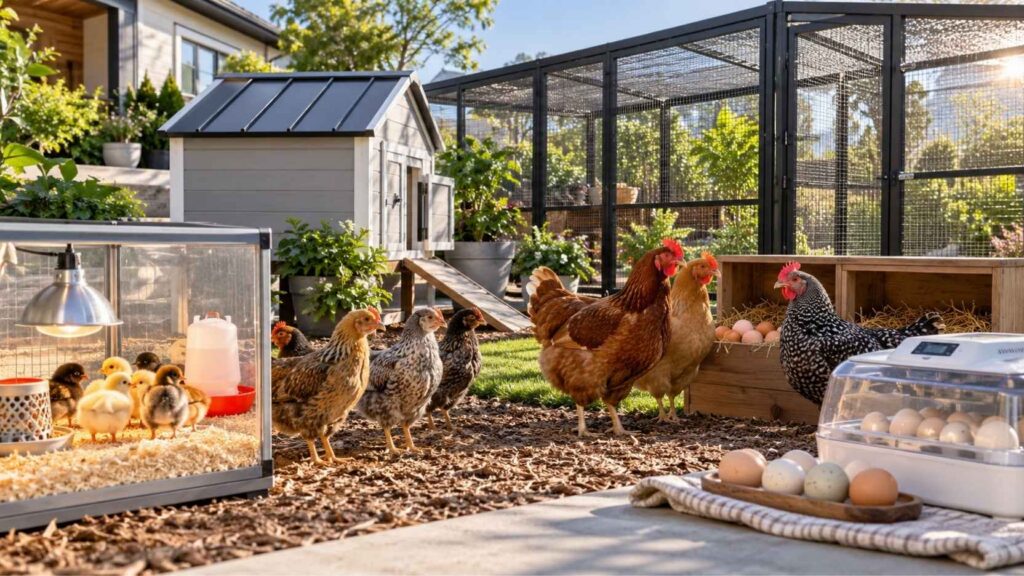
Getting chickens sounds like one decision until you actually start shopping and discover that you can buy day-old chicks, started pullets, adult laying hens, or even hatching eggs. 🐔 Each route leads to the same general destination—an egg-producing backyard flock—but the amount of equipment, waiting, uncertainty, money, and daily work along the way can be dramatically different. For an egg-focused beginner, choosing the right starting age may matter almost as much as choosing the right breed.
There is no single option that is automatically best for every first-time keeper because some people genuinely want the experience of raising tiny chicks while others mainly want dependable backyard eggs. Your housing rules, tolerance for roosters, available time, brooder space, budget, and willingness to wait should all influence the decision. The smartest starting point is therefore the one that matches what you actually want from chicken keeping, rather than simply copying how another person started.
First Decide Whether You Want the Chick Experience or Mainly Want Eggs
Before comparing chicks vs pullets, ask yourself a surprisingly useful question: Would I still want chickens if eggs were several months away? 🥚 Raising chicks can be rewarding because you watch them grow, learn their personalities, and manage every stage from brooder to coop, but it also adds an entire phase of poultry care before egg production begins. Someone interested primarily in collecting fresh eggs may find that this extra stage is enjoyable but unnecessary.
If you want the complete raising experience, chicks can make perfect sense even though they require more preparation. If your priority is simplifying your first flock and reaching egg production sooner, started pullets or appropriately sourced adult hens may fit better. Neither approach makes someone a more serious chicken keeper—the difference is simply where you want your learning curve to begin.
Starting With Day-Old Chicks
Day-old chicks are one of the most common entry points because they are widely available, often provide the largest breed selection, and allow owners to raise their flock from almost the beginning. 🐣 However, chicks cannot simply be placed into an outdoor coop, because young birds initially need a protected brooder environment with appropriate warmth, clean bedding, chick feed, fresh water, and protection from drafts and predators. Their temperature requirements gradually decrease as they feather out, meaning the brooder setup must change as they grow.
The biggest disadvantage for an egg-focused beginner is time, because chickens generally do not begin producing eggs shortly after leaving the brooder. Many common laying breeds begin somewhere around five to six months of age, although genetics, nutrition, daylight, season, health, and individual development can move that timeline earlier or later. That means somebody buying chicks specifically for eggs should be comfortable caring for the flock for months before seeing the first egg.
Starting With Pullets
A pullet is a young female chicken that has not yet reached full adult maturity, and started pullets are often sold after much of the fragile chick stage has already passed. 🌱 Depending on their age, these birds may be only weeks or a few months away from beginning egg production, which can make them an appealing middle ground between tiny chicks and established hens. You still get to watch young chickens mature, but you may avoid maintaining a brooder from day one.
Pullets usually cost more per bird than day-old chicks because the seller has already provided feed, housing, labor, and care during part of the growing period. That higher purchase price can nevertheless simplify the beginning because your major infrastructure may be reduced to a secure coop, predator-resistant run, appropriate feed, water, and normal flock-management supplies. For a beginner primarily interested in eggs without skipping the young-bird experience completely, this can be one of the easiest compromises.
Starting With Adult Laying Hens
Adult laying hens can shorten the path to eggs considerably because some may already be producing when they arrive at their new home. 🪺 This avoids months of raising non-laying birds, and an established hen usually requires standard adult housing rather than chick-brooding equipment. For someone who wants backyard chickens but has little interest in raising babies, purchasing healthy adult layers from a trustworthy source can be practical.
However, “laying hen” does not automatically mean maximum future production, so age and history matter when evaluating an adult bird. Egg production generally rises after laying begins, reaches its strongest period relatively early in life, and then tends to decline with age, although individual birds and breeds vary considerably. Beginners should therefore ask about age, previous management, current diet, laying history, health, and why the birds are being sold instead of assuming every adult hen offers the same value.
Starting With Hatching Eggs
Hatching eggs provide the longest and most hands-on path to an egg flock because you begin before the chicken even exists outside the shell. 🥚➡️🐥 Artificial incubation normally takes about 21 days for chicken eggs, but placing fertile eggs in an incubator does not guarantee that every egg will hatch successfully. After hatching, the chicks still require the same brooding and growing process that purchased day-old chicks require.
Another major consideration is that hatchlings do not conveniently arrive according to the female-to-male ratio you want. When hatching eggs, you should plan for the realistic possibility of raising multiple cockerels, including birds that cannot remain in the final flock. For beginners whose main objective is simply collecting eggs, incubation is usually better viewed as a poultry project of its own rather than a shortcut to laying hens.
Sexed vs. Unsexed Chicks Matters More Than Many Beginners Realize
The difference between sexed and unsexed chicks can completely change a small backyard flock plan. ⚠️ Unsexed chicks—often called straight-run chicks—include both males and females, and purchasing four chicks does not mean you should expect exactly two pullets and two cockerels. Small groups can produce highly uneven results simply through chance, leaving someone who wanted four future layers with several males instead.
Many hatcheries and sellers offer sexed pullets, particularly for breeds or commercial hybrids that can be sexed reliably at hatch, but no sexing method should automatically be treated as perfect unless the seller specifically guarantees it. Certain sex-linked crosses allow male and female chicks to be distinguished by inherited characteristics at hatch, while other chicks may be professionally vent-sexed. Beginners who cannot keep roosters should pay close attention to how birds are being sold and understand the seller’s policy if a chick later proves to be male.
What If Your City Doesn’t Allow Roosters?
Local chicken rules can influence the chicks-vs-pullets decision before you ever purchase a bird. 🏡 Some municipalities, homeowner associations, subdivisions, or lease agreements allow hens while restricting or prohibiting roosters, and regulations may also govern flock size, coop placement, noise, sanitation, or setbacks. Checking the rules first is far easier than discovering months later that one of your growing chickens cannot legally remain on the property.
If keeping a rooster is not possible, reducing sex uncertainty becomes a major purchasing priority. Sexed female chicks, older pullets whose sex is clearly established, or adult hens can reduce the likelihood that you will later need to rehome unwanted males. Hatching eggs and straight-run chicks create substantially more uncertainty and therefore require a realistic rooster plan before you begin.
Should You Buy Several Breeds or Keep It Simple?
A mixed flock can be wonderful because different breeds may provide different egg colors, appearances, temperaments, sizes, and personalities. 🌈 A beginner might combine brown-egg layers, blue-egg layers, and other interesting breeds, but breed diversity should never distract from more important compatibility issues such as climate suitability, temperament, mature body size, and flock management. The prettiest collection of chickens is not particularly useful if the birds are poorly suited to your environment.
Starting with several breeds is completely reasonable when the birds have compatible needs and the keeper understands what each breed contributes to the flock. Beginners should pay particular attention to whether they are selecting chickens for egg production, appearance, temperament, broodiness, cold tolerance, heat tolerance, or novelty, because those goals do not always point toward the same breeds. A smaller, carefully chosen first flock can also make it easier to learn normal chicken behavior before expanding later.
Chicks vs Pullets vs Hens: Beginner Decision Matrix
| Starting option | Daily startup work | Typical path to eggs | Sex uncertainty | Special equipment | Beginner complexity |
|---|---|---|---|---|---|
| Day-old chicks | Higher | Several months | Low to high depending on how sold | Brooder initially | Higher |
| Started pullets | Moderate | Usually shorter | Generally lower | Coop and run | Medium |
| Adult laying hens | Lower startup | Potentially immediate or near immediate | Low | Coop and run | Lower |
| Hatching eggs | Highest | Longest | High | Incubator plus brooder | Highest |
The table is best used as a planning tool rather than a rigid ranking, because individual circumstances can completely change which option feels easiest. Someone who already owns brooding equipment and enjoys raising chicks may consider day-olds simple, while someone working long hours may prefer pullets because much of that early management has already been completed. Your available time and housing situation matter just as much as the purchase price printed beside the bird.
Cost should also be considered across the entire startup process, not only the price per chicken. Cheap chicks may require a brooder, heat source, chick-sized feeders, bedding, months of feed before laying, and eventually a full coop, while higher-priced pullets have already consumed some of those resources before purchase. Comparing total setup requirements gives beginners a more useful picture than asking which bird costs least at checkout.
The Beginner Egg-Flock Decision Tree
If your priority is getting eggs sooner, started pullets or appropriately sourced laying hens deserve serious consideration. If you specifically want the experience of raising chickens from babies and are comfortable waiting several months for eggs, day-old chicks provide that journey. If incubation itself sounds exciting and you are prepared for uncertain hatch rates, brooder care, and unwanted males, hatching eggs can become a rewarding project rather than merely a way to obtain chickens.
If roosters are prohibited where you live, move sex certainty near the top of your decision list rather than treating it as an afterthought. If your schedule makes frequent brooder monitoring inconvenient, consider starting farther along the chicken life cycle, while people eager to learn every stage may deliberately choose chicks. The best beginner flock does not begin at a particular age—it begins with birds whose needs realistically match your property, regulations, time, expectations, and reason for keeping chickens. 🐔🥚🌿




