Introduction
Diatomaceous earth (DE) is often recommended in backyard chicken communities as a natural way to control mites, lice, and other unwanted pests. Some chicken keepers sprinkle it in nesting boxes, mix it into dust baths, or spread it around the coop as part of their regular cleaning routine.
But does it actually work?
The answer is more complicated than many backyard poultry tips suggest. Diatomaceous earth can help reduce certain external parasites under specific conditions, but it is not a guaranteed treatment for an established infestation. Its effectiveness depends on the type of parasite, how chickens come into contact with it, and how the product is used.
There is also an important safety consideration: DE is a fine powder that can irritate the respiratory system when inhaled.
Before adding it to your chicken coop, here’s what you should understand about its effectiveness, limitations, and safer use. 🐔
1. What Is Diatomaceous Earth?
Diatomaceous earth is a naturally occurring powder made from the fossilized remains of microscopic aquatic organisms called diatoms.
Its particles have physical properties that make certain types of insects and arthropods vulnerable to dehydration.
Unlike conventional insecticides, DE does not work primarily by poisoning parasites through a chemical active ingredient.
Instead, it can damage or absorb the protective outer layer of certain small pests, causing them to lose moisture and eventually die.
For backyard chicken keepers, this makes DE appealing because it is often marketed as a natural pest-control option.
However, natural does not automatically mean harmless or completely effective.
Important distinction: Food-grade DE and products specifically formulated and registered for pest control are not interchangeable. Always check the product label and intended use.
2. Does Diatomaceous Earth Really Kill Chicken Mites and Lice?
Yes, diatomaceous earth can affect poultry mites and lice, but its effectiveness is not universal.
Research and veterinary references indicate that inert dusts, including food-grade DE, can help suppress external parasites when chickens come into contact with the material during dust bathing.
A 2012 study published in Medical and Veterinary Entomology examined dust-bathing materials, including sand mixed with DE. Researchers observed substantial reductions in ectoparasite populations among hens that used the dust boxes.
However, DE did not provide the same benefit to birds that did not use the dust boxes. Parasite populations could also recover after the dust boxes were removed.
This is an important distinction: DE can help manage parasite populations, but it should not be treated as a guaranteed cure for an active infestation.
3. How Does DE Affect Mites and Lice?
Diatomaceous earth works through physical action rather than conventional chemical poisoning.
When susceptible parasites come into contact with the powder, it can interfere with their protective outer surface and contribute to moisture loss.
Over time, affected parasites may become dehydrated and die.
However, there is a practical challenge: parasites do not all live in the same places.
- Chicken body lice live on the bird, especially around feather shafts and the skin.
- Northern fowl mites are commonly found around the vent and under feathers.
- Red poultry mites often hide in coop cracks, crevices, and nesting areas during the day, feeding on chickens at night.
This means simply sprinkling DE on the coop floor may not reach the parasites that need to be controlled.
Red poultry mites are particularly challenging because they spend much of their time hiding away from the birds.
4. The Best Way to Use DE: A Dust-Bath Area
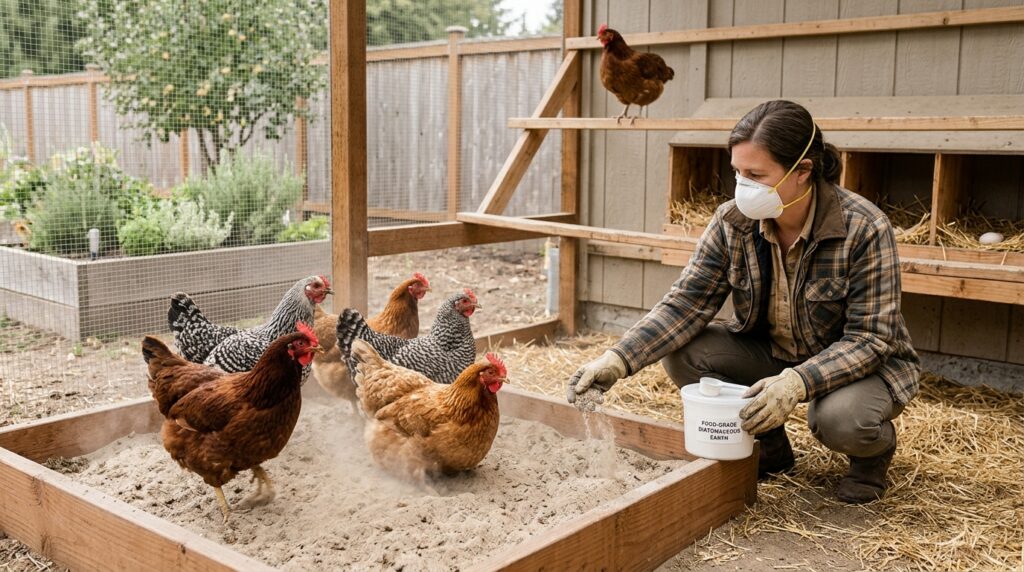
One approach described in poultry veterinary guidance is mixing food-grade DE with washed play sand in a designated dust-bathing container.
The purpose is to encourage chickens to bathe naturally, allowing the material to reach their feathers and skin.
A University of California poultry entomology resource describes a mixture of approximately six cups of food-grade DE with 25 pounds of washed play sand.
This is a published example, not a universal prescription. Follow applicable product directions and veterinary guidance, and consider whether using DE is appropriate for your flock.
Practical considerations:
- Choose a stable, appropriately sized dust-bathing container.
- Use clean, dry play sand.
- Avoid creating airborne clouds of powder.
- Keep the area dry and protected from excessive rain.
- Allow chickens to use the dust bath voluntarily.
- Monitor the birds for respiratory irritation or other problems.
Dust bathing is a normal chicken behavior. Providing a suitable dust-bathing area supports that behavior, whether or not DE is included.
5. Does Sprinkling DE in Nesting Boxes Actually Work?
This is one of the most common backyard poultry practices, but it deserves a closer look.
Sprinkling DE in nesting boxes may expose some crawling parasites to the powder. However, it does not guarantee that mites or lice living on chickens will be eliminated.
For example, northern fowl mites commonly live on the bird, while red poultry mites hide in structural cracks and crevices.
Simply treating nesting material may miss important parasite hiding places.
If you suspect an infestation, inspect:
- Nest-box joints and corners.
- Roosting-bar connections.
- Cracks in wooden walls.
- Spaces behind removable fittings.
- Areas around the vent and under the wings of chickens.
Targeted inspection and appropriate treatment are more useful than relying on a general dusting routine.
6. Important Safety Warning: Can Chickens Inhale DE?
Yes. Fine diatomaceous earth dust can become airborne and irritate the respiratory system.
Chickens have sensitive respiratory systems, and repeatedly creating dusty conditions in an enclosed coop is not a good practice.
People handling DE can also inhale the fine particles.
For safer handling:
- Wear an appropriate dust mask or respirator when handling the powder.
- Work in a well-ventilated area.
- Avoid pouring or scattering large amounts from a height.
- Keep chickens away while dusty material is being handled.
- Avoid creating airborne clouds around birds.
- Follow the product’s safety instructions.
Do not assume that a product labeled food-grade is safe to inhale. Food-grade describes its intended quality and use, not respiratory safety.
Also avoid using pool-filter-grade DE as a substitute for food-grade material. These products may have different processing characteristics and safety risks.
If chickens develop coughing, sneezing, breathing difficulty, or unusual respiratory signs after exposure, remove them from the dusty environment and consult a poultry veterinarian.
7. How to Recognize Mites and Lice on Chickens
Before choosing a treatment, identify what you’re dealing with.
Mites and lice are different parasites, and their behavior can influence which control methods are effective.
Signs of Chicken Lice
Look for:
- Small, straw-colored or yellowish insects moving through the feathers.
- White egg clusters attached to feather shafts.
- Feather damage or irritation.
- Frequent scratching and preening.
- Restlessness and reduced comfort.
Pay particular attention to the skin around the vent and underneath the wings.
Signs of Chicken Mites
Possible warning signs include:
- Tiny moving specks around the skin and feathers.
- Irritated or crusty skin.
- Pale combs and wattles in severe infestations.
- Reduced egg production.
- Weakness or unusual behavior.
- Mites or dark deposits around roosting areas.
Red poultry mites may be difficult to find on chickens during daylight because they hide in the coop between feeding periods.
Inspect roosts, nesting boxes, and cracks after dark when necessary.
Severe infestations can cause blood loss, anemia, and other health problems. <Cite refs={[“turn132150search1″,”turn132150search2″,”turn132150search5”]}/>
8. What Should You Do If Your Chickens Already Have an Infestation?
If you find mites or lice, don’t rely on DE alone.
A more effective approach involves identifying the parasite, inspecting the flock, and using an appropriate control strategy.
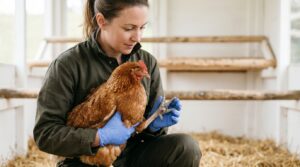
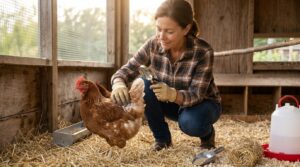
Step 1: Inspect every chicken.
Check around the vent, under the wings, and along feather shafts. Some birds may have heavier infestations than others.
Step 2: Clean and inspect the coop.
Remove dirty bedding and inspect roosting bars, nesting boxes, and structural gaps.
Cleaning alone may not eliminate parasites, but it helps you identify hiding places and prepare the environment for treatment.
Step 3: Choose an appropriate treatment.
Ask a poultry veterinarian about products approved for the specific parasite and your type of flock.
Check whether the product is permitted for laying hens, meat birds, and birds of different ages.
Step 4: Follow the treatment schedule.
Some treatments do not kill parasite eggs, meaning repeat applications may be necessary.
For example, veterinary guidance for poultry lice describes repeating certain insecticide treatments after approximately 10 days. Always follow the actual product label rather than applying a universal schedule. <Cite refs={[“turn132150search2″,”turn132150search10”]}/>
Step 5: Monitor the flock.
Recheck affected birds and coop hiding places. If parasites remain or return, consult a veterinarian about alternative treatments.
9. Better Ways to Prevent Mites and Lice
Prevention is generally easier than managing a serious infestation.
Consider making these practices part of your regular poultry routine:
- Inspect new birds: Examine incoming chickens before introducing them to your existing flock.
- Quarantine newcomers: Keep new arrivals separate for an appropriate observation period and seek veterinary advice when necessary.
- Clean housing regularly: Remove accumulated bedding and inspect areas where parasites can hide.
- Check roosting areas: Pay special attention to joints, cracks, and nesting-box connections.
- Provide dust baths: Give chickens access to a suitable dry area for natural dust bathing.
- Monitor individual birds: Regularly check feathers, skin, and overall condition.
- Avoid overcrowding: Appropriate housing and ventilation support flock health.
Remember that good sanitation helps reduce parasite problems, but it does not replace targeted treatment when an infestation is already present.
10. Diatomaceous Earth vs. Other Mite and Lice Treatments
| Control Method | Main Purpose | Important Limitation |
|---|---|---|
| Diatomaceous earth | Physical parasite suppression | May not eliminate infestations |
| Approved poultry insecticides | Targeted parasite treatment | Must follow label and withdrawal instructions |
| Coop cleaning | Reduces hiding places and contamination | Does not kill every parasite |
| Dust-bathing areas | Supports natural grooming | Effectiveness depends on bird participation |
| Regular inspection | Early detection | Requires consistent monitoring |
The best option depends on the parasite, infestation severity, flock conditions, and locally approved products.
For persistent infestations, professional guidance is preferable to repeatedly trying different home remedies.
Frequently Asked Questions
1. Can diatomaceous earth completely eliminate chicken mites?
Not reliably. Research supports its ability to suppress certain mite populations under specific conditions, but it should not be considered a guaranteed treatment for an established infestation.
2. Does food-grade DE kill chicken lice?
It can help reduce lice when birds come into contact with it during dust bathing. However, it may not eliminate all lice or their eggs.
3. Can I put DE directly on my chickens?
Avoid casually dusting chickens with loose powder. Airborne particles can be inhaled by both birds and people. Use only products specifically labeled for the intended application and seek veterinary guidance.
4. Is DE safe for chicks?
Do not assume that a product suitable for an adult flock is automatically appropriate for chicks. Young birds require particular care, and airborne dust should be avoided.
5. How often should I put DE in the chicken coop?
There is no universally established schedule that guarantees parasite control. Follow the product label and prioritize regular inspections rather than repeatedly adding powder.
6. Does DE kill red poultry mites?
Diatomaceous earth can affect poultry mites, but red poultry mites are especially challenging because they hide in coop structures during the day. Treating only the dust-bathing area may not address their hiding places.
Final Thoughts
Diatomaceous earth can have a place in backyard poultry management, but it isn’t the miracle solution that some chicken-keeping discussions suggest.
Research shows that it can help suppress certain mites and lice when used in appropriate dust-bathing conditions. However, its effectiveness has limitations, particularly when parasites are hiding in coop structures or when chickens do not come into contact with the material.
The most important lesson is to identify the parasite before choosing a treatment.
Maintain clean housing, provide suitable dust-bathing areas, inspect your flock regularly, and use appropriately approved treatments when necessary.
Also remember that natural products still require careful handling. Protecting your chickens’ respiratory health is just as important as controlling external parasites.
A healthy flock isn’t built around one magic powder. It’s built through consistent observation, good housing, appropriate treatment, and responsible daily care. 🐔