Introduction
Healthy feet are essential for happy, active backyard chickens. They need their feet to scratch the ground, search for food, perch, dust-bathe, and move comfortably around the coop. But what happens when a chicken develops a swollen footpad, starts limping, or refuses to walk normally?
One possible cause is bumblefoot, also known as pododermatitis.
Bumblefoot is an inflammatory condition of the foot that can involve bacterial infection, tissue damage, and abscess formation. It often begins with a small injury or repeated pressure on the footpad. Without appropriate attention, the problem can become painful and potentially affect deeper tissues.
The good news is that regular foot inspections, suitable coop flooring, and early veterinary attention can help protect your flock.
Whether you’re raising your first backyard chickens or managing an established flock, this guide explains how to recognize bumblefoot, understand its causes, seek appropriate treatment, and prevent future problems. 🐔
1. What Is Bumblefoot in Chickens?
Bumblefoot is the common name for pododermatitis, a condition affecting the skin and underlying tissues of a bird’s foot.
In chickens, it commonly develops when the footpad becomes injured through cuts, abrasions, repeated pressure, or irritation. Bacteria, particularly Staphylococcus aureus, can enter through damaged skin and cause infection.
The condition can range from mild inflammation to deep infection involving an abscess, tendons, or bone.
Bumblefoot is not simply a dirty foot or an ordinary callus. A swollen footpad with a dark scab may indicate an infection that needs veterinary assessment.
Why it matters: Chickens rely on their feet for nearly every daily activity. Painful foot problems can interfere with walking, feeding, drinking, and normal flock behavior.
2. Common Symptoms of Bumblefoot
Early detection is important because visible signs can become more serious as the condition progresses.
Here are symptoms backyard chicken keepers should watch for.
Early Symptoms
- Slight redness on the bottom of the foot.
- Shiny or thickened footpad skin.
- Small scratches or irritated areas.
- Localized warmth.
- Mild swelling around the affected area.
- Changes in how the chicken stands.
At this stage, a chicken may still walk normally, so regular inspection is particularly useful.
Moderate Symptoms
As inflammation and infection develop, you may notice:
- A dark brown or black scab on the footpad.
- Noticeable swelling.
- A firm or thickened area beneath the foot.
- Redness around the affected skin.
- Reluctance to stand on the affected foot.
- Mild limping or reduced activity.
Severe Symptoms
More advanced cases may involve:
- Significant swelling of the foot or toes.
- An abscess containing infected material.
- Discharge or an open wound.
- Severe lameness or difficulty walking.
- Reduced appetite and activity.
- Infection extending into deeper tissues or bone.
A chicken that cannot comfortably reach food and water needs prompt veterinary attention.
These symptoms are warning signs, not a substitute for a veterinary diagnosis.
3. What Does Bumblefoot Look Like?
One of the most recognizable signs is a dark scab on the underside of the footpad.
However, not every dark spot is automatically bumblefoot. Dirt, normal pigmentation, minor injuries, and other foot conditions can sometimes look similar.
Compare both feet when inspecting your chicken.
Look for differences in:
- Footpad thickness.
- Skin color and texture.
- Swelling around the toes.
- Warmth and tenderness.
- Walking and standing behavior.
A dark scab combined with swelling, warmth, or limping is particularly concerning.
Do not cut, peel, or squeeze the scab to see what is underneath. This can cause additional tissue damage, pain, and bleeding.
4. What Causes Bumblefoot in Chickens?
Bumblefoot usually develops through a combination of foot injury, repeated pressure, environmental conditions, and bacterial exposure.
Understanding these contributing factors can help prevent future cases.
1. Rough or Splintered Perches
Wooden perches with sharp edges, splinters, or uneven surfaces can irritate the footpads.
Repeated pressure against an unsuitable surface may damage the skin and create an entry point for bacteria.
Inspect wooden roosts regularly and repair or replace damaged sections.
2. Hard or Uneven Ground
Chickens spend much of their time standing and walking.
Constant pressure on hard, rough, or uneven surfaces can contribute to footpad injuries, particularly in heavier birds.
Provide comfortable walking areas with suitable litter and footing.
3. Wet and Dirty Bedding
Damp bedding can soften and irritate the skin, while accumulated waste and rough debris can increase the risk of foot injuries and infection.
Keep the coop dry, remove wet patches, and replace soiled bedding regularly.
4. High Perches and Hard Landings
Repeatedly jumping from high roosts onto hard flooring can place considerable pressure on a chicken’s feet.
Provide appropriately positioned perches and consider a softer landing area beneath them.
5. Excess Body Weight
Heavier chickens place more pressure on their footpads.
Some heavy breeds and overweight birds may be particularly vulnerable to pressure-related foot problems.
Maintain appropriate body condition through balanced feeding and sufficient opportunities for movement.
6. Poor Nutrition
An unbalanced diet can affect skin health and the body’s ability to maintain normal tissues.
Feed a nutritionally complete ration appropriate for the bird’s age and production stage. Vitamin A deficiency is one nutritional concern associated with poor skin health.
7. Foot Injuries
Cuts, scratches, punctures, and abrasions can allow bacteria to enter the footpad.
Check the run for sharp wire, nails, broken plastic, sharp stones, and other objects that could injure your chickens.
Bumblefoot is often associated with several contributing factors rather than one single cause.
5. Which Chickens Are More at Risk?
Although chickens of different breeds and ages can develop bumblefoot, some birds may face greater risk.
Pay particular attention to:
- Heavy-bodied breeds.
- Overweight chickens.
- Roosters with substantial body weight.
- Birds with limited mobility.
- Chickens housed on rough or hard surfaces.
- Birds recovering from foot injuries.
This does not mean that lighter breeds are immune. Any chicken with damaged footpad skin can potentially develop an infection.
6. How Is Bumblefoot Treated?
Veterinary assessment recommended
Treatment depends on how deeply the infection has developed. A mild lesion may require a different approach from an established abscess involving deeper tissues.
The most important step is to have the affected chicken examined by a veterinarian familiar with poultry.
Step 1: Separate the Chicken if Necessary
If the chicken is being bullied, having difficulty moving, or unable to access food and water, temporarily place it in a clean, quiet recovery area.
Provide:
- Fresh drinking water.
- Easy access to appropriate feed.
- Clean, dry bedding.
- Comfortable, nonslip flooring.
- Enough space to move without unnecessary pressure on the foot.
Isolation is for protection and easier monitoring, not because bumblefoot is generally considered a contagious disease.
Step 2: Have the Foot Examined
A veterinarian will assess the swelling, scab, surrounding skin, and the chicken’s ability to walk.
More serious cases may require imaging to determine whether infection has reached deeper tissues or bone.
Step 3: Follow the Recommended Treatment
Depending on severity, veterinary treatment may include:
- Appropriate wound cleaning.
- Protective dressings and foot bandages.
- Pain and inflammation management.
- Antibiotics when indicated.
- Surgical removal of infected or dead tissue when necessary.
Antibiotics should be selected and prescribed by a veterinarian. Not every case requires them, and treatment decisions should consider the likely bacteria and infection severity.
Step 4: Change the Environment
Treating the foot without correcting the conditions that contributed to the injury can allow the problem to return.
Improve the roosting surfaces, flooring, drainage, and bedding while the chicken recovers.
Step 5: Monitor Recovery
Check the foot as directed by your veterinarian.
Watch for:
- Reduced swelling.
- Improved walking.
- Less redness.
- Healing skin.
- Normal appetite and activity.
If swelling increases, discharge appears, or the chicken becomes less active, contact the veterinarian promptly.
Important: Never attempt to cut out a black scab, squeeze an abscess, or remove a hardened plug yourself. Bumblefoot abscesses can contain firm infected material, and improper removal can cause significant pain, bleeding, and further tissue damage. VCA Animal Hospitals+2
7. Can Bumblefoot Be Treated at Home?
This is a common question among backyard chicken keepers, especially those who prefer practical, low-cost care.
Some basic supportive measures can be performed at home while arranging veterinary assessment.
For example:
- Move the chicken to a clean, dry area.
- Provide easy access to food and water.
- Remove rough or sharp objects from its surroundings.
- Follow veterinary instructions for cleaning and dressing the foot.
- Monitor its walking ability and general behavior.
However, home care should not replace professional treatment when infection, swelling, or an abscess is present.
A mild-looking lesion can sometimes involve deeper tissues than expected.
Avoid using leftover antibiotics, human pain medications, or strong disinfectants without veterinary guidance.
If you keep laying hens, also ask about egg withdrawal requirements when medications are prescribed. Meat birds may have separate withdrawal requirements.
8. How to Prevent Bumblefoot in Your Chicken Coop
Prevention starts with reducing pressure, protecting footpad skin, and maintaining a clean environment.
Here are practical improvements that can make a difference.
1. Inspect Perches Regularly
Check wooden roosts for:
- Splinters.
- Sharp edges.
- Cracks.
- Uneven surfaces.
- Damaged connections.
Choose supportive perches that allow chickens to rest comfortably without excessive pressure on their feet.
2. Keep Bedding Dry
Wet litter should not become a permanent feature of the coop.
Remove damp bedding, investigate leaking drinkers, and improve ventilation where necessary.
Dry bedding helps maintain healthier foot conditions.
3. Provide Safe Flooring
Avoid sharp wire, rough broken surfaces, and flooring that creates repeated pressure points.
Provide suitable litter and comfortable walking surfaces in areas where chickens spend most of their time.
4. Reduce Excessive Jumping
Position roosts at appropriate heights and consider how chickens land when getting down.
Heavy birds may benefit from lower roosting arrangements and easier access to their sleeping areas.
5. Maintain Healthy Body Weight
Feed a complete poultry ration and avoid excessive treats that displace balanced nutrition.
Encourage natural movement by providing enough space and opportunities for scratching and foraging.
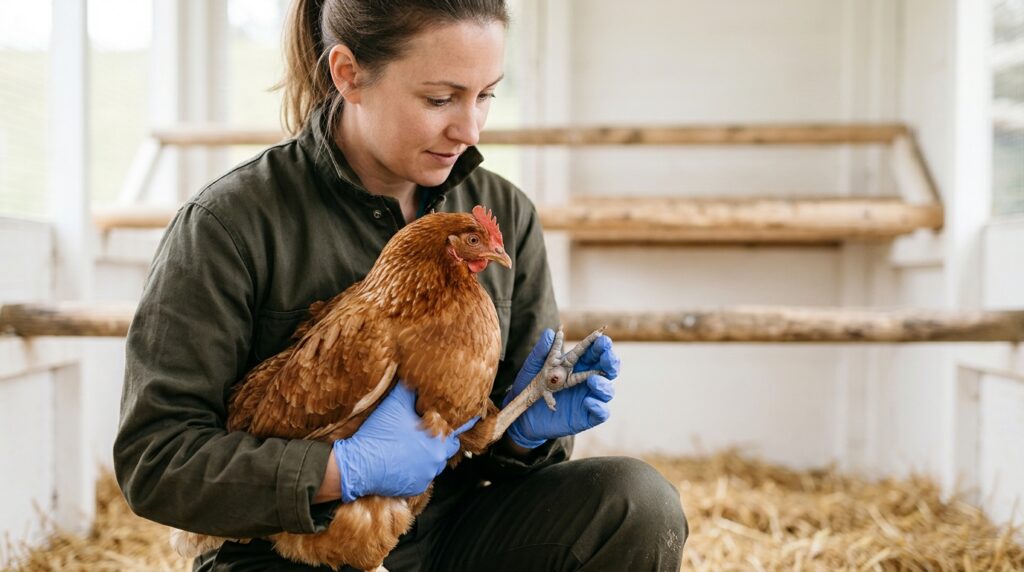
6. Check Feet Regularly
Make foot inspections part of your normal flock-health routine.
Look underneath each foot for redness, scratches, swelling, thickened skin, and dark scabs.
Early detection is much easier than managing a painful, advanced infection.
7. Maintain a Safe Outdoor Run
Remove sharp objects, broken equipment, and debris.
If the run becomes muddy after rain, improve drainage and provide a drier area where chickens can walk comfortably.
These prevention measures are consistent with USDA and university extension guidance on managing pododermatitis. MAY 2025+2
9. A Simple Weekly Chicken Foot-Health Checklist
You don’t need complicated equipment to monitor your flock.
Set aside a few minutes each week to check the following:
Backyard Chicken Foot-Health Checklist
0 of 8 completed
0%Check the underside of both feet for redness or dark scabs.Look for swelling around the footpads and toes.Check for cuts, scratches, and puncture wounds.Inspect roosts for splinters and sharp edges.Remove wet or heavily soiled bedding.Check the run for sharp objects and muddy areas.Observe chickens walking, standing, and perching.Confirm that all birds can reach food and water.
Reset checklist
If you notice an abnormality, don’t wait until the next weekly inspection to address it.
10. When Should You Contact a Poultry Veterinarian?
Some signs indicate that a chicken needs prompt professional attention.
Seek prompt veterinary attention if you notice:
- Significant footpad swelling.
- A dark scab with surrounding redness or swelling.
- Pus or unusual discharge.
- Persistent or worsening limping.
- An open or deep foot wound.
- Suspected infection involving deeper tissues.
- Loss of appetite or unusual weakness.
- Inability to stand or reach food and water.
A chicken that is unable to stand, severely distressed, or showing signs of systemic illness needs urgent veterinary care.
Early assessment can help prevent a localized foot problem from progressing into a more serious condition.
Frequently Asked Questions
1. Is bumblefoot contagious between chickens?
Bumblefoot itself is generally not considered contagious. It usually develops when bacteria enter damaged footpad tissue. However, shared environmental hazards can expose multiple birds to injuries and infection.
2. Can a chicken recover from bumblefoot?
Yes. Many chickens can recover with appropriate treatment, especially when the condition is identified early. More advanced cases may require surgery and a longer recovery period.
3. Does bumblefoot always have a black scab?
No. Early lesions may show redness, irritation, or thickened skin without a noticeable dark scab. A black or brown scab can develop as the condition progresses.
4. Can bumblefoot cause a chicken to stop laying eggs?
Pain, stress, and illness can interfere with normal laying behavior. However, reduced egg production has many possible causes, so it should not automatically be attributed to bumblefoot.
5. Should I remove the black scab?
No. Do not cut, peel, or pull it off yourself. The scab may cover infected tissue, and removing it improperly can cause additional injury. A veterinarian should determine whether removal is necessary.
6. Can bumblefoot come back?
Yes. Recurrence is possible, particularly if the original causes remain. Improving flooring, perches, bedding, and body condition can help reduce the risk.
Final Thoughts
Bumblefoot is one of those backyard chicken health problems that can start with something surprisingly small: a scratch, a rough perch, or repeated pressure on the footpad.
But ignoring early warning signs can allow inflammation and infection to become more serious.
The best approach is to make foot inspections part of your regular flock-care routine, maintain clean and dry housing, provide suitable perches, and address injuries promptly.
Remember that treating the infection is only half the job. Correcting the environmental conditions that contributed to the problem is equally important.
You don’t need an expensive chicken coop to maintain healthy feet. You need safe surfaces, good hygiene, proper nutrition, and consistent observation.
Happy chickens need healthy feet. A few minutes of regular inspection can make a meaningful difference to your flock’s comfort, mobility, and overall well-being. 🐓